
What are the troubleshooting methods for CNC machining CNC lathes
author: Hansheng Automation
2022-08-01
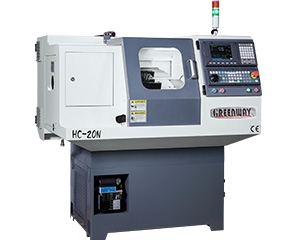
The control system of CNC machining CNC lathes has a very high level of intelligence, and generally has a fault self-diagnosis function. In general, when a fault occurs, an alarm message appears. By checking the fault handling methods in the manual, most faults can be resolved. Of course, there are also some faults in the use of CNC lathes, even if there is no alarm, and the phenomenon is not obvious.
Dealing with this situation is not as simple as it is well documented. When maintenance personnel lack certain work experience in handling such faults, they often make incorrect judgments, resulting in unnecessary economic losses or extending maintenance time. To investigate the causes of such faults, it is necessary to first identify their true phenomena from the various surface phenomena that crisscross, and then identify the cause of their occurrence from the confirmed fault phenomena.
Below is a summary of some common methods for handling and analyzing non alarm faults in CNC lathes:
Fault Case 1
In the use of CNC lathes, manual movement is normal. When moving back to zero automatically, the machine does not move after a certain distance, and when manually moving again, it is normal. CNC lathes use economical CNC, stepper motors, and when manually moving, due to a slightly slower speed and normal automatic return to zero, the rapid movement distance is longer, resulting in mechanical jamming. Based on the analysis of the fault, it is mainly due to mechanical reasons. This type of malfunction often occurs without proper attention during repairs, so attention should be paid to it in work to avoid its occurrence.
In the use of CNC lathes, manual movement is normal. When moving back to zero automatically, the machine does not move after a certain distance, and when manually moving again, it is normal. CNC lathes use economical CNC, stepper motors, and when manually moving, due to a slightly slower speed and normal automatic return to zero, the rapid movement distance is longer, resulting in mechanical jamming. Based on the analysis of the fault, it is mainly due to mechanical reasons. This type of malfunction often occurs without proper attention during repairs, so attention should be paid to it in work to avoid its occurrence.
Fault Case 2
After starting the CNC lathe, the screen does not display. To solve this problem, the first step is to make the screen work normally. Sometimes it may only be due to the display part. But in many cases, multiple faults may coexist. The power switch on the operation panel has been pressed, and both the red and green lights are on. Check that there are no abnormalities in the switches and main parts of the electrical cabinet, and all control circuits are normal. After shutting down, restart, and the fault is the same.
After investigation, it was found that due to the poor working environment, the ground wire on the machine tool site was loose, causing static electricity and causing this fault. After connecting the ground wire, start the system in MODE1 mode and it is in normal condition.
Fault Case 3
In CNC equipment, the most common occurrence of no alarm is due to machine tool errors or inaccurate dimensions, such as the phenomenon of large and small sizes when CNC lathes appear in the diameter direction. The reason for this failure is generally that the coupling structure of the screw and motor has different frequencies and possibilities for the occurrence of faults, and the phenomenon after the fault occurs is also different. Some dimensions only increase in the negative direction, but the possibility of changes in both positive and negative directions will occur. Based on experience, if the coupling adopts elastic connection in the middle, it basically increases more in the negative direction, while both types of faults using key connection in the middle will occur.
Fault Case 4
During the process of turning threads on a CNC lathe, it was initially thought that there was a problem with the system software when the threads were improperly threaded. After deleting the original software, the system was reinstalled, but the system malfunction remained unresolved. After analysis, it may be a mechanical fault. After opening the box cover, it was found that the mechanical connection between the spindle and the spindle encoder was loose. After re calibration and fixation, the fault was eliminated.
How to Choose a Processing Center for Stainless Steel Five Axis Processing at Dongguan Five Axis Processing Factory
How to improve the causes of blade breakage during CNC machining
Related Article

Let us go over the foundations of the electroplating procedure. Electroplating involves several phases, and from pre-treatment to post-treatment there are several really significant ones.
The basic principle of surface treatment of precision parts in CNC machining

Audio panels, electronic cigarette shells, nameplateLOG, watch shells, etc. are among the CNC processing of high surface texture needs components.
CNC machining aluminum alloy parts high-quality surface texture process explained in detail

Metallic finishing, sometimes known as metallic finishing, is the process of using several techniques to change the surface of an object in order to improve appearance and performance, such as corrosion resistance, discoloration resistance, chemical resistance, abrasion resistance, and hardness, modify electrical conductivity, remove burrs, or apply a specific color to a machined part.
Metal CNC finishing surface treatment process and its working principle
