
What are the factors that affect the efficiency of plane milling in large CNC machining centers
author: Hansheng Automation
2022-12-19
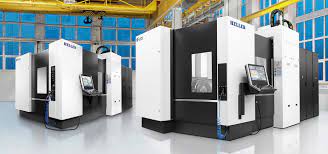
Numerical control machining refers to a process method for machining parts on CNC machine tools. The process procedures for CNC machine tool machining are generally consistent with those for traditional machine tool machining, but there have also been significant changes. A mechanical processing method that uses digital information to control the displacement of parts and tools. It is an effective way to solve the problems of variable variety, small batch size, complex shape, high precision of parts, and to achieve efficient and automated processing.
The main factors affecting the efficiency of plane milling in large CNC machining centers are:
1、 Cooling and coating:
1) There is controversy over whether cooling is necessary for flat milling. When milling with a large diameter face milling cutter, it is difficult for coolant to spray onto the entire milling cutter. Especially milling belongs to intermittent processing. The blade frequently cuts in and out, but in reality, the coolant cannot reach the blade tip. Instead, the blade tip is heated when it cuts in and cooled when it cuts out. This rapid heating and cooling can easily cause thermal cracking. If the blade cracks and falls from the blade seat during cutting, the blade body will be severely damaged.
2) Modern tool coatings can greatly reduce the probability of temperature cracks, further promoting the development of dry cutting. Especially TiAlN coated tools are very suitable for dry cutting. Because when cutting into metal, the heat of cutting causes chemical changes on the surface of TiAlN, producing harder substances.
3) The advantage of dry cutting is that the operator can clearly see the actual shape and color of the chips, providing information for the operator to evaluate the cutting process. Due to the different chemical composition of the workpiece, the information emitted is also different: when processing carbon steel, dark brown chips are formed, indicating that the cutting speed is appropriate; As the speed further increases, the brown chips will turn blue. If the chips turn black, it indicates that the cutting temperature is too high, and the cutting speed should be reduced at this time.
4) The thermal conductivity of stainless steel is low, and its heat cannot be transferred to the chips well. Therefore, when processing stainless steel, an appropriate cutting speed should be selected to make the chips have a light brown color. If the chips turn dark brown, it indicates that their cutting speed has reached its maximum limit. Sometimes, in order to avoid knife bumps, cutting heat is required for processing stainless steel. In addition, coolant can cause chips to cool too quickly and fuse on the blade, resulting in a decrease in tool life.
5) Excessive feed rate can cause material accumulation, while low feed rate can cause friction between the tool and the workpiece, which can also lead to overheating.
6) The goal of dry cutting is to adjust the cutting speed and feed rate, so that heat is transferred to the chips instead of the workpiece or milling cutter. Therefore, the use of coolant should be avoided in order to observe the splashed chips and adjust the spindle speed and feed rate appropriately. Hot chip means that heat is not transferred to the parts and tools, and thermal cracks will not occur, thereby extending the tool life. But when processing flammable materials such as magnesium and titanium, attention should be paid to cooling and fire extinguishing facilities should be prepared.
7) It is worth mentioning that when dry cutting, it is also important to apply a small amount of compound to prevent "bite" (difficult to disassemble) on the joint surface of the thread/milling cutter body. However, it is important to be careful not to bring in dirt, otherwise it will affect the installation accuracy of the milling cutter.
2、 Forward and reverse milling:
1) Most flat milling is done using reverse milling on lightweight machine tools with screw or ball screws. However, forward milling should be used as much as possible to achieve better processing results. Because during reverse milling, strong friction occurs before the blade cuts in, causing the machining surface to harden and making it difficult for the next cutting tooth to cut in.
When milling, the milling width should be approximately equal to 2/3 of the milling cutter diameter, which ensures that the blade can immediately cut into the workpiece from the beginning, with almost no friction. If it is less than 1/2 of the milling cutter diameter, the blade begins to "rub" the workpiece again, as the cutting thickness decreases during cutting, and the feed rate per tooth will also decrease due to the narrowing of the radial cutting width.
The result of friction shortens the tool life, and for hard alloy tools, increasing the feed rate per tooth and reducing the cutting depth are more advantageous. So during rough milling, if the radial cutting width is smaller than the milling cutter radius, increasing the cutting amount will increase the tool life and shorten the processing time. Of course, precision milling requires a smooth surface of the workpiece, so the cutting amount should be limited.
2) The work of adjusting the radial milling width and determining the ratio of milling cutter diameter to radial milling width is best carried out on a high-precision machine tool, in order to observe the changes in surface roughness of the workpiece while adjusting the ratio.
3、 Evaluation of milling efficiency:
The efficiency of surface milling can be measured in various ways, one of which is by determining the amount of metal removal per minute, i.e. WOC (cutting width) × DOC (cutting depth) × FR (cutting amount). Example: 3 (WOC) × 0.150 inch (DOC) × 3.5 inches/minFR=15.75 cubic inches/minute. The metal removal rate represents the volume of metal cut, and whether the machine power used can achieve this removal rate depends on the hardness of the processed metal.
Therefore, there is another measurement method, which is to directly calculate the required rate of milling. It is equal to: metal removal rate × Material hardness coefficient. For example, if the hardness coefficient of aluminum is about 0.3, the required power is 15.75 × 0.3=4.725 (* *). The hardness coefficient of 4140 steel is about 0.7, and the required power is 15.75 × 0.7=11 (* *), hardness coefficient can be found in relevant manuals and materials.
What are the reasons that affect the machining cutting speed
What are the advantages and disadvantages of a horizontal five axis machining center
Related Article

Let us go over the foundations of the electroplating procedure. Electroplating involves several phases, and from pre-treatment to post-treatment there are several really significant ones.
The basic principle of surface treatment of precision parts in CNC machining

Audio panels, electronic cigarette shells, nameplateLOG, watch shells, etc. are among the CNC processing of high surface texture needs components.
CNC machining aluminum alloy parts high-quality surface texture process explained in detail

Metallic finishing, sometimes known as metallic finishing, is the process of using several techniques to change the surface of an object in order to improve appearance and performance, such as corrosion resistance, discoloration resistance, chemical resistance, abrasion resistance, and hardness, modify electrical conductivity, remove burrs, or apply a specific color to a machined part.
Metal CNC finishing surface treatment process and its working principle
