
What are the differences between CNC machining and traditional machining
author: Hansheng Automation
2023-02-17
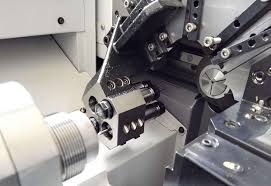
CNC machining technology originates from conventional machining processes and is an organic combination of conventional machining processes, computer numerical control technology, computer-aided design, and assisted manufacturing technology. Due to the continuous development of technology, there are more and more parts that require precision machining in modern manufacturing, and the requirements for machining accuracy and surface complexity of workpieces are also increasing.
Therefore, CNC machining has received widespread attention, but in terms of cost savings, CNC machining still has higher costs than traditional machining. Below, we will specifically introduce the differences between CNC machining and traditional machining processes.
1. Processing technology
In ordinary machining processes, simplification can be carried out in terms of positioning benchmarks, clamping methods, cutting tools, and cutting methods. However, data processing processes are relatively complex and need to fully consider these factors. Moreover, even for the same machining task, CNC machining processes can have multiple plans, and multiple machining parts and cutting tools can be arranged as the main line in the process, The process has diverse characteristics, which is the difference between CNC machining process and traditional machining process.
2. Clamping and fixtures
In CNC machining technology, it is not only necessary to ensure relative fixation of the coordinate direction between the fixture and the machine tool, but also to coordinate the dimensional relationship between the parts and the machine tool coordinate system. And during the clamping process, it is necessary to effectively control the positioning and clamping steps. Moreover, under traditional machining techniques, due to the limited processing capacity of the machine tool itself, multiple clamping operations are required during the machining process.
And it requires the use of specialized fixtures, which leads to higher costs in design and manufacturing of fixtures, invisibly increasing the production cost of the product. CNC machining process positioning can be debugged using instruments, and in most cases, there is no need for specialized fixture design, so its cost is relatively low.
3. Tools
During the machining process, the selection of cutting tools needs to be determined based on different machining processes and methods. Especially in CNC machining, the use of high-speed cutting is not only conducive to improving machining efficiency, but also ensures machining quality, effectively reducing the probability of cutting deformation and shortening the machining cycle. Therefore, the demand for cutting tools further increases under the guidance of cutting.
At present, there is another dry cutting method, which requires the tool to have good heat resistance when cutting without or with only a small amount of cutting fluid. Compared to ordinary machining processes, CNC machining processes have higher requirements for the performance of cutting tools.
How to solve the problem of blackening after processing copper materials for precision parts
What steps are the precision requirements for precision hardware parts processing reflected in
Related Article

Let us go over the foundations of the electroplating procedure. Electroplating involves several phases, and from pre-treatment to post-treatment there are several really significant ones.
The basic principle of surface treatment of precision parts in CNC machining

Audio panels, electronic cigarette shells, nameplateLOG, watch shells, etc. are among the CNC processing of high surface texture needs components.
CNC machining aluminum alloy parts high-quality surface texture process explained in detail

Metallic finishing, sometimes known as metallic finishing, is the process of using several techniques to change the surface of an object in order to improve appearance and performance, such as corrosion resistance, discoloration resistance, chemical resistance, abrasion resistance, and hardness, modify electrical conductivity, remove burrs, or apply a specific color to a machined part.
Metal CNC finishing surface treatment process and its working principle
