
What are the advantages of five axis CNC machining in work
author: Hansheng Automation
2023-05-23
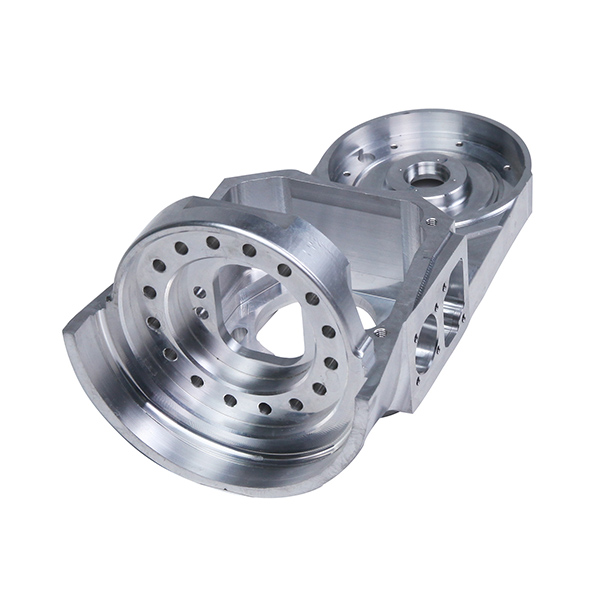
A lofty goal of the manufacturing industry is to complete processing in one go: placing a piece of material into a machine tool, running a program, and finally obtaining a perfect precision machined part. It can be said that five axis machining can bring us closer to the goal of "completing it all at once" than any other process. Five axis machining is the use of CNC to simultaneously move parts or cutting tools on five different axes.
It can process very complex components, which is why five axis machining is particularly popular in the aerospace field. Medical components and tools need to be designed with sufficient precision to ensure the perfect fit of components used for surgery or component replacement. Incorrect cutting or imperfect edges can render medical supplies unusable.
This makes five axis machining the preferred way to create customized medical tools and components. Five axis CNC machining is now fully capable of achieving one-time clamping, reducing clamping costs and product scratches and scratches. Five axis CNC machining is suitable for processing parts with multiple workstation pores and flat surfaces, and high machining accuracy requirements, especially for parts with strict shape machining accuracy requirements.
There are many benefits to using 5-axis CNC machining technology, as follows:
1. Simple setup: 5-axis CNC machine tool, making it possible to easily process complex shapes in one setup. It does not require multiple settings, which may lead to errors. A single setup helps reduce setup and manufacturing time, and improves productivity. In addition to shortening delivery time, this processing technology also helps to increase production and cash flow.
2. Faster cutting speed: Due to the five axis CNC machining allowing simultaneous movement along both X and Y axes, you can use shorter and more sturdy tools. The use of short and rigid cutting tools can help accelerate cutting speed while minimizing or negligible vibration.
3. Improve accuracy: During the five axis CNC machining process, the workpiece remains stationary, achieving higher part accuracy.
4. Excellent smoothness: The short cutting tools used in the five axis CNC machining process help achieve excellent surface smoothness, thereby achieving better part quality.
5. Ability to process complex parts: With this processing technology, you can manufacture extremely complex machine parts in a shorter time and at a lower cost. This is a great benefit for small-scale running applications or prototypes.
Another question is how many axes do you need? The geometric shape of the workpiece determines the use of three, four or five axes. For example, the turbine blade in the following figure is a free surface, which is quite complex. The most effective method for machining such blades is to use a five axis machine tool, which allows the cutting tool to spiral around the blade surface.
You can also use a three-axis machine tool to process the surface of the blade by constantly changing its position, but this is usually not the most effective way. Of course, we also need to consider the needs of our customers. Due to the complexity of 5-axis milling, the requirements for operators of machine tools will be higher. Usually, experienced operators always receive higher salaries, which adds up to the total processing cost.
Analyze the reasons for the failure of precision parts processing
How to solve the DC low voltage alarm scheme for large CNC machining centers
Related Article

Let us go over the foundations of the electroplating procedure. Electroplating involves several phases, and from pre-treatment to post-treatment there are several really significant ones.
The basic principle of surface treatment of precision parts in CNC machining

Audio panels, electronic cigarette shells, nameplateLOG, watch shells, etc. are among the CNC processing of high surface texture needs components.
CNC machining aluminum alloy parts high-quality surface texture process explained in detail

Metallic finishing, sometimes known as metallic finishing, is the process of using several techniques to change the surface of an object in order to improve appearance and performance, such as corrosion resistance, discoloration resistance, chemical resistance, abrasion resistance, and hardness, modify electrical conductivity, remove burrs, or apply a specific color to a machined part.
Metal CNC finishing surface treatment process and its working principle
