
What are the advantages of CNC precision automatic lathe processing in work
author: Hansheng Automation
2023-05-22
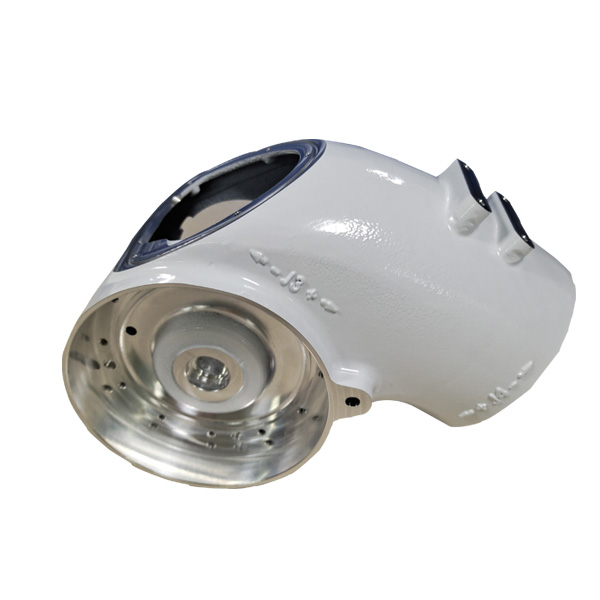
Due to the use of dual axis tool arrangement, the processing cycle time is greatly reduced. By shortening the tool exchange time between the tool arrangement and the opposite tool table, multiple tool table overlaps and the effective axis movement overlap function of thread chip is achieved, the effective axis movement overlap function of thread chip is achieved, and the direct spindle indexing function during secondary processing is achieved to shorten the idle time.
The chip cutting tool has always played a very important role in the machining process of the clamping part between the spindle and the workpiece, providing a strong guarantee for constant machining accuracy. From the perspective of the centrifuge market, 38mm is its large machining diameter, which gives the centrifuge a great advantage in the precision shaft machining market.
This series of machine tools can also be equipped with automatic feeding devices to achieve fully automated production of a single machine tool, reducing labor costs and defective products in the production process. It is very suitable for producing large quantities of precision shaft parts.
It is also because CNC centering machines can complete all or most of the machining processes in one operation, greatly shortening the product manufacturing process chain. On the one hand, this reduces the production auxiliary time caused by card changes, while also reducing the manufacturing cycle and waiting time of tooling and fixtures, which can significantly improve production efficiency.
The shortening of the manufacturing process chain and the reduction of equipment required for products, as well as the reduction of the number of fixtures, workshop area, and equipment maintenance costs, can effectively reduce the overall investment in fixed assets, production operations, and management costs; The reduction of card loading times avoids the accumulation of errors caused by positioning reference conversion. At the same time, most of the turn-milling composite processing equipment has the function of online detection, which can achieve in situ detection and accuracy control of key data in the manufacturing process, thereby improving the processing accuracy of the product.
The main difference between CNC walking machine and cutting machine is that the material of the walking machine is in motion, the cutting machine is in motion, and the old name of the walking machine in China was the longitudinal cutting lathe. Mainly used for holding small parts for mass processing. Generally, the feeding machine passes the bar material through the main shaft through the hole, and the spring clamp automatically clamps it. If the part overhangs, it needs to be equipped with a center. If the tail needs to be processed, it needs to be equipped with a second spindle. If it is necessary to process four and six drilling holes and other sub holes, power tool holders and spindle indexing should be equipped.
The CNC precision automatic lathe is mainly limited by the diameter of the material, and generally large models of walking lathes can only process parts with a diameter of 20mm.
The advantages of a CNC precision automatic lathe are mainly as follows:
1.The spindle can be used to turn parts with a length of 200mm or more without stopping the clamping process at once. If you are turning a part with a length of 5mm, both the cutting machine and the walking machine can be turned, but the walking machine can process 20-30 parts in one go before stopping and feeding.
2.When cutting with a lathe, it is always in the fixed position of the material, so rigidity is very good. Think about how much better the rigidity will be when your lathe clamps the parts and the tool sticks a few millimeters to the clamping position for turning.
3.CNC precision automatic lathes are all integrated with turning and milling, and the complexity of forming in one process is not comparable to that of walking machines. There were old-fashioned automatic lathes, commonly known as convex machine lathes. Nowadays, more advanced CNC automatic lathes are called walking lathes or slitting lathes. Mainly, the spindle Z moves forward and backward, while the knife can move X and Y to achieve three-dimensional processing and one-time forming.
CNC precision automatic lathes are generally used for processing small parts such as bars in large batches, many of which are formed in one go. As long as it involves the processing of bar materials and the diameter is not too large, the advantage of using a lathe with a feeding machine is great. This makes it a small independent production line, which has advantages in terms of processing speed, labor cost, and so on.
What is the difference between CNC machining and 3D printing
Mechanical functions of titanium and titanium alloy processing
Related Article

Let us go over the foundations of the electroplating procedure. Electroplating involves several phases, and from pre-treatment to post-treatment there are several really significant ones.
The basic principle of surface treatment of precision parts in CNC machining

Audio panels, electronic cigarette shells, nameplateLOG, watch shells, etc. are among the CNC processing of high surface texture needs components.
CNC machining aluminum alloy parts high-quality surface texture process explained in detail

Metallic finishing, sometimes known as metallic finishing, is the process of using several techniques to change the surface of an object in order to improve appearance and performance, such as corrosion resistance, discoloration resistance, chemical resistance, abrasion resistance, and hardness, modify electrical conductivity, remove burrs, or apply a specific color to a machined part.
Metal CNC finishing surface treatment process and its working principle
