
The difference between the principle of a gearbox and a frequency converter
author: Hansheng Automation
2023-05-10
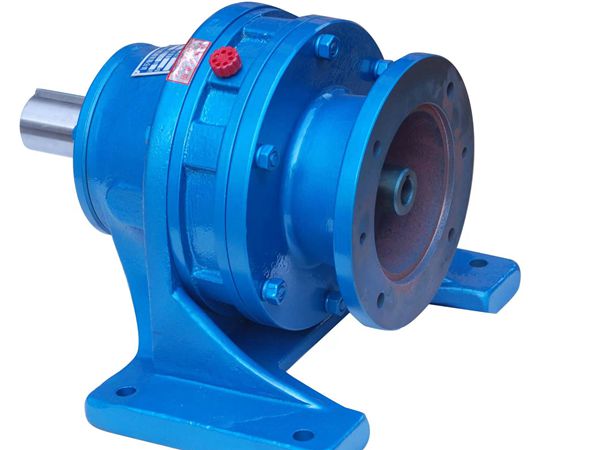
The common function of the reducer and frequency converter on the transmission equipment is to reduce speed. However, the reducer is actually a power transmission mechanism that does not generate power itself. Its function is to use different gear sizes and speed converters to reduce the number of revolutions of the motor (motor) to the desired number of revolutions; And obtain a larger torque mechanism. In the current mechanisms used to transmit power and motion, the application range of reducers is quite extensive. What exactly is a gearbox?
In the current mechanisms used to transmit power and motion, the application range of reducers is quite extensive. For example, gear reducers can be found in almost all types of mechanical transmission systems, from ships, cars, locomotives, heavy machinery used in construction, bicycles with similar principles to reducers, processing tools and automated production equipment used in the mechanical industry, to common household appliances, watches, and so on in daily life. Their applications range from high-power transmission work to small loads, Accurate angle transmission can be seen in the application of reducers, and in industrial applications, reducers have functions of reducing speed and increasing torque. Therefore, it is widely used in speed and torque conversion equipment. For example, the elevator we make every day uses the equipment of a worm gear reducer.
The main functions of the reducer are:
(2) Deceleration simultaneously reduces the inertia of the load, which is reduced by the square of the deceleration ratio. Everyone can take a look. Generally, motors have an inertia value.
A gearbox is a relatively precise machinery used to reduce speed and increase torque. It has a wide variety of models, and different types have different uses. There are various types of reducers, which can be divided into gear reducers, worm reducers, and planetary gear reducers according to the transmission type; According to the different transmission stages, it can be divided into single stage and multi-stage reducers; According to the shape of the gears, they can be divided into cylindrical gear reducers, conical gear reducers, and conical cylindrical gear reducers; According to the layout of the transmission, it can be divided into deployable, split, and coaxial reducers.
working principle
Reducers are generally used for low speed and high torque transmission equipment, where the power of electric motors, internal combustion engines, or other high-speed operation is reduced by meshing the small number of teeth on the input shaft of the reducer with the large gear on the output shaft. Ordinary reducers also have several pairs of gears with the same principle to achieve ideal deceleration effect, and the ratio of the number of teeth of the large and small gears is the transmission ratio.
difference
The reducer uses a mechanical transmission device to reduce the speed of the motor, while the frequency converter adjusts the speed of the motor by changing the AC frequency. When reducing the motor speed through a frequency converter, energy conservation can be achieved.
How to grind the inner circle,What are the methods for grinding the inner circle
The harmonic reducer mainly consists of three basic components
Related Article

Let us go over the foundations of the electroplating procedure. Electroplating involves several phases, and from pre-treatment to post-treatment there are several really significant ones.
The basic principle of surface treatment of precision parts in CNC machining

Audio panels, electronic cigarette shells, nameplateLOG, watch shells, etc. are among the CNC processing of high surface texture needs components.
CNC machining aluminum alloy parts high-quality surface texture process explained in detail

Metallic finishing, sometimes known as metallic finishing, is the process of using several techniques to change the surface of an object in order to improve appearance and performance, such as corrosion resistance, discoloration resistance, chemical resistance, abrasion resistance, and hardness, modify electrical conductivity, remove burrs, or apply a specific color to a machined part.
Metal CNC finishing surface treatment process and its working principle
