
Key points of lean production in machining
author: Hansheng Automation
2023-05-10
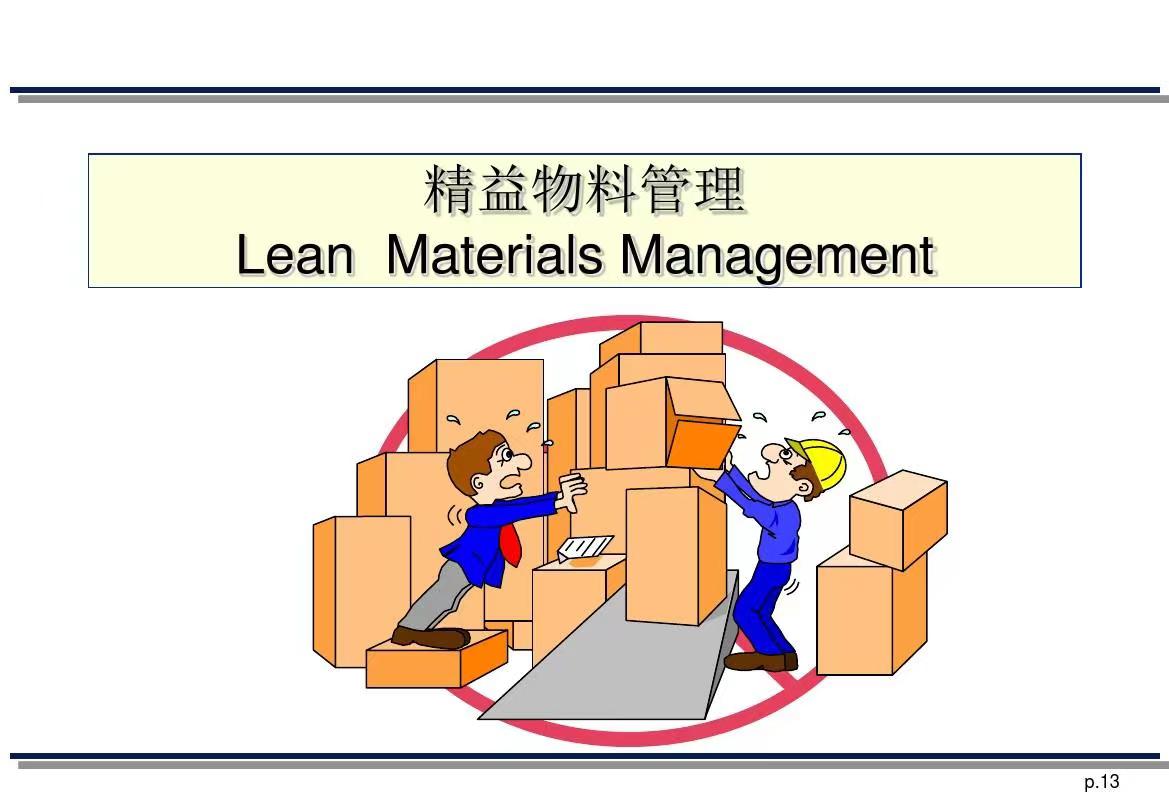
I The environment must be clear and bright
Many people visit companies in the machining industry and their impression is generally not very good. They feel like there is noise, oil, garbage, dust, smoke, dim lighting everywhere... not to mention the employees who work in it every day? 80 years ago, the Hawthorne Mayo experiment in the West taught us the importance of the environment for on-site management. The environment has a strong suggestive effect on human psychology, which directly affects human behavior. To purify one's heart, one must first understand their surroundings.
II Reasonable and smooth layout of factories and workshops
The development of many factories is gradual, and equipment and factories are gradually added, lacking unified planning. The phenomenon of "patching" and "occupying land" is severe, leading to disordered layout of workshops and factories. The phenomenon of backflow and turbulence not only affects logistics efficiency and management efficiency, but also generates many quality risks. Therefore, regular review and optimization of the layout is an indispensable task.
III Management of fixed quantity and calibration of items
Commonly known as "three fixed" management, it avoids the game of "hide and seek" on site. The machining industry has a wide variety of products, and items are everywhere. Over time, there are many "lonely ghosts" and "orphans and abandoned children" on site that no one cares about, and even technicians cannot distinguish between "son", "ugly", "actor", and "mao".
IV Orderly management of cutting tools, measuring tools, and fixtures
Why use an ox knife to kill a chicken?
Yes, many machining factories commonly use ox knives to kill chickens, because there are too many "knives". Regardless of whether they are chicken knives or ox knives, they can be killed! In today's world where technical accuracy requires nitpicking, using the wrong knife may kill the company. The "old lady" ideology of Chinese people is prominent in the machining industry, and they are reluctant to give up anything, appearing to be very good at "living". The old lady hesitates, but the enterprise cannot remain complacent.
V Strict management of process documents
The process documents used by the technical department are version E, but version D is being used for on-site operations. Materials are purchased using version C, but tools are made according to the requirements of version B, and the quality is being checked using version A. Everything is in chaos, and the management and modification of process documents is an extremely serious matter. However, in some machining factories, it is regarded as a joke, and the source is chaotic, and the whole thing is chaotic!
VI First inspection, patrol inspection, and final inspection step by step
The first inspection may be troublesome, the inspection may be outdated, and the final inspection may not be in place... Most of the three inspections in the machining industry are like this. Do you still expect employees to conduct self inspection and mutual inspection? From the lean perspective, inspection is a waste, but in the process of lean transformation of enterprises, strict inspection is the best means to reduce quality risk, management risk and operational risk. For each product, a detailed quality control Plan should be formulated, which should be repeated in troubled times!
VII Effective collaboration of planned material control systems
Many machining factories generally adopt the traditional sales command production or self command production mode, lacking an independent planning and material control system, leading to the loss of control of the entire operating system, or excessive weight loss. The lack of effective constraints between production and sales is the biggest waste of the operating system. Making good use of mature ERP+SFC systems can largely solve the problems of planned material control systems and on-site schedule management, material management, and data management.
VIII Equipment inspection and lubrication veto management
The machining industry belongs to a dual intensive industry of equipment and labor, and good equipment is the basic guarantee for production and operation. However, currently, the professional equipment management force of general machining factories is weak, and the on-site personnel have a weak awareness of equipment maintenance, resulting in frequent equipment overspeed, overheating, overpressure, and overload operation, leading to frequent equipment failures, quality abnormalities, and casualties. In this regard, factories can introduce the "Equipment Love" activity and adopt a one vote veto system for equipment preservation awards, closely linking equipment preservation with employees' salary performance and promotion.
IX Bottleneck process management and process transformation
The characteristic of the machining industry is discrete production, coupled with the phased development of enterprises and the diversity of products, it is difficult to maintain a balance in the production capacity of each process. In imbalanced situations, the management of bottleneck processes is particularly important, as they are included in the focus of daily management and undergo continuous process transformation to reduce the number and constraints of bottleneck processes.
X Continuously improving the establishment and guidance of culture
The path of university lies in being clear and virtuous, being close to the people, and achieving the ultimate good. The ancients told us that human life is a process of continuous improvement, and production and operation are also the same. As a traditional industry, the machining industry still has a lot of room for improvement. Companies should introduce appropriate mechanisms and tools (such as PDCA, QC story, DMAIC) to guide and establish such a culture of improvement, accumulating streams to form rivers and seas, and taking small steps to thousands of miles.
Of course, to do a good job in lean production, the above ten points are still not enough. Lean production is a part of enterprise lean operation, lean strategy, and lean culture. Without systematic collaboration, strategic support, and cultural influence, the changes that lean production can bring to the enterprise can only be limited, and this limited achievement often results from system shortcomings, strategic negligence The inertia of culture and the inertia of organization are in vain.
Be careful with dry weather and dry materials. Laser cutting machine and water cooling machine
How to grind the inner circle,What are the methods for grinding the inner circle
Related Article

Let us go over the foundations of the electroplating procedure. Electroplating involves several phases, and from pre-treatment to post-treatment there are several really significant ones.
The basic principle of surface treatment of precision parts in CNC machining

Audio panels, electronic cigarette shells, nameplateLOG, watch shells, etc. are among the CNC processing of high surface texture needs components.
CNC machining aluminum alloy parts high-quality surface texture process explained in detail

Metallic finishing, sometimes known as metallic finishing, is the process of using several techniques to change the surface of an object in order to improve appearance and performance, such as corrosion resistance, discoloration resistance, chemical resistance, abrasion resistance, and hardness, modify electrical conductivity, remove burrs, or apply a specific color to a machined part.
Metal CNC finishing surface treatment process and its working principle
