
How to reduce burrs when milling aluminum parts on CNC machining centers
author: Hansheng Automation
2022-03-30
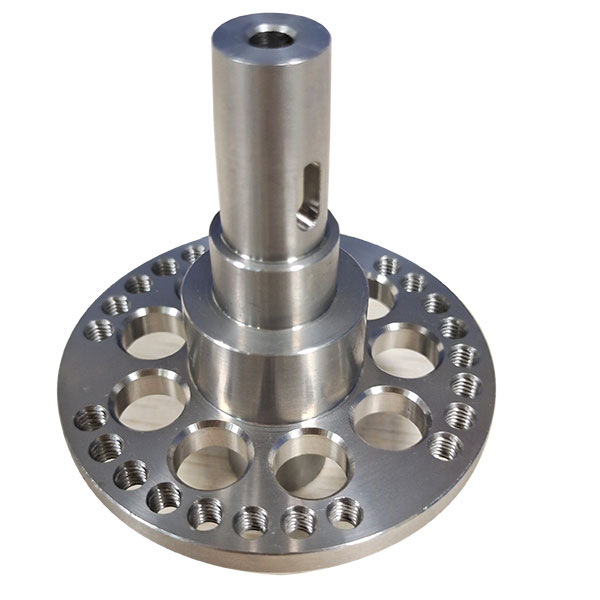
CNC machining centers significantly reduce the number of fixtures, and do not require complex fixtures to process parts with complex shapes. If you want to change the shape and size of a part, you only need to modify the part processing program, which is suitable for new product development and modification. Stable machining quality, high machining accuracy, high repeatability, and adaptability to the machining requirements of aircraft.
Burrs not only reduce the machining accuracy of the workpiece, thereby affecting its performance, but also increase machining costs. Therefore, deburring is usually required, which is not only troublesome but may also damage the workpiece. So it is better to control burrs during processing as much as possible.
Burrs are small metal particles that appear on the surface of formed parts, characterized by protrusions on the formed surface. Due to the plastic deformation of the material, burrs usually appear at the cutting end of the processed material. This is particularly common in ductile materials such as aluminum alloys.
The shape and size of burrs are affected by many factors, such as workpiece material and its end support stiffness, tool geometry, tool cutting path, tool wear, cutting parameters and coolant usage.
Hazards of burrs
1. Burrs can reduce the accuracy of processing, measurement, and installation, affecting the dimensional, shape, and positional accuracy of the workpiece.
2. The hardening and detachment of burrs cause cracks, shortening the service life of the workpiece.
3. There is a risk of injury to producers and machine users.
4. The presence or absence of burrs can lead to electrical short circuits. If it falls on the sliding part, it will wear out faster and cause accidents.
Methods for controlling burrs
1. Selection of processing sequence
When organizing the processing sequence, it is necessary to first place the process that produces burrs, and then place the process that does not produce burrs (with fewer burrs and fewer quantities). Alternatively, use several subsequent processes reasonably to eliminate the burrs in the previous process. For example, when processing stepped grooves, processing deep grooves first and then shallow grooves can remove the groove edge burrs generated during deep groove processing and improve processing quality.
2. Selection of processing methods
When designing the process, try to choose a treatment method that produces fewer burrs or helps to remove burrs.For example, during cutting, it is necessary to place the cutting edge at the cutting edge angle of the part θ Burrs can be effectively reduced or completely eliminated at positions with large intersection angles between adjacent machining surfaces and high end support stiffness.
On a milling machine, the cutting layer is thick and the cutting layer is thin, resulting in stable cutting with small burrs and thin cutting layer. In addition, the upper and lower milling machines have thicker cut layers and generate larger burrs, so it is advisable to use forward milling as much as possible to reduce milling burrs.
When milling flat surfaces, using an end mill to process the flat surface of a part increases the cutting force generated when cutting perpendicular to the surface being processed, resulting in larger burrs. The use of cylindrical milling machines for forward milling can effectively reduce the generation of burrs.
In addition, even if burrs cannot be completely suppressed during the machining process, the cutting edge must be placed in a position that is convenient for deburring to reduce the cost of deburring.
3. Tool selection
Metal processing is achieved by squeezing the cutting tool from elastic deformation to plastic deformation to cut the machined part of the workpiece. Due to the excellent toughness and elongation of aluminum alloy materials, chips are not easily cracked, so it is necessary to grind the cutting edge of the tool.
Metal processing is achieved by squeezing the cutting tool from elastic deformation to plastic deformation to cut the machined part of the workpiece. Due to the excellent toughness and elongation of aluminum alloy materials, chips are not easily cracked, so it is necessary to grind the cutting edge of the tool.
Sharp high-speed steel tools, hard alloy tools (aluminum tools), and PCD tools are all available. The purpose is to shorten the elastic and plastic deformation time of the workpiece itself, and prevent the machining part of the part from being cut by burrs.
However, at the same time, tool wear also has a significant impact on the formation of burrs. For continuous mass production, the wear resistance of the cutting tools should be considered, and the cutting tools should be kept sharp for a longer period of time. Currently, it is recommended to use PCD tools. Special composite cutting tools (such as composite milling cutters, composite drill bits, etc.) can also be used during the machining process. Due to the fact that the burrs generated by the previous tool can be removed by the next tool, the generation of burrs can be suppressed while improving machining quality.
4. Adjust cutting parameters
For example, increasing the tool rake angle, reducing cutting thickness, and adjusting cutting speed. These can be adjusted according to the actual situation.
5. Knife path optimization
Tool withdrawal is the main factor contributing to the formation of burrs in the cutting direction. In general, the burrs generated when the milling cutter is rotated out of the workpiece are relatively large, while the burrs generated when the milling cutter is rotated into the workpiece are relatively small.
6. Selection of cutting fluid
Use cutting fluid with excellent anti sticking performance to reduce tool wear, extend life, lubricate milling process and reduce burr size.
Other methods
Multipart overlap processing
Keep the edge of one part close to the edge of another part. This can not only shorten the cutting stroke, improve production efficiency, but also increase the rigidity of the parts during the machining process, reduce cutting deformation, and effectively prevent and reduce the occurrence of burrs.
Use various accessories to assist in supporting and filling the edges of the part processing. For example, when machining small holes on thin-walled pipe fittings, insert the spindle into the part, drill and remove it. This will prevent deformation of the parts and prevent the formation of burrs in the holes.
What is the process flow for processing automotive parts
How to Ensure the Dimensional Tolerance of Mold Parts Processing
Related Article

Let us go over the foundations of the electroplating procedure. Electroplating involves several phases, and from pre-treatment to post-treatment there are several really significant ones.
The basic principle of surface treatment of precision parts in CNC machining

Audio panels, electronic cigarette shells, nameplateLOG, watch shells, etc. are among the CNC processing of high surface texture needs components.
CNC machining aluminum alloy parts high-quality surface texture process explained in detail

Metallic finishing, sometimes known as metallic finishing, is the process of using several techniques to change the surface of an object in order to improve appearance and performance, such as corrosion resistance, discoloration resistance, chemical resistance, abrasion resistance, and hardness, modify electrical conductivity, remove burrs, or apply a specific color to a machined part.
Metal CNC finishing surface treatment process and its working principle
