
Five Methods for Machining Conical Surface of Precision Parts on Lathe
author: Hansheng Automation
2023-05-18
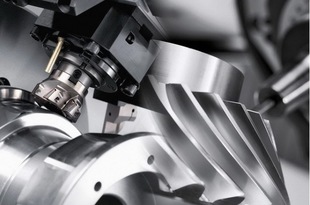
Conical surfaces are often encountered in the machining of precision parts on lathes. Conical surfaces are widely used in machine tools and tools.
There are several main methods for turning circular conical surfaces on lathes:
1. Rotating slide method
When turning conical bodies or holes with shorter lengths and larger tapers, the method of rotating a small sliding plate can be used. This method is easy to operate and can ensure a certain degree of turning accuracy, suitable for single piece or small batch production, and is a widely used turning method.
2. Offset tailstock method
For conical workpieces with longer length and smaller taper, the workpiece can be clamped between the two tips and turned by offsetting the tailstock. This turning method can machine feed to turn the conical surface, with low labor intensity and low surface roughness value of the turned conical body. However, due to the limitation of the tailstock offset, it is not possible to turn workpieces with large tapers.
3. Wide blade turning method
When turning the conical surface 3 of the bevel gear blank, a wide blade cutter can also be used to directly turn it out. When turning, lock the bed saddle and start precision parts processing. The feed speed of the sliding plate is slightly faster, but gradually slows down as the contact surface of the cutting edge increases. When turning to the size, stop slightly to reduce the roughness value of the conical surface.
4. Profiling turning
For cones with longer lengths and higher accuracy requirements, one side is commonly used for profile turning. The profiling device can enable the lathe to perform both longitudinal and transverse feed, so that the movement trajectory of the lathe is parallel to the conical contour of the machined part.
5. Reaming circular conical holes
When machining conical holes with smaller diameters, it is difficult to achieve high accuracy and small surface roughness values due to the poor strength of the turning tool. In this case, a conical reamer can be used for reaming. The precision of conical holes processed by the hinge method for precision parts is higher than that of turning, and the surface roughness value can reach Ra1.6um.
What are the errors and improvement measures caused by thermal deformation in the precision parts processing process system?
How to Reduce Surface Roughness When Using Two Hand Control Method for Precision Parts Processing
Related Article

Let us go over the foundations of the electroplating procedure. Electroplating involves several phases, and from pre-treatment to post-treatment there are several really significant ones.
The basic principle of surface treatment of precision parts in CNC machining

Audio panels, electronic cigarette shells, nameplateLOG, watch shells, etc. are among the CNC processing of high surface texture needs components.
CNC machining aluminum alloy parts high-quality surface texture process explained in detail

Metallic finishing, sometimes known as metallic finishing, is the process of using several techniques to change the surface of an object in order to improve appearance and performance, such as corrosion resistance, discoloration resistance, chemical resistance, abrasion resistance, and hardness, modify electrical conductivity, remove burrs, or apply a specific color to a machined part.
Metal CNC finishing surface treatment process and its working principle
