
Deceleration motor
author: Hansheng Automation
2019-02-05
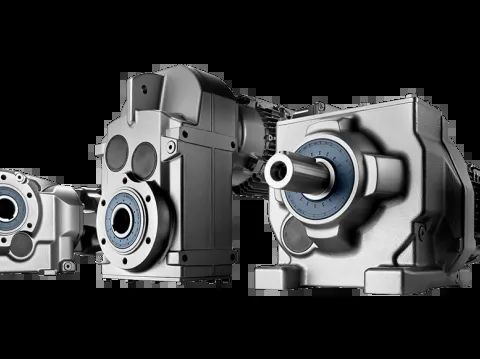
The power range of deceleration motor is 0.09 kW to 55 kW, and the torque can reach up to 19.500 Nm with coaxial, parallel shaft, bevel gear or worm gear box, and other models and specifications will be provided later. The motor meets the current standards and is common with the products of many other reducer motor suppliers. The new series of reducer motors is compatible with the general standard motors on the market and can be very easily integrated into existing or new machines and systems.
Coaxial deceleration motor can reach high speed ratio because of pinion. Economic performance and high energy efficiency (transmission efficiency of 98%), large power range, with solid shaft, foot mounting type and flange mounting type, primary, secondary or tertiary transmission. Coaxial deceleration motors can be used in a conveyor system for conveyor packed goods or for a vertical conveyor.
Parallel shaft type reducer is also suitable for use in a narrower structural space.Parallel shaft deceleration motor has high energy efficiency (98% per stage), with insertion pinion can achieve very high speed ratio, can put the hollow shaft on both sides. These reduction motors are of level 2 or 3, available for foot or flange, box flange or by torque arm, with solid shaft, hollow shaft, splined hollow shaft or locking disc hollow shaft. Usually used for mixer drives, carrier drives, shelf access equipment, and vertical conveyors.
The single stage turbo deceleration motor is very quiet and is an economical solution, especially in the low power range.Single-stage worm gear reduction motor can achieve a very high speed ratio, due to the compact design, can also be used in a narrow space. With primary or secondary transmission, including foot mounted or flange mounted type, with SIMOLOC hollow shaft locking system, with solid or hollow shaft. Such motors are usually used for small conveyor belts and other conveyor systems, or for rope hoists, etc.
Provide with the secondary transmission model. The installation mode includes solid shaft installation and hollow shaft installation. Very energy saving, usually used for the need to use the transmission device equipped with a diagonal reduction motor occasions. Because of the worm deceleration stage, it can achieve a very high speed ratio. In the lower torque range,coaxial worm motor is a very economical and practical solution of diagonal deceleration motor. They operate with extremely low noise, for example, can be used in sewage treatment systems or as transmission devices in theaters.
The deceleration motor has extremely high energy efficiency, especially under partial load, motor efficiency is equal to IE 4. This motor is easy to maintain; accurate speed without an encoder and high prolonged overload in the high speed range. This synchronous magnetoresistance solution can be used in many applications, and its main technical advantages can be compared to standard asynchronous solutions.The MR deceleration motor is particularly suitable for delivery technology and applications that require high energy efficiency. Combined with the suitable frequency converter, the product line is widely used. The system is commonly used for roller, chain, and belt conveyors in airport baggage and cargo handling facilities. It is also suitable for use in warehouse and distribution logistics systems as well as postal and packaging systems, often used in lifts, shear lifts and monorail conveyors, and roller, chain, belt and skid conveyors used in the automotive industry.
What are the main components of a gear reducer?
Method for selecting precision component manufacturing process
Related Article

Let us go over the foundations of the electroplating procedure. Electroplating involves several phases, and from pre-treatment to post-treatment there are several really significant ones.
The basic principle of surface treatment of precision parts in CNC machining

Audio panels, electronic cigarette shells, nameplateLOG, watch shells, etc. are among the CNC processing of high surface texture needs components.
CNC machining aluminum alloy parts high-quality surface texture process explained in detail

Metallic finishing, sometimes known as metallic finishing, is the process of using several techniques to change the surface of an object in order to improve appearance and performance, such as corrosion resistance, discoloration resistance, chemical resistance, abrasion resistance, and hardness, modify electrical conductivity, remove burrs, or apply a specific color to a machined part.
Metal CNC finishing surface treatment process and its working principle
