
Conceptual Principles of Mold Life
author: Hansheng Automation
2023-05-16
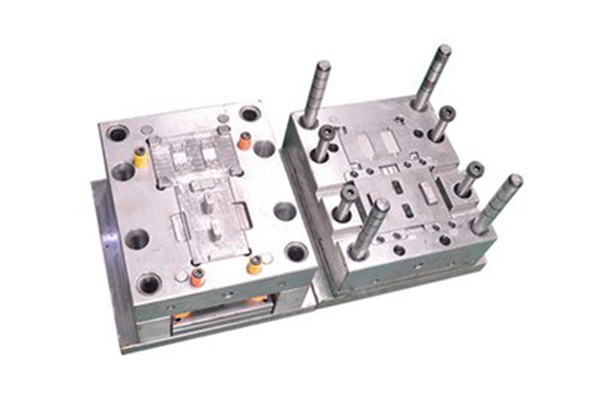
Mold service life: The number of times the mold has been produced. The failure of molds can be divided into abnormal failure and normal failure. Abnormal failure (early failure) refers to the inability of a mold to function before reaching a recognized lifespan at a certain industrial level. The early forms of failure include plastic deformation, fracture, and severe local wear. Normal failure refers to the inability of a mold to continue working due to slow plastic deformation, uniform wear or fatigue fracture after mass production and use.
1. Normal life of the mold
The number of qualified products produced before the normal failure of the mold is called the normal life of the mold, abbreviated as the mold life. The number of qualified products produced before the first repair of the mold is called the first life; The number of qualified products produced after a mold repair until the next repair is called the repair life. The lifespan of the mold is the sum of the first lifespan and each repair lifespan.
2. Forms and principles of mold failure
There are various types of molds, with significant differences in working conditions and different damaged parts. However, there are roughly three forms of failure, namely wear, fracture, and plastic deformation.
① Wear failure
When the mold is working, it comes into contact with the formed blank and generates relative motion. The phenomenon of gradual loss of material on the contact surface due to the relative motion of the surface is called wear. Wear failure can be divided into the following types:
a. Fatigue wear
The phenomenon of surface metal fatigue detachment caused by cyclic stress (mechanical stress and thermal stress) when two contact surfaces move relative to each other is called fatigue wear.
b. Cavitation and erosion wear
The phenomenon of bubble rupture on the metal surface, resulting in instant impact and high temperature, causing the formation of small pits and pits on the mold surface is called cavitation wear.
The phenomenon of liquid and solid small particles repeatedly impacting the surface of the mold at high speed, causing local material loss on the mold surface, forming pits and pits is called erosion wear.
c. Abrasion and wear
During the friction process, chemical or electrochemical reactions occur between the mold surface and the surrounding medium, coupled with the mechanical effect of friction, causing the surface material to fall off, which is called abrasive wear.
In the relative motion between the mold and the workpiece (or blank), wear often coexists in various forms and affects each other.
② Fracture failure
When a mold experiences large cracks or separates into two or several parts and loses its working ability, it becomes a fracture failure.
Fracture can be divided into plastic fracture and brittle fracture. The mold material is mostly medium to high strength steel, and the form of fracture is mostly brittle fracture. Brittle fracture can be further divided into one-time fracture and fatigue fracture.
③ Plastic deformation failure
The mold bears significant stress during operation and is uneven. When the stress in a certain part of the mold exceeds the yield limit of the mold material at the temperature at that time, plastic deformation occurs through lattice slip, twinning, grain boundary slip, and other methods, changing the geometric shape or size, and cannot be repaired for further work, it is called plastic deformation failure. The failure forms of plastic deformation include upsetting, bending, cavity expansion, collapse, etc.
The plastic deformation of a mold is the yielding process of the metal material in the mold. Whether plastic deformation occurs is mainly determined by the mechanical load and the room temperature strength of the mold. Whether a mold operates at high temperatures and undergoes plastic deformation mainly depends on the working temperature of the mold and the high-temperature strength of the mold material.
How to debug the newly purchased Dongguan turning and milling composite processing machine tool
What are the process characteristics of spiral bevel gears in precision parts machining
Related Article

Let us go over the foundations of the electroplating procedure. Electroplating involves several phases, and from pre-treatment to post-treatment there are several really significant ones.
The basic principle of surface treatment of precision parts in CNC machining

Audio panels, electronic cigarette shells, nameplateLOG, watch shells, etc. are among the CNC processing of high surface texture needs components.
CNC machining aluminum alloy parts high-quality surface texture process explained in detail

Metallic finishing, sometimes known as metallic finishing, is the process of using several techniques to change the surface of an object in order to improve appearance and performance, such as corrosion resistance, discoloration resistance, chemical resistance, abrasion resistance, and hardness, modify electrical conductivity, remove burrs, or apply a specific color to a machined part.
Metal CNC finishing surface treatment process and its working principle
