
Analysis of the causes of tool collision in CNC machining
author: Hansheng Automation-kk
2023-05-09
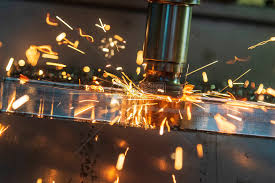
As a high-precision machine tool, collision prevention is very necessary for CNC machine tools. Operators are required to cultivate a habit of being careful and cautious, operate the machine tool in the correct way, and reduce the occurrence of tool collision. With the development of technology, advanced technologies such as tool damage detection, machine tool collision prevention detection, and machine tool adaptive processing have emerged, which can better protect CNC machine tools.
1. Programming error
The process arrangement is incorrect, the process acceptance relationship is not carefully considered, and the parameter setting is incorrect.
(1) The coordinates are set to zero at the bottom, but in practice, they are set to zero at the top.
(2) After the program is written, the path of the program should be analyzed and reviewed.
(3) The safety height is too low, resulting in the tool not being able to fully lift out of the workpiece.
2. Program sheet filling fault
(1) Error in indicating the clamping interval of the vise or the protruding interval of the workpiece.
(2) When changing the program, the principle of replacing the old with the new should be adopted: the old program should be destroyed.
(3) The program sheet should be as specific as possible.
(4) When the extension length of the tool is unclear or incorrect, it may cause a collision with the tool.
3. Knife collision caused by unclear or incorrect filling of tool extension length
(1) The use of scientific methods for tool measurement can help you use more accurate instruments as much as possible.
(2) The length of the tool installation should be 2-5mm longer than the actual depth.
4. Program transmission error, program number call error, or program modification, but still using old programs for processing, on-site processors must check the specific data of the program before processing
5. Wrong choice of knife
6. The blank exceeds the expected size and does not match the programmed blank
7. The workpiece material itself has defects or high hardness
8. Clamping elements, pad interference, not considered in the program
9. Machine tool malfunction, sudden power outage, lightning causing tool collision, etc
Gear reducer plays an important role in industrial production
What are the basic components of a CNC machining center
Related Article

Let us go over the foundations of the electroplating procedure. Electroplating involves several phases, and from pre-treatment to post-treatment there are several really significant ones.
The basic principle of surface treatment of precision parts in CNC machining

Audio panels, electronic cigarette shells, nameplateLOG, watch shells, etc. are among the CNC processing of high surface texture needs components.
CNC machining aluminum alloy parts high-quality surface texture process explained in detail

Metallic finishing, sometimes known as metallic finishing, is the process of using several techniques to change the surface of an object in order to improve appearance and performance, such as corrosion resistance, discoloration resistance, chemical resistance, abrasion resistance, and hardness, modify electrical conductivity, remove burrs, or apply a specific color to a machined part.
Metal CNC finishing surface treatment process and its working principle
