
Advantages and Characteristics of Vibration Cutting in Precision Parts Processing
author: Hansheng Automation
2023-05-16
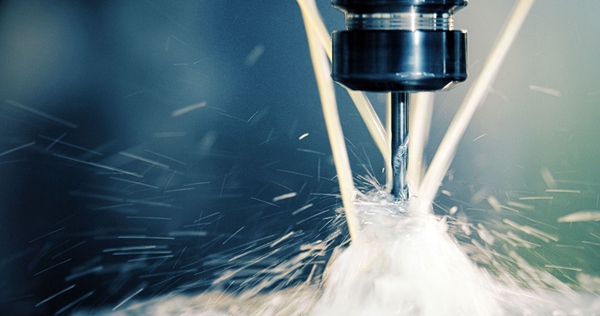
During vibration cutting, due to low cutting force, low cutting temperature, and sufficient cooling, chips are prone to fracture and extrusion, which can significantly improve the service life of precision mechanical accessory processing tools. If the vibration parameters are selected appropriately, the tool life can generally be extended by several to tens of times, and the application results of difficult to machine materials and processes are better. The ultrasonic vibration cutting test of stainless steel using a hard alloy tool has shown that the service life of the tool is 20 times that of ordinary cutting methods. Extending tool life not only saves tool materials, reduces help time, reduces the processing cost of precision mechanical parts, improves production compliance, but also helps to ensure processing quality.
When mechanical parts are processed and subjected to ordinary cutting, the chips always press against the surface of the blade to form a high-temperature and high-pressure area. It is difficult for the cutting fluid to enter the cutting area, and it can only be indirectly cooled outside the blade to accept vibration cutting. When the blade is separated from precision parts, the cutting fluid enters the cutting area from the surrounding area, and the blade tip is fully cooled and lubricated, especially in ultrasonic vibration cutting.
Due to the cavitation effect caused by ultrasonic vibration, on the one hand, the cutting fluid can uniformly emulsify and form uniform emulsion particles, and on the other hand, the cutting fluid is more prone to secreting material cracks, which can further improve the application results of the cutting fluid, improve chip removal conditions, and improve the processing performance of precision mechanical parts.
When machining vibration cutting of mechanical parts, the cutting tool vibrates according to sinusoidal rules, forming small tool marks on the machining surface, similar to grid patterns formed by secondary machining. A large number of patterns are evenly distributed on the machining surface of precision mechanical parts, making it easy for the parts to form a thick oil film and improving the wear resistance of sliding debate. The residual stress of vibration cutting is very small, the processing deterioration layer is shallow, the processing deformation near the blade is small, and the changes in the metallographic structure of the working surface are relatively small, almost matching with the metallographic structure inside the material, improving the corrosion resistance of the machined surface of precision mechanical parts. Cutting tests have shown that the wear resistance and corrosion resistance of the surface of vibration cutting parts are close to that of the ground surface, which is sufficient to ensure the machining accuracy of precision mechanical parts.
Improvement Measures for Surface Roughness in Precision Parts Processing
Five Major Causes of Collisions during Dongguan Turning and Milling Compound Processing
Related Article

Let us go over the foundations of the electroplating procedure. Electroplating involves several phases, and from pre-treatment to post-treatment there are several really significant ones.
The basic principle of surface treatment of precision parts in CNC machining

Audio panels, electronic cigarette shells, nameplateLOG, watch shells, etc. are among the CNC processing of high surface texture needs components.
CNC machining aluminum alloy parts high-quality surface texture process explained in detail

Metallic finishing, sometimes known as metallic finishing, is the process of using several techniques to change the surface of an object in order to improve appearance and performance, such as corrosion resistance, discoloration resistance, chemical resistance, abrasion resistance, and hardness, modify electrical conductivity, remove burrs, or apply a specific color to a machined part.
Metal CNC finishing surface treatment process and its working principle
