
How to handle the common methods of deburring precision parts in a five axis machining center factory
author: Hansheng Automation
2023-05-23
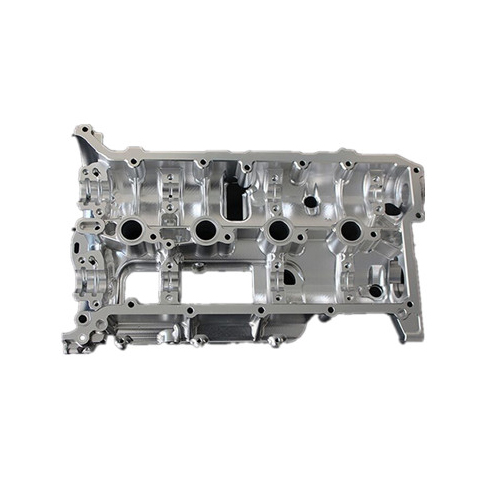
The Five Axis Machining Center of the Five Axis Machining Center Factory has the advantages of CNC lathe processing technology and mechanical processing manufacturing. It is a high-level automated CNC equipment machine tool with high rigidity, with high structural rigidity, small deformation, and high accuracy. However, the small burrs generated during the machining process of the workpiece on the five axis machining center are difficult to avoid. Therefore, how to efficiently remove the machining burrs without affecting the performance of the part and meet customer requirements.
The five axis machining center factory tells you the following three main points:
1. A common method for deburring CNC machining parts is to manually use steel files, sandpaper, and polishing; Nowadays, the more popular method is to use a trimming knife to remove burrs, which is convenient to use, does not require technical processing, saves costs, is fast and efficient, and is environmentally friendly.
2. Chemical deburring: Automatically and selectively complete the deburring operation of precision machined metal parts through the principle of electrochemical reaction. It can be widely used for deburring metal materials of pumps, valves, connecting rods, piston pin couplings and other parts in different industries such as pneumatic, hydraulic, mechanical engineering, oil pumps, automobiles, engines, etc. Suitable for internal burrs, heat treatment, and precision machined parts that are difficult to remove.
3. Electrolytic deburring: It is the use of electrolysis to remove metal burrs, abbreviated as ECD. The tool cathode (usually a brass component) has a fixed area near the workpiece burr, both of which are located in a gap (usually between 0.3 and 1 mm).
The conductive part of the tool cathode is aligned with the edge of the burr, and the other surfaces are covered with an insulation layer, mainly used to remove the burr part through electrolysis. When the cathode of the machining tool is connected to the negative pole of the DC power supply, the workpiece is connected to the positive pole of the DC power supply.
A low-pressure electrolyte (usually an aqueous solution of sodium nitrate or sodium chlorate) flowing between the workpiece and the cathode at a pressure of 0.1 to 0.3 MPa. When connected to a DC power supply, burrs will be generated, and anodic dissolution will be removed, which will be carried away by the electrolyte. Electrolytes with certain corrosiveness should be cleaned, deburred, and treated with rust prevention.
Electrolytic deburring is commonly used for deburring and chamfering gears, splines, connecting rods, crankshaft oil passage plates, as well as cross holes in hidden parts or burrs in complex shaped parts. It has high production efficiency and the deburring time is usually only a few seconds to tens of seconds. The disadvantage is that nearby burrs are also electrolyzed, causing the surface to lose luster and even affecting dimensional accuracy.
What processes are included in machining
How to Check the Causes of Errors Caused by Cutting Tools in Precision Part Processing
Related Article

Let us go over the foundations of the electroplating procedure. Electroplating involves several phases, and from pre-treatment to post-treatment there are several really significant ones.
The basic principle of surface treatment of precision parts in CNC machining

Audio panels, electronic cigarette shells, nameplateLOG, watch shells, etc. are among the CNC processing of high surface texture needs components.
CNC machining aluminum alloy parts high-quality surface texture process explained in detail

Metallic finishing, sometimes known as metallic finishing, is the process of using several techniques to change the surface of an object in order to improve appearance and performance, such as corrosion resistance, discoloration resistance, chemical resistance, abrasion resistance, and hardness, modify electrical conductivity, remove burrs, or apply a specific color to a machined part.
Metal CNC finishing surface treatment process and its working principle
