
How to Choose a Tool Handle for Turning and Milling Compound in Dongguan CNC Precision Machining Factory
author: Hansheng Automation
2023-05-15
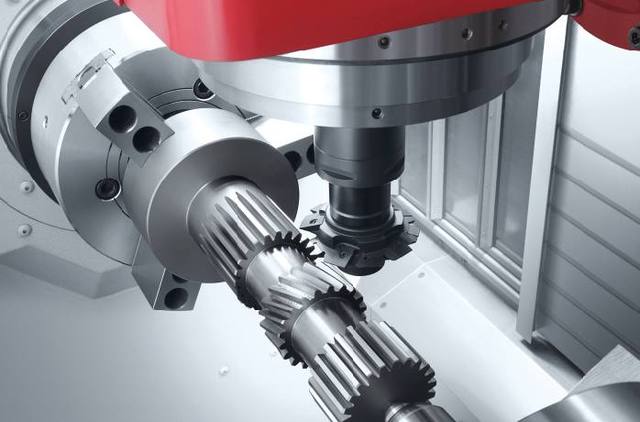
Most Dongguan CNC precision machining factories complete the turning and milling composite process on the turning center. It can shorten the product manufacturing process chain and improve production efficiency. Turning and milling composite processing can achieve complete all or most of the processing steps in one operation, greatly shortening the product manufacturing process chain. On the one hand, this reduces the production auxiliary time caused by card changes, while also reducing the manufacturing cycle and waiting time of fixtures, which can significantly improve production efficiency.
How should Dongguan CNC Precision Processing Factory choose the tool handle for turning and milling composite? Let's take a look together!
1. Classification of turning and milling composite tool shanks
According to the processing method, it can be divided into two types: milling tool shanks and turning tool shanks
Milling tool shanks: These types are basically equivalent to tool shanks used in ordinary machining centers, such as common shanks, powerful tool shanks, hydraulic tool shanks, surface milling tool shanks, and boring cutters. There are a wide variety of types, and I believe everyone is familiar with them. We will not go into detail here, but mainly introduce the following turning tool shanks.
Turning tool holders have a characteristic that only the workpiece rotates, while the tool holder does not rotate.
According to the specifications of the lathe spindle taper shank, there are three main types: BBT (BIG-PLUS), CAPTO, and HSK-T.
1) BBT is a two sided positioning connection system developed on the basis of the original BT tool handle with a 7:24 taper;
2) CAPTO is a two sided positioning connection system using a 1:20 taper triangular pyramid structure; (The above two are very mature and widely used types of connection between the tool handle and the spindle.)
3) HSK-T is a turn-milling composite tool shank type that has only been standardized in recent years, based on the HSK-A (1:10 taper) series and improved to meet the requirements of turning machining. It is developed on the basis of the original HSK-A to strictly control the width tolerance of the transmission keyway, in order to improve the problem of tool tip height changes during turning. When milling, HSK-A series tool handles can be used universally.
2. Modular tool handle
There are two main types of modular lathe tool handles and heads, namely inclined type (45 °) and straight type (90 °).
1. Oblique type: The cutting force mainly follows the axis direction of the tool handle, and the B-axis bears less torsional torque, which is more favorable for the lathe spindle. Due to a 45 ° tilt, the suspension length of the tool bar can be reduced, and it is easy to avoid interference between the spindle and the lathe chuck. It is suitable for short or large diameter workpiece end faces and cylindrical turning.
2. Direct cutting type: It is a relatively universal type with a variety of left and right disc holders to choose from, as well as a type that can be used with ordinary turning tool bars and boring bars, suitable for most turning processing situations. For the processing of longer workpieces, it is also beneficial to avoid interference with the lathe tailstock.
2. Modular tool holder
The specific types of combined tool holders are mainly divided into two types: inclined (45 °) and orthogonal (90 °).
1. Oblique type: The cutting force mainly follows the axis of the tool holder, and the torsional torque of the B bearing is small, which is more favorable for the lathe spindle. Due to a 45 ° inclination angle, the overhanging length of the tool holder can be reduced, which can easily avoid interference between the spindle and the lathe chuck. It is suitable for turning short or large diameter workpiece end faces and outer circles.
2. Orthogonal type: It is a relatively common type with a variety of left and right disc tool holders to choose from, and can be used in conjunction with ordinary turning tool bars and boring bars, suitable for most turning situations. For the processing of longer workpieces, avoiding interference with the lathe tailstock is also beneficial.
Through the above introduction, I believe everyone has a certain understanding of the turning and milling tool handles at Dongguan CNC Precision Processing Factory. When choosing a tool handle, you will know what kind of tool handle is used for what kind of processing.
Process benchmark for precision parts processing
What is the general reason for error reporting in the machining center of Dongguan CNC Precision Machining Factory
Related Article

Let us go over the foundations of the electroplating procedure. Electroplating involves several phases, and from pre-treatment to post-treatment there are several really significant ones.
The basic principle of surface treatment of precision parts in CNC machining

Audio panels, electronic cigarette shells, nameplateLOG, watch shells, etc. are among the CNC processing of high surface texture needs components.
CNC machining aluminum alloy parts high-quality surface texture process explained in detail

Metallic finishing, sometimes known as metallic finishing, is the process of using several techniques to change the surface of an object in order to improve appearance and performance, such as corrosion resistance, discoloration resistance, chemical resistance, abrasion resistance, and hardness, modify electrical conductivity, remove burrs, or apply a specific color to a machined part.
Metal CNC finishing surface treatment process and its working principle
