
What steps are the precision requirements for precision hardware parts processing reflected in
author: Hansheng Automation
2023-02-13
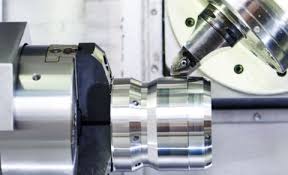
The processing of small hardware parts is usually difficult and small in size, such as the pointers in clock accessories, the gears driving the turntable, etc., which are all relatively fine parts. The higher the precision of processing small hardware parts, the better the effect of their use, just like big brand watches nowadays, because only with exquisite appearance, precise size, and high precision can the sound of rotation be better.
However, the precision of machining small hardware parts must keep up, and the step requirements are also different from general parts machining, which requires a fixture drawing step. A fixture is a large category of tools used in carpentry, ironwork, fitters, machinery, electrical control, and other handicrafts, mainly as a tool to assist in controlling position or movement (or both). Fixtures can be divided into three categories: process assembly fixtures, project testing fixtures, and circuit board testing fixtures.
1. Measure and draw the required objects (the software department should provide information on the motherboard and small board, which should be included in the actual drawing. It is recommended to print the corresponding objects and compare them with the actual object. When printing, adjust the printing ratio option to 1:1 to ensure the position of the holes).
2. The placement of the motherboard is usually placed in the center of the lower needle board. This is for reference. In general, the situation is not ideal (there is a driven relationship between the cooling fan and the rotary horn fan placed on the upper frame bottom plate). After determining the position of the motherboard, the placement position of the small board can be determined.
3. Draw the bearing plate. Based on the relationship between the motherboard and the small board, the carrier board can be drawn. Reasonably allocate and retain the position of the adapter pins. This position can usually be placed near the motherboard, as well as a hole with a diameter of approximately 60 and a diameter of 1.75 (which can reduce the total weight of the fixture and improve its aesthetics). The drawing carrier board is the edge position on the left and right sides of the PCB board. This edge position is the edge position of various interfaces and does not exclude actual measurements in actual testing.
4. For hard drives and odd side inserts, if it is a wire insertion, the position of the connector should be considered. The front and rear up and down positions of the side module are determined based on the motherboard connector. The side plug-in is a 5T fiberglass board with four notches. Place the bracket in the corresponding position on the bearing plate. The side insert is locked onto the bearing plate with four equal height sleeves, so that the side insert maintains its left and right movement position, leaving a 13mm movement and 0.1mm gap for the equal height sleeve, which is the reference value. The gap between the side insert and the bearing plate is greater than the gap between the equal height sleeve.
5. The lower mold rotating plate (described in the contract award for the lower mold and upper mold) is located below and above the lower needle plate. The flow of the turntable should be reasonably allocated based on the general location of the contract order, and the operation should be appropriate. (Attention should be paid to whether there is interference with the bottom plate of the lower frame during the discharge of the lower mold rotary plate, which can be milled through).
6. The needle tip positions of the upper needle plate and upper needle plate are determined by the fixed pressure plate and elastic compression rod to be installed. The bearing plate can be used as a reference drawing. (Fix the test point pin on the front of the motherboard in the upper pin board function room) Determine the position of the CPU and GPU, and install a cooling fan.
What are the differences between CNC machining and traditional machining
How influential is the production of precision parts in the mechanical industry
Related Article

Let us go over the foundations of the electroplating procedure. Electroplating involves several phases, and from pre-treatment to post-treatment there are several really significant ones.
The basic principle of surface treatment of precision parts in CNC machining

Audio panels, electronic cigarette shells, nameplateLOG, watch shells, etc. are among the CNC processing of high surface texture needs components.
CNC machining aluminum alloy parts high-quality surface texture process explained in detail

Metallic finishing, sometimes known as metallic finishing, is the process of using several techniques to change the surface of an object in order to improve appearance and performance, such as corrosion resistance, discoloration resistance, chemical resistance, abrasion resistance, and hardness, modify electrical conductivity, remove burrs, or apply a specific color to a machined part.
Metal CNC finishing surface treatment process and its working principle
