
What is the difference between CNC milling and turning
author: Hansheng Automation
2022-11-04
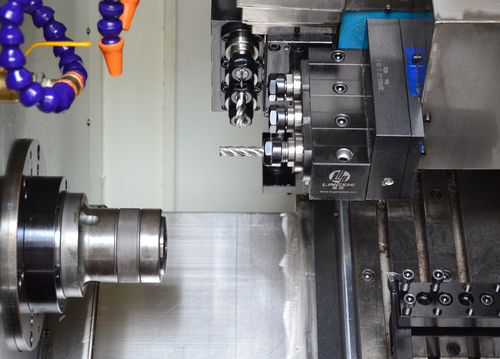
When seeking to manufacture metal parts with complex shapes, our customers often request CNC machining services. Although using this broad term is common and there is no need to mention exact manufacturing methods, CNC machining requires two different methods.
They are milling and turning. Both are CNC machining methods, but they are not the same. CNC refers to computer numerical control, which refers to the use of computer systems to guide cutting machinery in CNC milling and CNC turning. Good CAD-CAM software can easily convert 3D models into readable code for CNC machines. This determines the use and movement of tools, cutting paths, etc.
Although our engineers can make decisions on the appropriate operation of a certain part, what are the differences between CNC milling and turning?
The short answer is this - CNC milling uses rotating tools, while CNC turning uses rotating parts for cutting. Therefore, the two use different techniques to create parts. Although milling machines manufacture complex parts from metal blocks by cutting off excess material, turning is typically used for cylindrical parts such as shafts.
What is CNC milling?
Let's start with milling. Firstly, it is a more traditional three axis CNC milling machine. The tool can move in three directions: X, Y, and Z.
Although this imposes some limitations on the geometric shape of the parts, it is sufficient to complete most of the work that requires milling. A wide range of milling tools can provide different cutting methods, such as end milling, face milling, hollow milling, etc. Multi axis milling allows for 4 or more axes, including tool and workbench rotation. This provides additional flexibility. A 5-axis milling machine is the most common and can manufacture almost anything that can be milled.
The size of the initial block is usually larger than the general size of the final part. Therefore, each side can be precision milled. The tolerance is very strict, so it is easy to achieve good surface finish.
What is CNC turning?
As mentioned earlier, CNC lathes are mainly used for manufacturing cylindrical parts. These can be shafts, customized hollow tubes, cones, or anything else that requires turning services.
Although 5-axis machining can also create cylindrical parts, turning efficiency is higher and these machines have lower hourly wages. The chuck holds the raw material (usually a round rod) in place. The chuck rotates at high speed with the spindle. The maximum speed or RPM depends on the machine.
The single point cutting tool is installed on the turret. The turret can enter and exit the workpiece during rotation, allowing the cutting tool to come into contact with the metal for cutting.
This highly precise machining method can achieve strict tolerances. This is why limitations and fits are typically used in conjunction with hole based systems, as achieving the required accuracy on the axis is easier.
How to solve the problem of surface accuracy and size control in precision parts machining
What are the anti-interference and troubleshooting methods for Dongguan CNC machining center machines
Related Article

Let us go over the foundations of the electroplating procedure. Electroplating involves several phases, and from pre-treatment to post-treatment there are several really significant ones.
The basic principle of surface treatment of precision parts in CNC machining

Audio panels, electronic cigarette shells, nameplateLOG, watch shells, etc. are among the CNC processing of high surface texture needs components.
CNC machining aluminum alloy parts high-quality surface texture process explained in detail

Metallic finishing, sometimes known as metallic finishing, is the process of using several techniques to change the surface of an object in order to improve appearance and performance, such as corrosion resistance, discoloration resistance, chemical resistance, abrasion resistance, and hardness, modify electrical conductivity, remove burrs, or apply a specific color to a machined part.
Metal CNC finishing surface treatment process and its working principle
