What is CNC drilling?
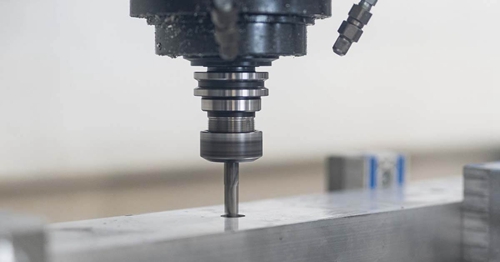
What is CNC drilling?
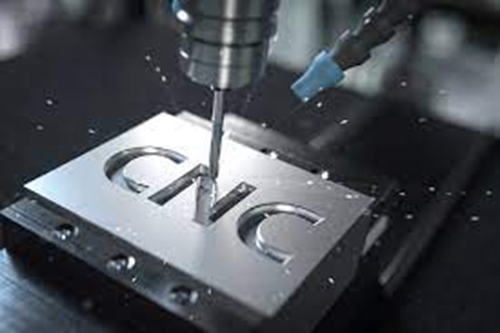
CNC drilling is the process of creating holes in a workpiece using a computer-controlled drill. The process is automated and precise, allowing for consistent and accurate hole placement. The CNC drilling process begins with designing the desired hole pattern in a CAD/CAM software program. The program then generates the necessary toolpaths and sends them to the CNC machine. The machine uses a drill to remove material from the workpiece, creating the desired hole.
Thanks to CNC drilling we can create very tiny holes even in stainless steel. Their pores are smaller than the material thickness without compromising quality or performance. After drilling and milling, we satin finish and wash the super pierced metal to ensure perfectly clean holes and slots. As usual, our perforated metal sheets are made by CNC stamping, gantry stamping, turret stamping, etching. But super perforation and high precision screen need CNC drilling.
Hansheng Automation is mainly engaged in the drilling and processing of metal plates. All processing equipment are independently developed and have a complete and scientific quality management system. Our commonly used CNC drilling machines include gang drilling machines and multi-spindle drilling machines.
The main method of CNC drilling machine (NC drilling) hole processing
(1) Dot holes. Before the point hole is used for drilling, it is completed by the center drill. Since the chisel edge of the twist drill has a certain length, it is not easy to center when guiding the drill, and the rotation axis of the drill bit is unstable during processing. Therefore, a center drill is used to pre-drill a pit on the plane to facilitate the centering of the drill bit when drilling. Due to the small diameter of the center drill, the spindle speed must not be lower than 1000r/min during processing.
(2) Drilling. Drilling is a method of machining holes in the solid material of the workpiece with a drill. The most commonly used tool for drilling is the twist drill. General twist drills are made of high speed steel. The drilling accuracy can generally reach ITIO-IT11 level, the surface roughness is Ra50^-12. 55m, the drilling diameter range is 0. 1^-100 mm, and the drilling depth varies widely. It can also be used as the final processing of unimportant holes.
(3) Reaming. Reaming is to use a reaming drill to enlarge the existing hole on the workpiece. The reaming drill has 3-4 main cutting edges, no chisel edge, and its rigidity and guidance are good. 3-3. 25m。 Reaming processing accuracy can generally reach IT9-ITIO level, surface roughness of Ra6. 3 - 3. 25m. Reaming is often used to expand cast, forged or drilled holes, and can be used as the final processing of holes with low precision requirements or the preprocessing before reaming and grinding. It is often used for hole machining with a diameter in the range of 10^-100 mm. Twist drills are generally used for the reaming of workpieces, and reaming is used when the precision requirements are high or the production batch is large, and the reaming allowance is 0. 4-0. 5mm.
(4) Hollow hole. Hole refers to the processing method of scraping the end face of the hole or cutting out the countersunk hole with a drill or knife. It is usually used to process countersunk holes, taper holes, and small convex table surfaces of countersunk screws. The cutting speed is not easy to be too high when cutting holes, so as to avoid quality problems such as radial vibration lines or polygonal shapes.
(5) Reaming. Reaming is a method of using a reamer to cut a trace metal layer from the hole wall of a workpiece to improve its dimensional accuracy and surface roughness. The accuracy level of reaming can reach IT7-r IT8 level, and the surface roughness is Ral. 6-0. 85m, which is suitable for semi-finishing and finishing machining of holes. Reaming is a fixed-size tool with 6^-12 cutting edges. Its rigidity and guidance are better than reaming drills, and it is suitable for processing small and medium diameter holes. Before reaming, the workpiece should be processed by drilling and reaming.
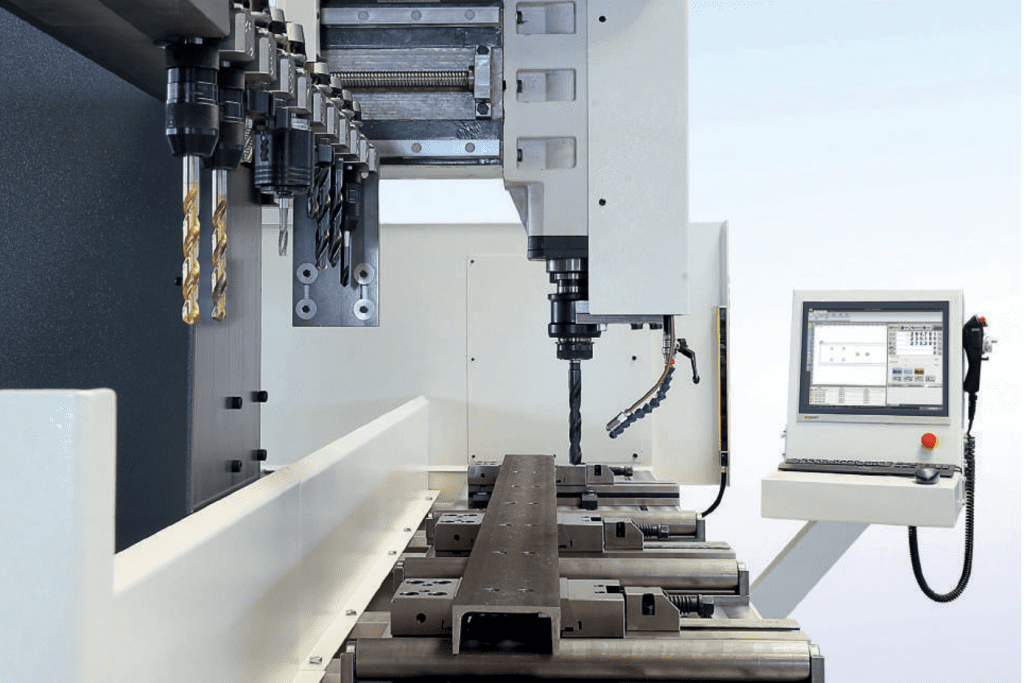
Drilling method with higher accuracy
1. Sharpening the drill bit is the beginning of everything
The corresponding drill bit should be selected for sharpening before drilling. In addition to ensuring the correct top angle, relief angle, and chisel edge bevel angle, the length of the two main cutting edges is equal and symmetrical to the center line of the drill bit, and the two main flank surfaces are smooth, the sharpened drill bit is designed to facilitate centering and reduce the roughness of the hole wall. , The chisel edge and the main cutting edge should also be properly ground (preferably rough ground on a grinder first, and then finely ground on a whetstone).
2. Accurate marking is the foundation
Use the height gauge to accurately mark the line, first of all, the standard should be accurate. When marking the line, make the stylus angle and the workpiece line plane form an angle of 40-60 degrees (along the line direction), so that the lines drawn are clear and even. Pay attention to the selection of the datum plane for scribing, the datum plane must be processed accurately, and the flatness of itself and the perpendicularity to the adjacent surface must be guaranteed. After the cross line of the hole position is drawn, in order to ensure easy alignment when drilling, the center punch is used to punch out the center point on the cross line (the punch point should be small and the orientation should be accurate).
3. Correct clamping is the key
Usually, for holes with a diameter of less than 6mm, if the precision is not high, the workpiece can be clamped with pliers for drilling; for holes with a diameter of 6-10mm, if the workpiece is regular and flat, it can be clamped with flat-nose pliers, but the workpiece should be The surface is perpendicular to the spindle of the drill press. Please join the group 726236503 to learn more about CNC knowledge. When drilling a hole with a large diameter, the flat-nose pliers must be fixed with a bolt clamp.
4. Accurate finding is the key
After the workpiece is clamped, don't rush to drop the drill, and the alignment should be carried out first. There are static alignment and dynamic alignment. The so-called static alignment refers to the alignment before the drilling machine is started, so that the center line of the drilling machine spindle and the intersection point of the workpiece cross line are aligned. This method is safe and convenient for beginners, and is relatively easy to grasp, but because it does not consider the swing of the drilling machine spindle Uncertain factors such as drilling accuracy is low. Dynamic alignment is performed after the drilling machine is started. During the alignment, some uncertain factors are taken into account, and the accuracy is relatively high.
5. Careful inspection is indispensable
The detection can accurately and timely discover the precision of the hole, so that necessary measures can be taken to compensate. For holes with high drilling precision, we generally use the processing technology of drilling, reaming and reaming. After drilling the small hole in the first step, use a caliper to detect the error offset from the center of the bottom hole to the reference plane, and convert the position between the bottom hole and the ideal center through actual measurement. If the error is not greater than 0.10mm, you can use it when expanding the hole. Appropriately increase the apex angle of the drill bit, weaken the automatic centering effect, and make compensation by properly pushing the workpiece in the positive direction and gradually increasing the diameter of the drill tip. If the error is greater than 0.10mm, the two side walls of the bottom hole can be trimmed with assorted round files, and the trimmed part should be connected with the arc of the bottom hole with a smooth transition.
What is Laser Cutting?
What is Cylindrical grinding?