Frequently Asked Questions About Metal Stamping
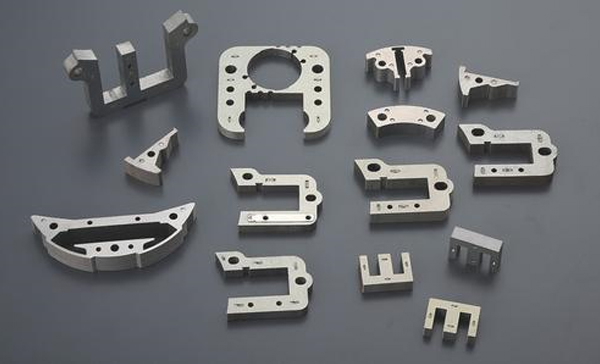
Metal stamping is not only shaping metal, it is also shaping today's industry. Designs are updated every day and needs change.
Currently, metal stamping plays a vital role in construction, automobiles, and household appliances.
Currently, metal stamping plays a vital role in construction, automobiles, and household appliances.
1. What is metal stamping?
Metal stamping or metal pressing is actually a process that consists of a series of processes including bending, punching and blanking, stamping, flanging, etc. using tools and dies. This process gives the sheet metal the desired shape based on your design. It is one of the most commonly used metal forming processes.
Metal stamping or metal pressing is actually a process that consists of a series of processes including bending, punching and blanking, stamping, flanging, etc. using tools and dies. This process gives the sheet metal the desired shape based on your design. It is one of the most commonly used metal forming processes.
2. What is precision metal stamping?
Precision metal stamping, as the name suggests, is a metal stamping process with more accurate stamping and higher precision. The process requires die sets and tooling in the stamping press to ensure high speed, accuracy and precision.
Most precision metal stamping parts are automated. As a result, the cost of the process is reduced as no manual labor is required. In addition, precision metal stamping produces products with fewer defects due to this production method.
If you are producing a product whose design may require high precision, metal stamping is a great option.
3. What materials are used in metal stamping?
Metal stamping can be used on many metals. Some of the known metals used in metal stamping are:
Metal stamping can be used on many metals. Some of the known metals used in metal stamping are:
- Carbon steel
- Stainless steel
- aluminum alloy
- copper alloy
- brass alloy
- Nickel alloys, such as Hastelloy, Inconel, Monel, etc.
4. What is the surface treatment of metal stamping parts?
Metal stamping parts are often electroplated in various ways to maintain their appearance. The following are some surfaces applied to metal stampings:
Metal stamping parts are often electroplated in various ways to maintain their appearance. The following are some surfaces applied to metal stampings:
Aluminum chromate
Aluminochromate treatment is mainly performed on aluminum metal stampings. It is done by converting aluminum into chromate. it can
- Reduce surface corrosion
- used to conduct electricity
- Gives a good arrangement
If necessary, it can be used as a basis for painting.
Zinc/Zinc Nickel Plating
This is another popular surface applied to metal stampings. The surface is coated with zinc or zinc-nickel layer. For corrosion, you will also need a chromate conversion coating. Zinc or zinc-nickel electroplated tanks -
Give your finishes a nice look with a silver-blue look
Prevent surface rust
Increase metal durability
Can be used on copper, brass, steel, iron and many other materials
5. What are the advantages and disadvantages of stamping/stamping metal?
Metal stamping is usually done by placing a sheet of metal into a machine called a punch or power press.
The following are the advantages of metal stamping:
Since much of the stamping process is automated, you can produce your designs without much labor. Therefore, the process is actually cost-effective.
Due to the automated process, the error rate is low and almost no faults can be found in the processed parts.
For mass production, it is time effective.
The operation process is simple and easy. As a result, you don't need to put in much effort to get the job done successfully from the laborer.
Here are some of the disadvantages of metal stamping:
- Since the main process of metal stamping relies on tools and dies, it can be costly to create new molds based on your designs.
- The process of metal stamping is automated, and you should do it when you just need to produce in bulk. For smaller volumes, the cost increases.
- If the mold is not good enough, there is a high chance that the material will become thinner, which can lead to frequent production errors. You should choose a good company from the beginning to avoid this situation
6. What products are generally manufactured by metal stamping?
Whether it's agriculture, construction, home appliances, electronics, or surgical supplies, metal stamping is popular. Some of the items you will find on the market that are manufactured through metal stamping are as follows:
Whether it's agriculture, construction, home appliances, electronics, or surgical supplies, metal stamping is popular. Some of the items you will find on the market that are manufactured through metal stamping are as follows:
- Metal cups and cans
- Metal casing and metal cover
- Terminal blocks, socket bushings, oil valves and other automotive parts.
- Aviation parts such as fuselage, seat parts, bolts, nuts, headsets, etc.
- Brackets, clips, fuse boxes, radiators and other structural parts.
- Lighting components, such as lamp stands, metal parts, etc.
7. How do I know if metal stamping or CNC machining is best for my part?
Metal stamping works on cold metal because the metal particles don't need to be hammered again and again. If you are considering choosing between CNC machining and metal stamping, here are a few things you can do to find out which production method is best for you:
Metal stamping works on cold metal because the metal particles don't need to be hammered again and again. If you are considering choosing between CNC machining and metal stamping, here are a few things you can do to find out which production method is best for you:
Design
If your product design is more complex, then CNC machining is best suited for production. Metal stamping is a great process for metal forming, but it may not get complex and deep parts right.
Production quantity
Production quantity is important. For low-volume production, CNC machining is a realistic option because it reduces costs. Since metal stamping is largely automated, it facilitates high-volume production.
Standard tolerance
With CNC machining, the standard tolerances are tight and you get good design-oriented production. Metal stamping has different tolerances than CNC machining.
Accurate
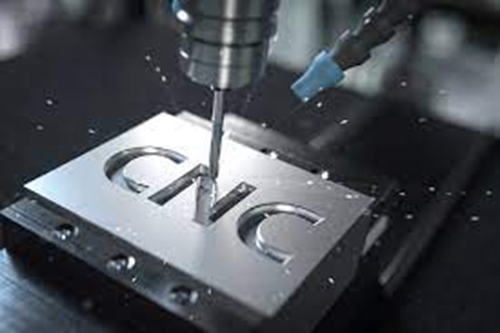
Even with precision metal stamping, you may not get as good a result as you can with CNC machining. CNC machining is slow but highly precise.
So if you are looking for high precision and low volume production then you should go for CNC machining whereas for high production and standard tolerance levels metal stamping is enough you can go for metal stamping.
8. How to identify perfect metal stamping process?
Here is the sequence of work that will determine the perfect metal stamping process:
Here is the sequence of work that will determine the perfect metal stamping process:
designing process
The design drawing process should carefully show all parts of the product in a flat, two-dimensional manner. Even the most complete parts should be drawn so that they can be seen in two dimensions. In addition to the axes and bending points, the curve coordinates should also be clearly shown in the drawings.
correct process
Each surface of the metal stamping process may have different processing requirements. Each one should be carefully inspected and the chances of getting the best metal quality measured. For example, punch diameter should maintain K-factor for perfect results. If you follow the variations and treat the surface accordingly then it will give you a perfect metal stamping process.
Cutting method
The cutting method of metal stamping should have high precision and efficiency. Mold punching and punching give the product the desired shape. For best results in CNC machining, you should insert your design and issue appropriate commands to the software based on your design. Like laser or jet cutting can be used to cut the board to give it better finishing by metal stamping.
Stamping sequence formula
This is the tricky part of the design principles, you need to design the stamping sequence according to the most effective and efficient way. The sequence must be performed in a way that can be introduced into automated systems.
Assembly method
Depending on your design, assembled parts may require fastening or welding. You have to figure out which one is needed when. After that, you can continue.
This is the entire process of identifying the perfect metal stamping process.
9. What is the metal stamping process?
The metal stamping process is actually a series of processes that turn metal into a product or part of a product. Many processes are related to the metal stamping process. But the main categories can be divided into two parts –
The metal stamping process is actually a series of processes that turn metal into a product or part of a product. Many processes are related to the metal stamping process. But the main categories can be divided into two parts –
- separation
- forming
Separation
Separation is the process of separating two parts of metal through stamping. The process requires that the separated part does not lose quality as it will be used for further processing.
Forming
Forming is the use of tools, techniques and machines to give separate parts the desired shape according to your needs, this should be stated up front in your requirements and design.
These two categories are the sum of many smaller processes such as –
- Blanking
- embossed
- coinage
- painting
- bend
Stamping actually separates the two parts of the metal. The separation of stamped parts is called blanking. Embossing involves stretching metal into a shallow depression and then pressing it into it. Imprinting extrudes the pattern into the metal, while stretching stretches the blank in a controlled manner. Bending is the controlled bending of metal in a straight line.
If you work in metal stamping, you need to sequence your process in a way that you can easily automate the process without any interruptions in between.
10.What is a metal stamping die?
Metal stamping dies are made from tool steel, a very hard steel used to cut and shape metal during the precision metal stamping process.
Metal stamping can be used on a single node or on multiple production nodes. It can be two styles and you only use them in one station - a combination style or a composite style.
Molds can be worked in a single station or multiple stations
Combination style
Combination dies have multiple cutting points in one die and can be used to perform multi-point metal cutting operations on one press. Typically, they take three seconds to complete a press.
Composite style
Composite molds can perform cutting as well as stretching or bending in a single press. As a result, complex designs can be created and waste reduced.
Multi-station molds are useful when you need one mold to perform various operations such as cutting, bending, stamping, stretching, etc. It can be executed through various nodes and according to the program of each node.
Another type of mold is a street mold or a knife mold. This type of mold is used to cut metal and secure the cut part in a mold shoe. It is usually used on softer materials.
Another type of mold is a street mold or a knife mold. This type of mold is used to cut metal and secure the cut part in a mold shoe. It is usually used on softer materials.
11.How many types of hardware stamping machines are there?
Common metal stamping or pressing can be done with three types of machines:
Mechanical metal stamping machines work quickly
Common metal stamping or pressing can be done with three types of machines:
Mechanical metal stamping machines work quickly
Equipment
Mechanical milling systems are used to separate workpieces from metal parts with the help of electric motors.
The machine is completely motor-driven and the entire process does not require any chemicals or heat. Metal stamping machinery can vary in operating speed and stamping size.
Hydraulic Press
Hydraulic presses are slower than mechanical metal stamping presses. Depending on the design and mold, they use pistons to manipulate fluids.
These machines are cost-effective and more accurate than mechanical presses. Therefore, hydraulic presses can benefit more complex designs.
Mechanical servo machine
These types of presses are the most efficient, most accurate, and have the most customizable features. They do work faster than hydraulic machines.
These machines can be programmed for stroke and slide positioning. The advantages of this press are clearly the best. But these are also the most expensive machines when you are looking for metal stampings.
12. How to choose a suitable metal stamping supplier?
If you are looking for a good metal stamping supplier, then you should evaluate your options from the following perspectives:
If you are looking for a good metal stamping supplier, then you should evaluate your options from the following perspectives:
ability
A good stamping supplier must have a wide range of stamping services, including bending, stamping, embossing, drawing, etc.
experience
Experience does make a difference when you are looking for a good metal stamping supplier. Experienced suppliers understand all services
Gear Hobbing Services