
What are the techniques for CNC precision machining
author: Hansheng Automation
2023-05-16
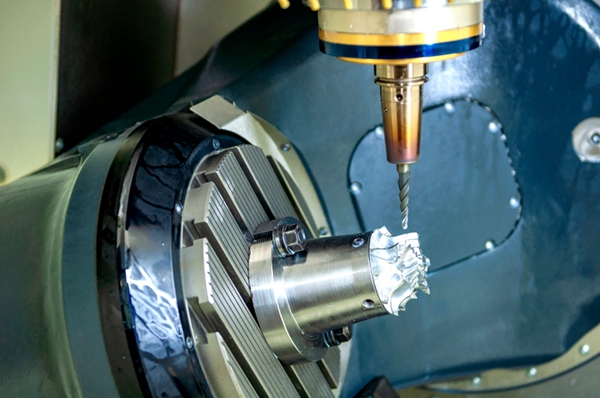
The machining accuracy of precision parts includes: positional accuracy, dimensional accuracy, style accuracy, etc. Summarized the following components that affect the accuracy of precision parts: During CNC precision machining and cutting processes, the workpiece may deform due to changes in the position of the force point, resulting in significant differences.
The feed system of CNC machine tools generally consists of a machine transmission system and an electrical control system. The accuracy level is related to the machine transmission system. The second is the impact of deviation in CNC machining positions on machining accuracy. Job deviation refers to changes or deviations in the upper level, middle line or symmetry, middle line or symmetry plane compared to the ideal position, such as flatness, symmetry, symmetry, etc.
The working deviation in CNC machine tool processing generally refers to the overcurrent protection deviation.
In order to better ensure the precision of CNC precision machining, separate the mechanical parts for initial machining and deep machining, and how to connect the rough machining mechanical parts and fine mechanical parts. Because of the crustal stress spreading again, the precision of the parts after deep machining will be rapidly lost. Thirdly, collision of measuring instruments should be avoided during the processing. Due to material reasons, measuring instruments are prone to damage and must be handled with care.
Processing raw materials: aluminum alloy, stainless steel, magnesium alloy, titanium alloy, nickel based alloy (invar invar alloy/invar alloy, kovar kovar alloy/kovar alloy), high-temperature alloy, tungsten copper alloy, engineering plastics, etc.
Processed products: High standard products in industries such as precision mechanical components, medical precision components, aviation components, instrument components, fiber optic communication components, electronic product components, automotive components, shock absorbers, pendants, non-standard components, connectors, alloy components, hardware shells, radiators, etc.
In order to better ensure the precision of CNC precision machining, separate the mechanical parts for initial machining and deep machining, and how to connect the rough machining mechanical parts and fine mechanical parts. Because of the crustal stress spreading again, the precision of the parts after deep machining will be rapidly lost. Thirdly, collision of measuring instruments should be avoided during the processing. Due to material reasons, measuring instruments are prone to damage and must be handled with care.
For the requirements of proving hardness, the higher the hardness of the raw material, the better. However, due to the hardness requirements of the processed parts, the processed raw material cannot be too hard, as it is more difficult to process than the parts. The material hardness is moderate, at least lower than the hardness of the parts, and also depends on the role of processing equipment. Reasonable selection of parts, multiple varieties, and a small amount of production comply with high standards, which can reduce production preparation, machine tool adjustment, and process inspection time. Due to good cutting quantity, cutting time is reduced.
What are the development types of milling machines in precision parts processing
What is the usage method of flat jaw vice in precision parts processing
Related Article

Let us go over the foundations of the electroplating procedure. Electroplating involves several phases, and from pre-treatment to post-treatment there are several really significant ones.
The basic principle of surface treatment of precision parts in CNC machining

Audio panels, electronic cigarette shells, nameplateLOG, watch shells, etc. are among the CNC processing of high surface texture needs components.
CNC machining aluminum alloy parts high-quality surface texture process explained in detail

Metallic finishing, sometimes known as metallic finishing, is the process of using several techniques to change the surface of an object in order to improve appearance and performance, such as corrosion resistance, discoloration resistance, chemical resistance, abrasion resistance, and hardness, modify electrical conductivity, remove burrs, or apply a specific color to a machined part.
Metal CNC finishing surface treatment process and its working principle
