
What are the reasons for workpiece defects in turning parts processing
author: Hansheng Automation
2022-11-29
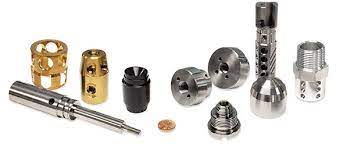
Sometimes, there may be defects in the workpiece during the machining of turning parts.
Below, the editor will take you to understand the causes of these workpiece defects.
1. Bending
1) The weight of the blank and its own bending. It should be straightened and subjected to external heat treatment.
2) The workpiece is poorly clamped, and the top of the tailstock is too tight against the center hole of the workpiece.
3) Improper selection of tool geometry parameters and cutting parameters leads to excessive cutting force. It can reduce the cutting depth and increase the number of feeds.
4) Thermal deformation occurs during cutting. Cooling lubricant should be used.
5) The distance between the tool tip and the support block is too large. It should not exceed 2mm.
2. Polygons
1) Poor contact between the support block of the tool holder and the surface of the workpiece, with gaps left, causing the center of the workpiece to deviate from the rotation center. The structure of the tool holder should be reasonably selected, and the curved surface of the support block should be properly polished to ensure good contact with the workpiece.
2) The deviation of the workpiece caused by various factors such as clamping and heating leads to changes in cutting depth. The bracket can be utilized and the contact state between the bracket and the workpiece can be improved.
3. Taper
1) The non parallelism between the center line of the tailstock and the spindle on the bed guide rail.
2) Tool wear. A 0 ° back angle can be used to grind the tool tip arc radius.
4. Surface roughness
1) Vibration during turning.
2) Improper selection of material for the support block of the tool holder, poor contact and friction with the workpiece.
3) Improper selection of tool geometry parameters. It can grind out the arc radius of the tool tip, and when the length and diameter of the workpiece are relatively large, a wide blade low-speed smooth turning can also be used.
What are the two common ways of rotating axes in a five axis machining center factory
What are the general installation methods for machined parts
Related Article

Let us go over the foundations of the electroplating procedure. Electroplating involves several phases, and from pre-treatment to post-treatment there are several really significant ones.
The basic principle of surface treatment of precision parts in CNC machining

Audio panels, electronic cigarette shells, nameplateLOG, watch shells, etc. are among the CNC processing of high surface texture needs components.
CNC machining aluminum alloy parts high-quality surface texture process explained in detail

Metallic finishing, sometimes known as metallic finishing, is the process of using several techniques to change the surface of an object in order to improve appearance and performance, such as corrosion resistance, discoloration resistance, chemical resistance, abrasion resistance, and hardness, modify electrical conductivity, remove burrs, or apply a specific color to a machined part.
Metal CNC finishing surface treatment process and its working principle
