
What are the basic components of a CNC machining center
author: Hansheng Automation-kk
2023-05-08
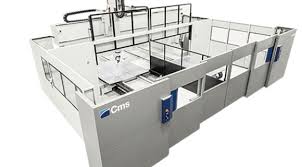
The basic components of a CNC machining center include:
1. The basic components refer to the casting of the bed. Composed of a bed, column, and workbench, it is the basic component of a CNC machining center, mostly made of cast iron. The CNC machining center must withstand static loads and cutting dynamic loads during processing. So the rigidity requirement of the bed casting is very high, and it is also the most important component that determines the quality of CNC machining centers.
2. Spindle components. It is composed of components such as spindle motor, spindle box, spindle and spindle support. Its start, stop, and rotation actions are controlled by the CNC system, and cutting motion is carried out through the tool installed on the spindle. It is a power output component for cutting processing. The spindle is a key component of CNC machining centers, and the quality of its structure has a significant impact on the performance of CMC machining centers.
3. Control system. The CNC machining center's CNC system is composed of CNC devices, programmable controllers, servo drive devices, and electric motors. They are the control centers for CNC machining centers to execute sequential control actions and complete operations during the machining process.
4. Servo system. The function of the servo system is to convert signals from CNC devices into the motion of moving parts of the machine tool, and its performance is one of the main factors determining the machining accuracy, surface quality, and production efficiency of the machine tool. CNC machining centers generally adopt three control methods: semi closed-loop, closed-loop, and hybrid loop.
5. Automatic tool change device. It consists of components such as a tool magazine, a robotic arm, and a driving mechanism. A tool magazine is a device that stores all the tools used for processing workpieces. There are various types of knife libraries, including disc type, bamboo hat type, and chain type, with capacities ranging from a few to dozens. When a tool needs to be changed during the machining process, according to the instructions of the CNC system, the robotic arm (or other means) takes the tool out of the tool library and loads it into the spindle. The structure of a robotic arm can take various forms depending on the relative position and structure of the tool magazine and spindle.
Some CNC machining centers use the movement of the spindle box or tool magazine to achieve tool replacement without the use of a robotic arm. Although the tool changing process, tool selection method, tool library structure, and robot type are different, they are all controlled by CNC devices and programmable controllers, and the selection and exchange of tools are achieved by electric motors, hydraulic or pneumatic mechanisms. When a contact sensor is installed in the mechanism, it can also achieve measurement of tool and workpiece errors.
6. Automatic tray replacement system. Some CNC machining centers are equipped with two automatic workpiece exchange pallets to further shorten non cutting time. One is installed on the workbench for processing, and the other is located outside the workbench for workpiece loading and unloading. This can reduce auxiliary time and improve processing efficiency.
7. Auxiliary system. Including lubrication, cooling, chip removal, protection, hydraulic and random detection systems, etc. Although the auxiliary system does not directly participate in cutting motion, it plays a decisive role in ensuring the machining efficiency, accuracy, and reliability of CNC machining centers, and is therefore an indispensable part of CNC machining centers.
The above are the major components of a complete CNC machining center. There are various brands and grades of functional components for customers to choose from and customize. If you have any needs for CNC machining centers, please feel free to contact us.
Analysis of the causes of tool collision in CNC machining
Structure, material, and process analysis of shaft parts processing
Related Article

Let us go over the foundations of the electroplating procedure. Electroplating involves several phases, and from pre-treatment to post-treatment there are several really significant ones.
The basic principle of surface treatment of precision parts in CNC machining

Audio panels, electronic cigarette shells, nameplateLOG, watch shells, etc. are among the CNC processing of high surface texture needs components.
CNC machining aluminum alloy parts high-quality surface texture process explained in detail

Metallic finishing, sometimes known as metallic finishing, is the process of using several techniques to change the surface of an object in order to improve appearance and performance, such as corrosion resistance, discoloration resistance, chemical resistance, abrasion resistance, and hardness, modify electrical conductivity, remove burrs, or apply a specific color to a machined part.
Metal CNC finishing surface treatment process and its working principle
