
Understand the causes of machining deformation and cracking
author: Hansheng Automation
2023-03-06
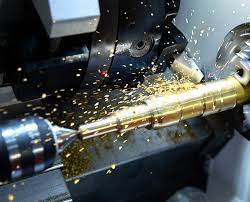
In fact, the reasons for machining deformation and cracking are multifaceted, such as material issues, heat treatment issues, structural design issues, process arrangement issues, and issues with workpiece clamping and cutting route selection during wire cutting. Among these many factors, can we find the patterns of deformation and cracking in wire cutting machining? Through years of in-depth research, the author has proposed the following measures to prevent deformation and cracking.
The main factors causing deformation and cracks:
In the production practice of machining, the author has analyzed a large number of examples and found that the deformation and cracks generated by wire cutting machining are related to the following factors. Related to the structure of the parts. Concave and convex molds with narrow and long shapes are prone to deformation, and the amount of deformation is related to the complexity of the shape, the aspect ratio, and the width ratio of the cavity to the frame.
The more complex the shape, the greater the aspect ratio and the width ratio of the cavity to the frame, and the greater the deformation of the mold.
The law of deformation is that the middle of the cavity is concave, and the convex mold is usually warped; Quenched cavities with complex shapes and clear corners are prone to cracking and even explosive cracking at sharp corners.
The frequency of its occurrence is related to the composition of the material, heat treatment process, etc; Cylindrical parts with thinner wall thickness are prone to deformation if cut on the inner wall, usually changing from circular to elliptical. If it is cut to a notch, it is prone to cracking when it is about to be cut through; The deeper groove cut from the outside of the part is prone to deformation, and the deformation pattern is the inward contraction of the groove. The amount of deformation is related to the depth of the groove and the material properties.
What are the principles for selecting CNC cutting parameters in CNC machining
What are the advantages of CNC machining operations
Related Article

Let us go over the foundations of the electroplating procedure. Electroplating involves several phases, and from pre-treatment to post-treatment there are several really significant ones.
The basic principle of surface treatment of precision parts in CNC machining

Audio panels, electronic cigarette shells, nameplateLOG, watch shells, etc. are among the CNC processing of high surface texture needs components.
CNC machining aluminum alloy parts high-quality surface texture process explained in detail

Metallic finishing, sometimes known as metallic finishing, is the process of using several techniques to change the surface of an object in order to improve appearance and performance, such as corrosion resistance, discoloration resistance, chemical resistance, abrasion resistance, and hardness, modify electrical conductivity, remove burrs, or apply a specific color to a machined part.
Metal CNC finishing surface treatment process and its working principle
