
Two Reasons for the Formation of Surface Roughness in Precision Parts Processing
author: Hansheng Automation
2023-05-15
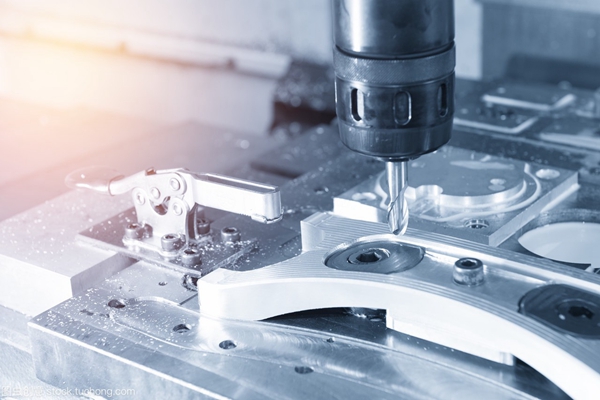
In the process of precision parts machining, due to the residual area caused by the geometric shape and cutting motion of the tool, the grooves scratched by the chip accumulation on the tool edge, the vibration ripple caused by the vibration between the workpiece and the tool, and the extrusion and friction marks caused by the wear of the tool back surface during the cutting process, roughness is formed on the surface of the part. The process factors that affect surface roughness include workpiece material and cutting amount.
Generally, elastic-plastic materials with higher toughness have higher surface roughness values after precision parts processing, while elastic-plastic materials with lower toughness are prone to obtaining lower surface roughness values after processing. For the same material, the larger the grain structure, the greater the machined surface roughness value. Therefore, in the process of precision parts machining, in order to reduce the surface roughness value, the material is often quenched and tempered or normalized before cutting to obtain uniform and dense grain structure and larger hardness.
What are the improvement measures for errors caused by internal stress in precision parts processing
Learn these tips to make turning and milling composite machining centers no longer drag down your machining accuracy
Related Article

Let us go over the foundations of the electroplating procedure. Electroplating involves several phases, and from pre-treatment to post-treatment there are several really significant ones.
The basic principle of surface treatment of precision parts in CNC machining

Audio panels, electronic cigarette shells, nameplateLOG, watch shells, etc. are among the CNC processing of high surface texture needs components.
CNC machining aluminum alloy parts high-quality surface texture process explained in detail

Metallic finishing, sometimes known as metallic finishing, is the process of using several techniques to change the surface of an object in order to improve appearance and performance, such as corrosion resistance, discoloration resistance, chemical resistance, abrasion resistance, and hardness, modify electrical conductivity, remove burrs, or apply a specific color to a machined part.
Metal CNC finishing surface treatment process and its working principle
