
To help you understand the requirements and conditions for feed motion in CNC machining centers
author: Hansheng Automation
2022-01-03
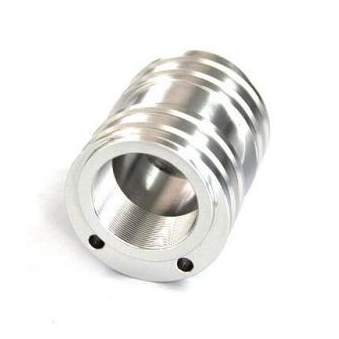
The feed motion of CNC machining tools is a direct object of digital control. Whether it is point control or contour control, the final dimensional accuracy and contour accuracy of the workpiece are influenced by the transmission accuracy, sensitivity, and stability of the feed motion. Therefore, the feed system of CNC machining machines should pay full attention to reducing friction resistance, improving transmission accuracy and stiffness, eliminating transmission clearance, and reducing the inertia of moving components.
1. Reduce frictional resistance
In order to improve the fast response performance and motion accuracy of the feed system of CNC machine tools, it is necessary to reduce the frictional resistance of moving parts and the difference between dynamic and static frictional forces. To meet the above requirements, ball screw nut pairs, static pressure screw nut pairs, rolling guide rails, static pressure guide rails, and plastic guide rails are commonly used in the feed system of CNC machine tools. While reducing frictional resistance, it is also necessary to consider the appropriate damping of the transmission components to ensure the stability of the system.
2. Improve transmission accuracy and stiffness
The transmission accuracy and stiffness of the feed transmission system mainly depend on the transmission clearance, as well as the accuracy and stiffness of the screw nut pair, worm gear and worm gear pair (during circumferential feed) and their supporting structures, considering the mechanical structure.
The transmission clearance mainly comes from the transmission gear pair, worm gear and worm gear pair, screw nut pair and their supporting components, and preload should be applied or measures should be taken to eliminate the clearance. Shortening the transmission chain and setting reduction gears in the transmission chain can also improve transmission accuracy. Increasing the diameter of the screw and applying pre tightening force to the screw nut pair, supporting components, and the screw itself are effective measures to improve the transmission stiffness. Insufficient stiffness can also cause crawling and vibration of the workbench (or pallet).
3. Reduce the inertia of moving parts
The inertia of moving components has an impact on the starting and braking characteristics of servo mechanisms, especially for components running at high speeds, where the influence of inertia is greater. Therefore, on the premise of meeting the strength and stiffness of the components, the mass of the moving parts, the diameter and mass of the rotating parts should be minimized as much as possible to reduce the inertia of the moving parts.
Dynamic and static optimization design analysis of spindle characteristics in CNC machining
How much do you know about the working principle of gear reducers?
Related Article

Let us go over the foundations of the electroplating procedure. Electroplating involves several phases, and from pre-treatment to post-treatment there are several really significant ones.
The basic principle of surface treatment of precision parts in CNC machining

Audio panels, electronic cigarette shells, nameplateLOG, watch shells, etc. are among the CNC processing of high surface texture needs components.
CNC machining aluminum alloy parts high-quality surface texture process explained in detail

Metallic finishing, sometimes known as metallic finishing, is the process of using several techniques to change the surface of an object in order to improve appearance and performance, such as corrosion resistance, discoloration resistance, chemical resistance, abrasion resistance, and hardness, modify electrical conductivity, remove burrs, or apply a specific color to a machined part.
Metal CNC finishing surface treatment process and its working principle
