
Surface treatment of plastic parts after CNC machining
Demand for CNC machining of precision plastic components has grown in the twenty-first century; most businesses use CNC machining together with 3D printing and injection molds. Because of their lower weight, durability, and less production costs than metal, industrial-grade polymers have grown to be very significant in contemporary industry. Prototyping also depends on plastics; they are simple to create, quick to use, and help to hasten the final metal component production.
Plastic components, like any other component, may be surface treated after CNC machining, although not the same as those used on metal parts. The manufacturing technique used to produce the pieces determines also the finishes. Design engineers must be aware of these variations in order to choose the appropriate plastic materials and manufacturing techniques for their component creation. Here is some information about the surface treatment of plastic components that could be beneficial.
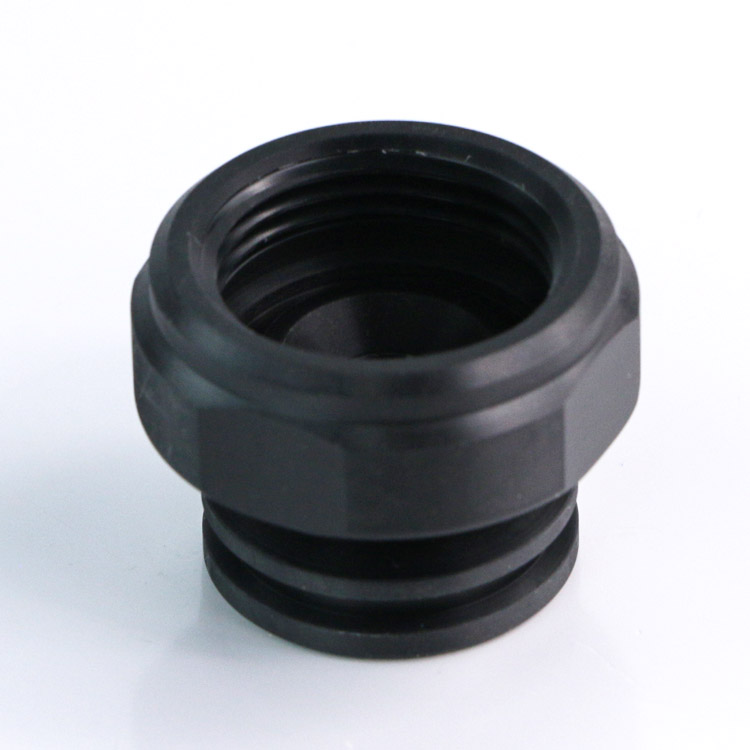
Plastics are used for a variety of purposes in the manufacture of precision parts
Many plastic polymers' intrinsic physical characteristics make them appropriate for a broad spectrum of uses. They are not electrically conductive, can withstand strong chemicals, and are frictional resistant. These are some sectors that gain from plastic components:
CNC Processed Food Industry: Plastic materials' self-lubricating qualities make them perfect for rollers, sprockets, augers, and other food processor parts.
CNC Machining Oil & Gas: Plastic is a great material for seals and other fluid transfer components as it naturally resists high pressures, temperatures, and corrosive chemicals.
CNC Machined Medical: Plastics allow CNC machined medical tools to resist strong chemical cleansers, therefore preventing the transfer of infection between patients utilizing plastic-based medical equipment.
CNC machined electronics: Many of the components found on circuit boards, including plastic leaded chip carriers (PLCCs), depend on the non-conductive qualities of plastics for packaging.
Aerospace: Apart from chemical resistance and low friction, plastics' lightweight makes them a necessary component for aircraft and aerospace parts.
Not every plastic component, including internal components buried under regular usage, calls for a surface treatment. Many component designers, nonetheless, want for more seamless user contact via clearly visible pieces. Still, the manufacturing technique utilized to create the item greatly influences the kind of surface finish applied. We will next review the three primary plastic component production techniques already in use and the surface treatments they can support.
Different surface treatments for plastic parts
The manufacturing technique of the plastic item determines the kind of surface treatment used on it. Some of the many surface finishing choices for 3D printing, injection molding, and CNC machining are included below.
CNC machining
Unless they are eliminated or reduced by a finishing process, CNC machined plastic components will show tool marks. Sometimes the parts are out of sight, therefore machine shops neglect to surface polish components utilized inside. For parts that must be polished, nevertheless, the following choices are at hand:
· Post-machining: The shop will put the components through the CNC machining process once more using finer tools to remove the original machining's roughness. Though less obvious, machining markings on the pieces will still exist.
· Polishing and polishing: Machined plastic components might have a smooth surface by means of polishing of their parts. The procedure calls for either a more sophisticated chemical vapor approach yielding a high-quality finish or a flame treatment offering the clearest finish. Although the item may also be polished technically, it will leave minute traces on the plastic surface.
Apart from surface polishing, plastic-machined components undergo further post-processing procedures aimed at strengthening and cleaning. The items will be deburred either chemically or manually to eliminate burrs left behind from machining processes. By heating plastic components uniformly in the oven, stores may also anneal them to improve and lower their internal tensions.
Injection molding
Injection-molded plastic items have entirely different surface finishes than machined ones. During the molding process the producer will polish and texturize into the mold and then transfer it to the component. Consequently, post-treatment finishes are not accessible; however, when deciding, one should take into account the material's capacity to endure the molded finish as well as its appearance.
There are four main types of surface treatment of injection molded parts:
• Group A, Diamond Polishing Wheel: Regardless of viewing angle or light, this revolving tool with diamond polishing paste polishes the die's inner surface in an arbitrary pattern that appears the same. The molded object looks most glossy or brilliant after diamond polishing.
• Group B, coarse sandpaper hides the production marks in the mold, therefore producing a semi-glossy surface for the item. Sandpaper moving back and forth produces a linear scratch with a unique pattern in the mold.
• Group C, Stone Polishing: Sand and gravel polishing of the mold will rapidly remove any production markings left in it. The matte surface on the last plastic item results from this finish being harsher and more uneven than in the last two sets.
• Group D, shot peening: blasting the mold helps to provide a rougher look. Texturing the inside of the mold could darken or flattish the surface of the produced final product.
Each of these classes is then broken down into many degrees of suitable finishes. Surface finishes in each next set cost less than in the one before it. One might also decide not to apply a surface treatment when the look of the component has little bearing on its function.
3D printing
3D printed plastic components created under several surface treatment possibilities:
Plating: Plating a plastic component with a metallic coating by an electrical or chemical method requires treating the item with a conductive coating beforehand.
Sanding: Sandpaper may straighten the surface of the component and eliminate production flaws.
Polishing: Plastic polishing agent may help to smooth the surface of a component after grinding.
Sandblasting: Sandblasting provides a matte finish and smooths the surface of the object, just like sanding.
Vibration and tumbling: Under repeated impacts, vibration or tumbling items in containers filled with abrasive materials like synthetic media or ceramics will be polished.
Vapor smoothing and solvent dripping: Solvent vapor or bath may melt the surface of the component, therefore generating a shining surface via vapor smoothing and solvent pouring. It will also seal the surface of the component and fill the pores. This method does not applicable to all polymers, however, hence its usage may compromise components if not well watched.
Epoxy coating: Since the technique is usually performed by hand, epoxy may also seal components and is less expensive. The size of the component may be somewhat altered, nonetheless, thus the user should pay close attention to its application.
One may dip plastic items in a dye bath or paint them for a delicate effect.
Before committing to producing a product, it is essential to choose the correct plastic material, manufacturing technique, and surface treatment from all the available ones.
What are the surface treatments of aluminum alloy precision parts after CNC machining
Typical molding defects in injection molding and countermeasures
Related Article


