
How to determine the clamping force of CNC machining tools
author: Hansheng Automation
2022-07-22
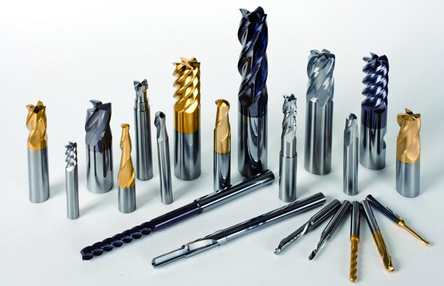
When designing clamping devices for CNC machining tools, the determination of clamping force includes three elements: the direction, point of action, and size of the clamping force. So how to determine the clamping force of CNC machining tools?
1. The point of action of the clamping force of CNC machining tools refers to a small area of contact between the clamping part and the workpiece. The problem of selecting the application point refers to determining the position and number of the application points of the clamping force when the clamping direction has been determined. The selection of the clamping force application point is the primary factor to achieve the optimal clamping state. Reasonable selection of the clamping force application point must comply with the following principles: the roughness value of the 200 grinding surface should be reduced from 2.0 to 1 1 CNC tool.
2. The direction of clamping force for CNC machining tools is related to the basic configuration of workpiece positioning and the direction of external force acting on the workpiece. The following guidelines must be followed when selecting CNC tools:
① The direction of the clamping force should contribute to stable positioning, and the main clamping force should be oriented towards the main positioning base plane.
② The direction of clamping force should be conducive to reducing clamping force to reduce workpiece deformation and reduce labor intensity.
③ The direction of clamping force should be in the direction where the workpiece has good rigidity. Due to the unequal stiffness of the workpiece in different directions, different stressed surfaces also deform differently due to the size of their contact area. Especially when clamping thin-walled parts, it is necessary to pay more attention to pointing the direction of clamping force towards the direction with the best rigidity of the workpiece.
3. CNC machining tools simplify the process flow and reduce production costs. In some applications, the surface quality of high-speed milling can be comparable to grinding, and high-speed milling can be directly used as the final finishing process. Therefore, the process flow has been simplified, production costs have been reduced, and the economic benefits are very considerable.
4. CNC machining tools have low energy consumption and save manufacturing resources. When high-speed cutting is carried out, the volume of the cutting layer material cut per unit power significantly increases. For example, Lockheed Aircraft Corporation's high-speed cutting of aluminum alloys, with spindle speeds ranging from 4 000 1/...
When it reaches 20000, the cutting force decreases by 30 ^ and the material removal rate increases by three times. The material removal rate per unit power can reach 130? 160 (⑴ is more than 'tearing', while ordinary milling only costs 30 'tearing). Due to the high cutting rate, low energy consumption, and short processing time of the workpiece, the utilization of energy and equipment is improved, and the proportion of cutting processing in manufacturing system resources is reduced. Therefore, high-speed cutting meets the requirements of sustainable development strategy.
How to improve the causes of blade breakage during CNC machining
Why did cutting nodules occur during Dongguan CNC machining
Related Article

Let us go over the foundations of the electroplating procedure. Electroplating involves several phases, and from pre-treatment to post-treatment there are several really significant ones.
The basic principle of surface treatment of precision parts in CNC machining

Audio panels, electronic cigarette shells, nameplateLOG, watch shells, etc. are among the CNC processing of high surface texture needs components.
CNC machining aluminum alloy parts high-quality surface texture process explained in detail

Metallic finishing, sometimes known as metallic finishing, is the process of using several techniques to change the surface of an object in order to improve appearance and performance, such as corrosion resistance, discoloration resistance, chemical resistance, abrasion resistance, and hardness, modify electrical conductivity, remove burrs, or apply a specific color to a machined part.
Metal CNC finishing surface treatment process and its working principle
