
Factors affecting surface roughness in precision parts machining
author: Hansheng Automation
2023-05-15
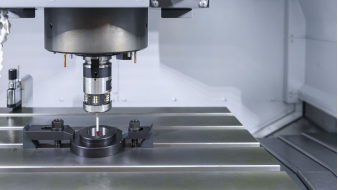
1. The influence of cutting force and conflicting force in precision part machining. In the process of precision parts machining, the rounded corners of the cutting edge of the tool may cause plastic deformation of the metal material, resulting in deformation of the existing residual area or deepening of the groove At this point, when processing brittle materials, the surface roughness increases, and the leftover materials are cut into broken particles. After processing, there are often traces of particle collapse on the surface, leaving many pits, making the surface rough.
2. The impact of debris accumulation. When the tool is cutting plastic at a certain speed, some small particles on the chip will adhere to the tip of the front face, forming a high hardness accumulation edge that can replace the front face and cutting edge for cutting. When the conflict between the chip and the stacked blade exceeds the cold welding strength between the stacked blade and the front blade surface, or when subjected to impact or vibration, the stacked blade will fall off, gradually producing new upper blades in the future. The formation, growth, and detachment of burrs can seriously affect the surface roughness of parts.
3. The function of scales and thorns. During the cutting process, due to the collision and cold welding of chips on the cutting surface during the machining of precision parts, the chips will regularly stay on the front cutting surface, thus kneading the newly processed surface. In severe cases, the exterior may tear. The outer surface forms scales, making the surface rough and uneven.
Due to the influence of the above physical factors on roughness, in order to reduce surface roughness, in addition to reducing plastic deformation caused by cutting forces, the accumulation of tumors and oxide skin during the machining process of precision parts should also be reduced. Avoid. The primary process method is to choose a cutting speed that is not prone to edge accumulation, improve the cutting performance of the material, and select the cutting fluid correctly.
How to Maintain and Maintain Measuring Tools at Dongguan CNC Precision Processing Factory
Method for Determining Machining Allowance in Precision Parts Processing
Related Article

Let us go over the foundations of the electroplating procedure. Electroplating involves several phases, and from pre-treatment to post-treatment there are several really significant ones.
The basic principle of surface treatment of precision parts in CNC machining

Audio panels, electronic cigarette shells, nameplateLOG, watch shells, etc. are among the CNC processing of high surface texture needs components.
CNC machining aluminum alloy parts high-quality surface texture process explained in detail

Metallic finishing, sometimes known as metallic finishing, is the process of using several techniques to change the surface of an object in order to improve appearance and performance, such as corrosion resistance, discoloration resistance, chemical resistance, abrasion resistance, and hardness, modify electrical conductivity, remove burrs, or apply a specific color to a machined part.
Metal CNC finishing surface treatment process and its working principle
