
Common Instruments for CNC Machine Tool Maintenance in Precision Parts Processing
author: Hansheng Automation
2023-05-11
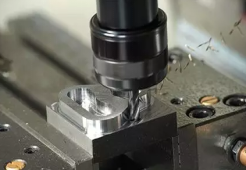
It is necessary and effective to use some necessary instruments during the fault detection process of precision parts processing CNC machine tools. These specialized instruments can directly reflect the condition of the fault point from the perspective of quantitative analysis.
1. Vibration meter
The vibration meter is the most commonly used and basic instrument in vibration detection in precision parts processing. It amplifies, transforms, integrates, and detects the weak signal output by the vibration sensor, and directly displays the vibration value of the tested equipment on the instrument or display screen. In order to meet the requirements of on-site testing, vibration testers are generally made portable.
2. Infrared thermometer
Infrared temperature measurement is the use of the principle of infrared radiation to convert the measurement of surface temperature of an object into the measurement of its radiation power. Infrared detectors and corresponding optical systems are used to receive the invisible infrared radiation energy of the measured object, and it is transformed into other forms of energy that are easy to detect for display and recording.
3. Oscilloscope
The repair of CNC systems usually starts with testing the machine tool using a dual channel oscilloscope with a frequency band width ranging from 10 to 100MHz. It can not only measure parameters such as level, pulse upper and lower edges, pulse width, period, frequency, etc., but also compare the phase and level amplitude of two signals. It is commonly used to observe the oscillation waveform of the main switch power supply, the ripple output of the DC power supply or tachogenerator motor, and the overshoot and oscillation waveform of the servo system. Used to check and adjust the output waveform of the photoelectric amplifier of the paper tape reader, as well as to check the vertical and horizontal oscillation and scanning waveform of the CRT circuit, as well as the video signal of the video amplifier circuit.
The Concept of Reliability in Precision Parts Processing
Analysis of the machining route for car grooves at Dongguan CNC Precision Machining Factory
Related Article

Let us go over the foundations of the electroplating procedure. Electroplating involves several phases, and from pre-treatment to post-treatment there are several really significant ones.
The basic principle of surface treatment of precision parts in CNC machining

Audio panels, electronic cigarette shells, nameplateLOG, watch shells, etc. are among the CNC processing of high surface texture needs components.
CNC machining aluminum alloy parts high-quality surface texture process explained in detail

Metallic finishing, sometimes known as metallic finishing, is the process of using several techniques to change the surface of an object in order to improve appearance and performance, such as corrosion resistance, discoloration resistance, chemical resistance, abrasion resistance, and hardness, modify electrical conductivity, remove burrs, or apply a specific color to a machined part.
Metal CNC finishing surface treatment process and its working principle
