
Cleaning and repair of large CNC milling machine parts
author: Hansheng Automation
2023-01-31
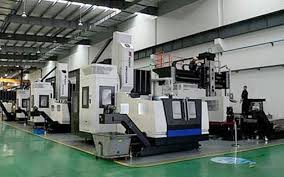
After disassembling large CNC machining parts from a CNC milling machine, the surface traces are first observed to determine the wear of the matching surface of the CNC milling machine. Then, the parts are cleaned and classified, and the inspection, identification, and marking of usable, to be repaired, and scrapped parts are carried out to prepare for the next step of repair and replacement of parts.
1、 Requirements for cleaning parts
1. All disassembled parts should be cleaned.
2. Attention must be paid to the cleaning of reused or newly replaced parts, and burrs generated during use or processing of the parts must be removed.
3. After cleaning and drying the parts, they must be coated with engine oil to prevent rusting.
4. When cleaning various types of equipment boxes, it is necessary to select cleaning solutions that remove residual debris, paint flakes, dust, oil stains, etc.
Kerosene or light diesel oil is widely used in cleaning parts and can remove general grease, whether it is castings, steel parts, or non-ferrous metals. It is relatively safe to use, but its volatility is poor. For precision parts, it is best to use specialized gasoline containing additives for cleaning.
At present, in order to save fuel, various metal cleaning agents used for cleaning mechanical parts are being vigorously researched and promoted. It has good hydrophilicity and lipophilicity, excellent emulsification and diffusion effects, low price, good usage prospects, and good applicability.
2、 Cleaning method
1. For manual cleaning, small parts can be directly placed in an oil basin containing cleaning solution, and the surface of the parts can be carefully brushed with a brush. For parts that cannot be accommodated in the oil basin, such as the bed, the oil stains should be wiped off with old cotton yarn first, and then repeatedly wiped with cotton yarn dipped in a cleaning solution. The final cleaning operation should be done by using clean cotton yarn dipped in clean water.
2. The cleaning box for intermediate spray cleaning is a box structure divided into two layers by a mesh frame, generally 1200mm long, 600mm wide, and 500mm high, supported by four rollers.
During cleaning, it is important to first remove the thick layer of oil stains from the parts to be cleaned, in order to extend the service life of the cleaning solution. Regularly clean the filter to remove sediment and dirt from the fuel tank.
3、 Examples of cleaning common components
Before cleaning the gearbox, the stored oil in the gearbox should be drained first, and then kerosene should be injected. The gear should be manually rotated and cleaned with a brush or cotton swab. Then, the dirty oil should be drained. After cleaning, a cotton cloth should be used to wipe it dry. It should be noted that there should be no debris such as iron filings, ash, or sand inside the box. If the rust resistant dry oil applied to the gears inside the box is too thick and difficult to clean, oil can be heated to 70-80 degrees Celsius or kerosene can be heated to 30-40 degrees Celsius, and then poured into the box for flushing.
The Difference between CNC Processing and Die Casting in CNC Processing Plants
Why do aviation parts processing require hard oxidation
Related Article

Let us go over the foundations of the electroplating procedure. Electroplating involves several phases, and from pre-treatment to post-treatment there are several really significant ones.
The basic principle of surface treatment of precision parts in CNC machining

Audio panels, electronic cigarette shells, nameplateLOG, watch shells, etc. are among the CNC processing of high surface texture needs components.
CNC machining aluminum alloy parts high-quality surface texture process explained in detail

Metallic finishing, sometimes known as metallic finishing, is the process of using several techniques to change the surface of an object in order to improve appearance and performance, such as corrosion resistance, discoloration resistance, chemical resistance, abrasion resistance, and hardness, modify electrical conductivity, remove burrs, or apply a specific color to a machined part.
Metal CNC finishing surface treatment process and its working principle
