
What is a Machining Center (MC)?
A machining center (MC) is a machine tool used for mold making and metal parts processing. NC (Numerical Control) machine tools, which have the function of automatically distinguishing and selecting various tools, can be divided into several types according to their size. This article will introduce what a machining center is, its features, and advantages.
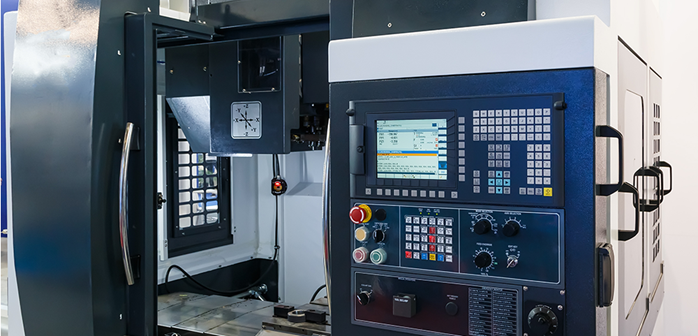
What is a Machining Center (MC)?
A machining center is a machine tool with automatic tool change function, which can perform various machining operations such as cutting and grinding. According to the definition of the Japan Machine Tool Manufacturers Association, "It is a CNC machine that can continuously perform a variety of processes such as boring, milling, drilling, threading, and reaming." For older machines, such as general-purpose milling machines, the operator must change the tool according to the machining content. For example, when machining threaded holes in a cylinder, the hole is drilled with a drill bit, and then the tool is replaced with a tap to form the thread, and the feed of the tool and the speed of the machining spindle must also be manually controlled. However, if a machining center is used, everything from drill bit selection to tapping tool change and stock removal control can be carried out automatically. Therefore, there are many advantages to this, and even for complex shapes, it can reduce the operator's man-hours and enable continuous processing. Machining centers can be used to cut molds for resin injection molding, stamping, and rubber processing, as well as for cutting mechanical parts of various shapes. In recent years, there has been an increasing number of models that can automatically process even complex shapes by acquiring 3D CAD data through an application (CAM) and automatically creating NC programs for machining. In general, the installation of tools in a machining center requires a very high level of technology. However, in recent years, many tools have appeared that can be used to assist in the setting of cutting tools.
The main types of machining centers
There are many types of machining centers, and they are usually classified according to the thickness of the shaft on which the tool is clamped, the orientation of the shaft, etc. Below we explain the four types according to the shape of the machining center: vertical, horizontal, gantry and five-axis.
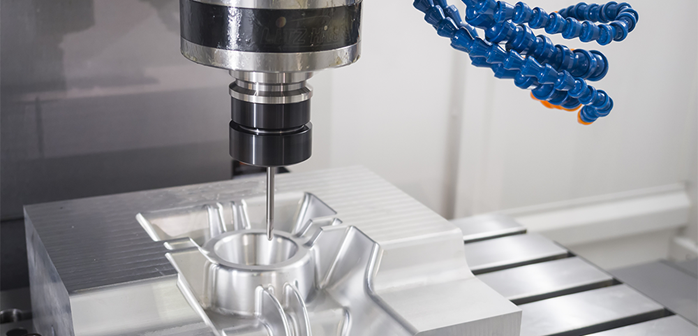
Vertical machining center: Vertical machining center refers to a machining center in which the tool or tool sets parameters vertically under reference conditions. In general, the table on which the workpiece is placed is moved in the horizontal direction (X and Y axes) and the tool is moved in the vertical (Z axis) direction for machining. Since the workpiece fixed to the table is cut from above, it is easy to check the machining situation, and it is characterized by high-precision machining even for heavy and long workpieces. On the other hand, chips tend to get stuck on the workpiece, and sometimes it is necessary to spray cutting fluid to remove them. In addition, it is generally difficult to introduce an automatic workpiece loading and unloading system. Vertical machining centers can cut three-dimensional shapes by controlling the XYZ three-axis direction. As machining centers, vertical machining center machine tools are usually compact and suitable for situations where the machining surface is concentrated on a single surface, as well as for small batches and multiple types of production.
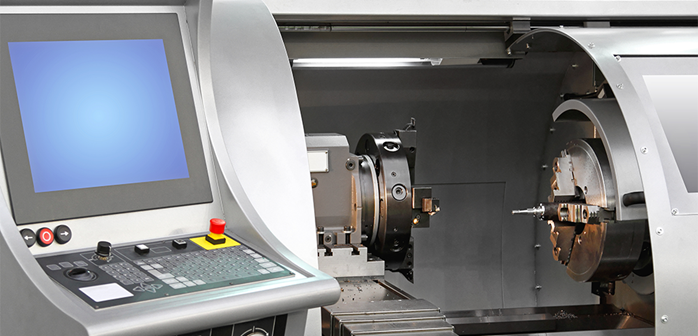
Horizontal machining center: A horizontal machining center refers to a machining center in which tools and tools set parameters horizontally under reference conditions. The advantage is that the chips are easily evacuated due to the horizontal setting of the workpiece. In addition, in the case of a large number of multi-sided machining, including the side of the workpiece, it can be continuously machined without reclamping and the shape is easy to load and unload automatically, so it can be used for continuous machining. In addition, for large and heavy workpieces, deflection may occur due to the weight of the workpiece itself. Therefore, it is more suitable for the machining of small, high-precision, mass-produced parts. In addition to the XYZ three axes, the horizontal machining center also controls the four axes of rotation of the table where the workpiece is stationed. Compared to vertical machining centers, most horizontal machining centers have a larger horizontal dimension and a larger dedicated area.
Gantry machining center: The gantry machining center can fix the worktable where the workpiece is located and move the machine head in the X, Y and Z directions. Although similar to the vertical type, it is characterized by the part that supports the spindle like a gantry across the top of the table. Due to its large and long table through the gantry, it can be used to machine large parts. Since shaft parts are not cantilevered, they are capable of high-precision machining. Compared to other types, gantry machining centers tend to be very large in size and are used as dedicated machines for the processing of large objects. As with the vertical type, three-dimensional shapes can be cut by controlling the three axes of the XYZ. In a gantry machining center, the head rotates in two axes and is capable of machining in multiple directions, which we call a "five-face machining center machine".
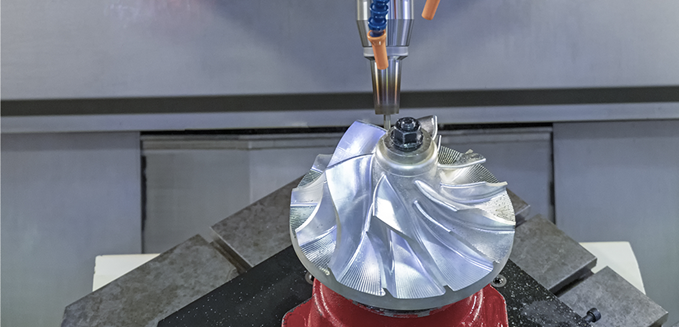
5-axis machining center: A 5-axis machining center is capable of machining very complex three-dimensional shapes by tilting workpieces and tools and machining from an oblique direction while controlling the direction of the existing 3-axis machining. By controlling the direction of rotation, it is possible to continuously machine multiple machined surfaces and complex curved surfaces without reclamping the workpiece. On the other hand, the disadvantage is that it is difficult to program, and controlling multiple axes at the same time requires a lot of programming skills. There are various variations in the movement mode of the table and tool that can perform 5-axis machining, and the rotation method varies depending on the model. The shape of the machining center is mostly vertical and horizontal, and it can be used differently according to the purpose of processing. A machining center capable of five-axis machining, which can cut complex shapes, such as turbines for jet engines.
Advantages of the introduction of machining centers
A machining center is a CNC machine with automatic tool change function. Regardless of the type, there are the following advantages compared to manual lathes or milling machines.
- High-precision machining: The position of the tool and workpiece is automatically controlled by numerical control, and the deviation of the machined part is less than that of manual work. Compared to CNC machines, errors caused by multiple workpiece mounting can also be eliminated. Since multiple axes can be controlled at the same time, complex shapes can be machined.
- Cost reduction: For CNC or manual machines, tool changes must be done manually by the operator. Changing heavier knives requires a lot of physical strength and a long time. In addition, skilled operational skills are required, which increases training costs and other expenses. The machining center can automatically change tools, which reduces labor costs and training costs. Another major advantage is that the system continues to operate even when unattended, so it can continue to operate even at night when the plant is less staffed.
- Protecting the safety of the operator: The tools and knives used in CNC machines are very heavy and sharp, so they need to be handled with care. However, in the machining center, tools and tools are automatically replaced, so the frequency of operator operations is greatly reduced. Reduced operating time also means fewer problems, so workers are protected from injury.
What is aluminum anodizing (anodizing)? Its characteristics, types and uses
What is Perforated Sheet Metal? Its characteristics, types and standards
Related Article


