
What is Die Casting? Features and precautions
Die casting is a casting technique also known as die casting. Die casting is the injection of molten non-ferrous metals into molds to form various shapes. Die-cast parts are used in a wide range of products such as automobiles, home appliances, copiers, and sewing machines.
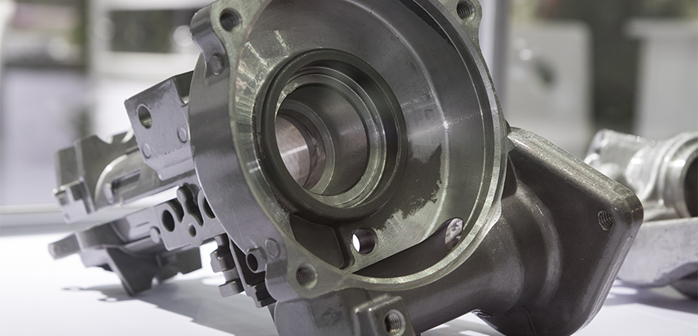
What is Die Casting? Main features and drawing marking
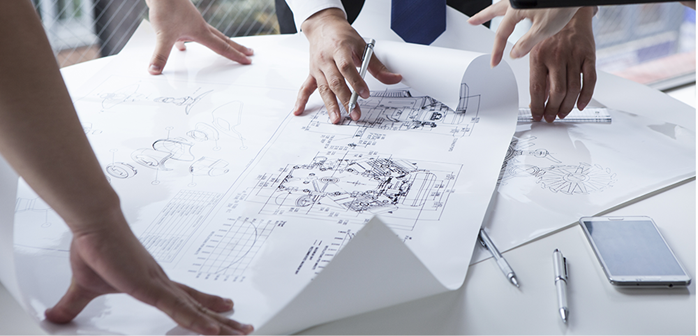
Die casting is the melting of non-ferrous metals and then the application of pressure to inject them into a mold. Since it is completed using a mold, it is suitable for mass production. Unlike other castings, die casting is characterized by good dimensional accuracy because it needs to be pressurized. In addition, because a mold is used instead of a sand mold, the surface is smoother. Die casting is suitable for manufacturing products with complex shapes that cannot be achieved with sheet metal parts, or products that cannot be processed with resin. Capable of creating complex three-dimensional shapes, it is characterized by a higher degree of freedom than sheet metal parts and a higher yield than machining. On the other hand, he cannot be used to make pipes or hollow shapes. In addition, it is less suitable for shapes that protrude inward, such as cantilevers or side holes, due to the use of molds. Die-casting is suitable for aluminum alloy, zinc alloy, magnesium alloy, copper and other materials. In particular, aluminum die casting and zinc die casting are widely used. On the drawings, aluminum die castings are marked as ADC and zinc die castings are marked as ZDC.
Features of aluminum die casting and zinc die casting
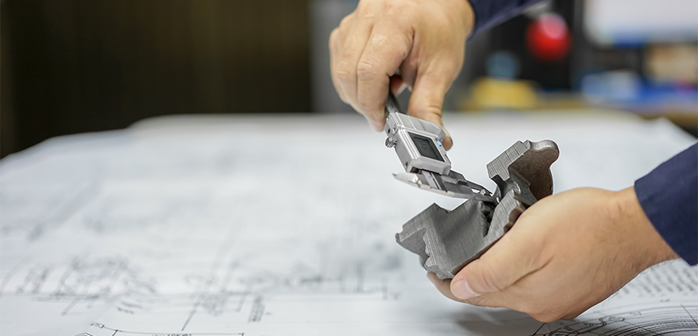
Aluminum die castings are characterized by light weight, stronger than zinc die castings, and less dimensional changes over the years. As a result, it is used in the manufacture of many components, such as the housing of automobile transmissions. In addition, due to its good thermal conductivity, it is also used as a heat sink at the same time. And zinc die casting is heavier than aluminum die casting, and there is no advantage in strength. But it is very machinable and can manufacture parts that are more complex and precise than aluminum die castings. It is generally used to manufacture delicate parts that do not require much strength. It is also often used in the structural parts of automotive parts and industrial machinery. In addition, because the surface is easy to handle, it is also used for furniture handles, etc. Although the dimensional accuracy of die castings is high, the dimensional accuracy is not high compared to machining, etc. For this reason, it is often necessary to perform machining such as cutting and grinding before assembly on the mating surface of die castings, the mounting part of other components, and the fastening surface of screws.
Precautions when using die casting
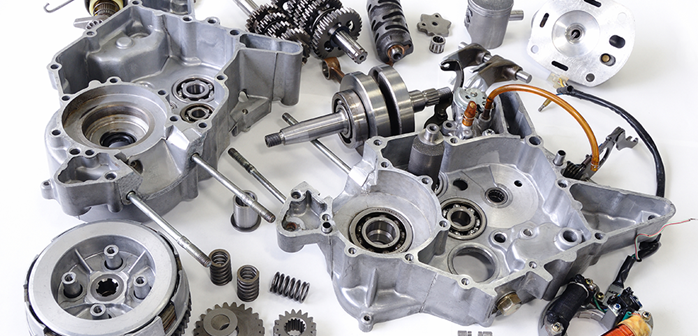
Although die casting is good for mass production and easy to manufacture complex shapes, it also has disadvantages.
The disadvantages of die casting are mainly as follows:
1.The same material has a lower strength than machining
When molten metal is injected under pressure, there is a problem that the strength of aluminum and zinc is reduced compared to parts made by the cutting process due to air mixing, etc. Injection of molten metal in a vacuum can perfectly improve this shortcoming, but it requires a high cost.
2.High upfront costs
Die casting requires the use of molds. In addition, it is necessary to inject molten metal, and the production equipment used for processing is quite expensive. As a result, if there is no need for large-scale production such as automobiles, it may not be possible to recover the initial investment cost.
What is Perforated Sheet Metal? Its characteristics, types and standards
What is 3D printing? What products can be made?
Related Article


