
What is a mold? What is its structure?
Most resin products are produced by injection molding, which is a method of injecting molten resin into a metal mold by pressure to mold it. This article is about molds used in injection molding.
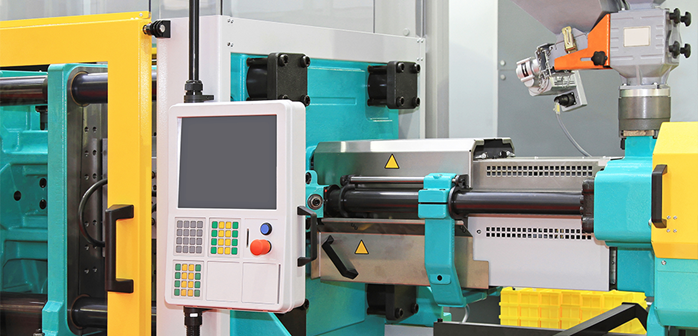
What is a mold
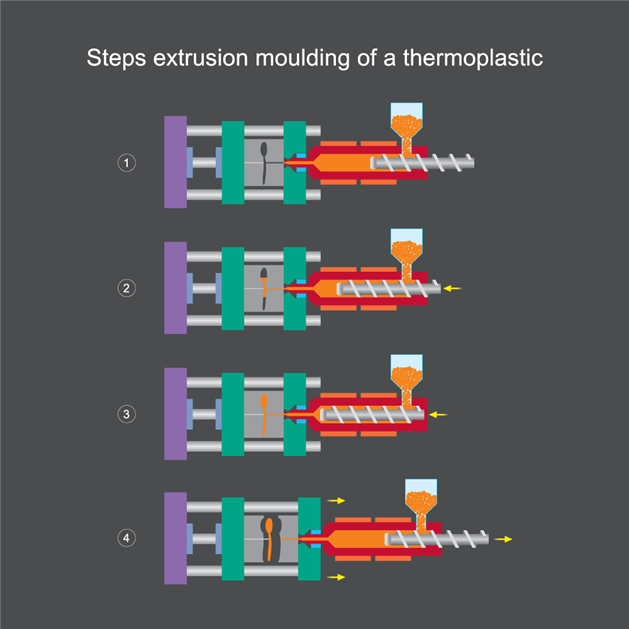
A mold is a "model" used to inject resin in a molten state into it. The molds used in injection molding are often compared to the "taiyaki model". Just like making taiyaki, the upper and lower dies are fastened, and the inner cavity of the buckle is filled with material to make the shape of the product. Resin processing is basically made of metal, so it is called a mold. The material of the mold is mostly alloy steel or stainless steel, which is pre-hardened steel. The basic manufacturing method of molds is to engrave and cut metal blocks with NC machines, etc. Depending on the cost strategy or shape, the mold may be divided into multiple parts and processed separately, or the mold after engraving processing may be treated with heat treatment such as quenching.
The basic structure of the mold
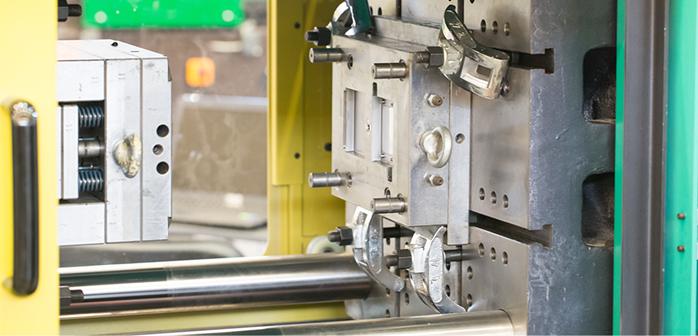
Molds are basically set of 2 molds. The purpose is to close two molds, fill them with resin material, and then open the mold to remove the molded resin product. The mold that completes the front forming of the part is called the cavity, and the mold that completes the inner molding is called the core. In most cases, the mold is opened horizontally on the left and right, the cavity is fixed, and the core performs the reciprocating motion of opening and closing. Most of the cavity side molding is the surface part of the part, and in order to ensure the aesthetics of the part surface, it is generally not necessary to configure too many parts on the cavity. Sometimes, in order to make the style of the part beautiful, embossing processing is used. ON THE OTHER HAND, ON THE CORE SIDE, THERE ARE USUALLY MANY COMPONENTS SUCH AS EJECTOR PINS THAT ARE USED TO DETACH THE PARTS FROM THE MOLD. Depending on the structure of the mold and the shape of the corresponding resin injection site (gate), there is also a type of three-plate mold that is divided into three parts.
Mold-related terms
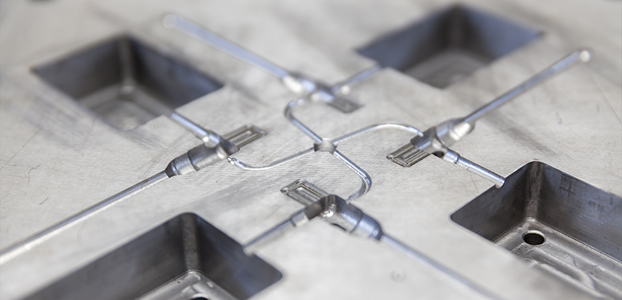
A variety of mold parts are used in molds. There are also many terms that need to be understood beforehand about injection molding. Here are a few representative terms.
• PL (parting line): The line on the joint surface of the mold. The position where the mold fitting surface touches the part is called "PL (parting line)".
• Sprue: The mechanism through which the jet resin flows.
• Gate: An inlet that injects resin into the mold. Gates include direct gates, side gates, latent gates, and so on.
• Runner: The channel through which the resin flows from the sprue to the gate in the mold or the bonded surface of the mold is called the runner.
• Runner: The channel through which the resin flows from the sprue to the gate in the mold or the bonded surface of the mold is called the runner.
• EJECTOR PIN: refers to the long rod part protruding from the mold (core), which is mainly used for the resin part that is ejected from the mold after the mold is opened.
• Inserts: There are also parts of the mold that are individually processed, such as parts with specific complex shapes or severely worn, etc., which are inlaid into the mold after being made. This embedded part is called a block.
• Slider: When there are holes or protrusions on the vertical wall, which cannot be made with ordinary molds, it is necessary to use an auxiliary mechanism to form, and the mechanism that slides on the relative mold transversely is called a slider with the opening and closing of the mold.
Molding methods for thermoplastic resins – extrusion, blow molding, vacuum, and compressed air molding
Types and methods of surface treatment
Related Article


