
Basic Knowledge, Applications, and Characteristics of CNC (Computer Numerical Control)
With the continuous advancement of IT technology, the manufacturing industry has been actively promoting informatization and automation to enhance production efficiency. A key technology in automating machining operations is "CNC (Computer Numerical Control)." Machine tools equipped with CNC are known as "CNC machines" and are widely used in industrial part manufacturing. The main advantages of CNC machines include the ability to mass-produce products with stable quality and a high level of safety.
The following will provide an overview of the basic principles of CNC, its applications, and the advantages and disadvantages of CNC, along with the types of machining processes it supports.
What is CNC?
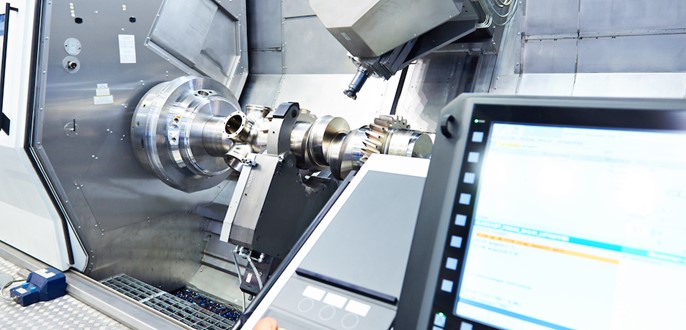
CNC stands for "Computer Numerical Control" or "Computerized Numerical Control." It is a technology that uses computer programs to control the operation of machine tools. Through programming, CNC can automate the control of the machine's movement direction, speed, and machining volume, thereby producing high-quality products safely and efficiently. In the past, milling machines and lathes were mainly operated manually, which often led to issues such as "variation in product quality due to different operators," "inability to machine complex shapes," and "difficulty in improving work efficiency." However, by automating the machine tools through numerical control, these problems can be resolved. Today, many machine tools are equipped with CNC functions, and with the integration of CAD and CAM, the entire process from design to machining can be completed on a computer.
Applications of CNC Machines
CNC machines are widely used in various industries, including the manufacturing of automotive, medical equipment, and aircraft parts, as well as mold processing. They are particularly advantageous in precision machining fields such as freeform surface machining or complex three-dimensional shape processing, which are challenging for traditional manual machine tools. Additionally, some CNC machines are capable of machining non-metallic materials such as plastics and wood, in addition to metals.
The Difference Between CNC and NC
A similar term to CNC is "NC," which stands for "Numerical Control." The key difference is that NC does not involve the concept of "computer." NC is a technology that controls the operation of machine tools purely through hardware, such as transistors or logic circuits, and it first appeared in the 1950s. In contrast, CNC replaces the control hardware of NC with a computer, allowing for software-based control of machine tool operations through specialized programming languages. In recent years, the distinction between NC and CNC has been gradually diminishing as more NC devices are equipped with computers.
CNC Operation Process
The general process for using CNC to machine materials is as follows:
• Create a 3D model of the product using 3D CAD software.
• Generate NC program data in CAM software.
• Prepare the necessary tools and mount them on the tool holder.
• Install the material on the machining table.
• Start the machining process.
CAD is used to create the 3D data, while CAM is used to generate the NC program based on the CAD-created 3D data. The NC program controls various aspects such as tool speed, type, path, and tool change timing. Even those without programming experience can use CAM to input tools and machining conditions, automatically generating the NC program and completing the CNC machining operation.
Characteristics of CNC
Advantages:
- Stable Quality: CNC machines automatically carry out machining according to the program, eliminating the quality variations that may occur with manual operation, and ensuring product consistency. This makes them particularly suitable for mass production, helping to reduce production costs.
- High Efficiency: CNC machines can complete machining operations faster than manual methods by reducing unnecessary workpiece movement. They are ideal for efficiently mass-producing identical products. Automation allows for unattended operation, even enabling overnight processing without human supervision, thus significantly improving productivity.
- High Safety: CNC machines can operate automatically without the need for workers to be nearby, reducing the risk of injuries from machine entanglement or flying debris. Additionally, with the integration of ATC (Automatic Tool Changer), tools can be automatically replaced without stopping the machine, further improving machining efficiency.
Disadvantages:
- High Cost: CNC machines are equipped with not only the structures for manual machining operations but also computers and specialized software, making them significantly more expensive than traditional manual machine tools. The investment should be carefully evaluated for return on investment.
- Extensive Preparation: CNC machining requires a substantial amount of preparation work, including mastering NC programming knowledge, writing and inputting NC programs, material positioning, and trial cutting. This preparation takes more time than traditional manual machine tools, so the overall processing time should be carefully calculated, considering the efficiency gains from automation.
Examples of CNC Machining
There are various types of CNC machines in the world. Once an NC machine is started, it automatically carries out machining according to the program. Even in the absence of workers, such as during night shifts, CNC machines can operate, enhancing work efficiency and productivity. CNC machines can also accurately machine three-dimensional shapes, which are difficult to achieve through manual machining. Below are a few representative examples:
- CNC Milling Machine: A milling machine equipped with CNC functionality, automating milling processes (cutting fixed workpieces with rotating tools).
- CNC Lathe: A machine that automates turning processes (cutting rotating workpieces with a fixed tool), suitable for machining shafts and other segmented parts, with precision up to 0.001 mm.
- CNC Grinding Machine: A machine that automates grinding processes (cutting workpiece surfaces with a high-speed rotating grinding wheel), with features like automatic wheel changing and controlled grinding range.
- Machining Center: A multi-functional CNC machine capable of performing various machining operations such as boring, milling, drilling, threading, and reaming in a single setup. They are categorized by size, shape, and the number of movable axes.
- Other CNC Machines: Examples include CNC laser cutting machines, which use laser energy to dissolve materials, and CNC water jet machines, which cut materials using high-pressure water jets.
Types and methods of surface treatment
What is 3D Printing? Its Features, Classifications, and Differences from Machining
Related Article


