
How to control the sharp edges and burrs of elevator stainless steel sheet metal parts?

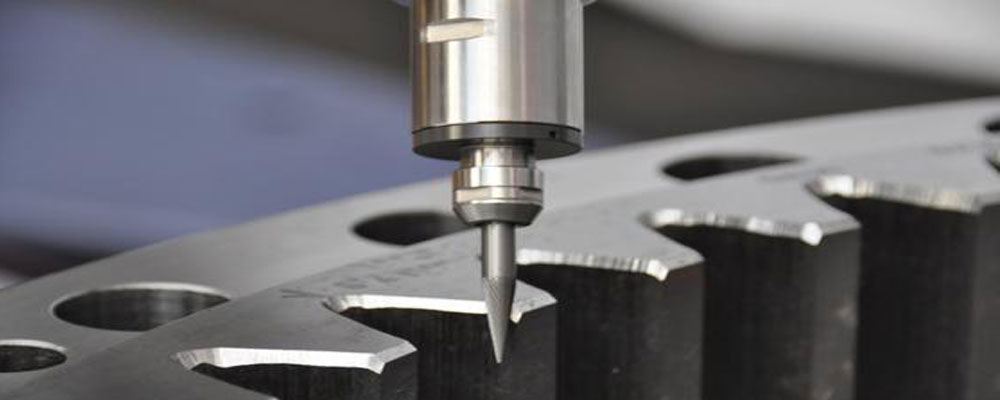
Causes of sharp edges and burrs in sheet metal parts
Sharp edges are plane convergence that occurs naturally during processing.
Sheet metal punching burr refers to the separation stage that the material enters after undergoing elastic and plastic deformation during the punching or shearing process. When the cut starts, cracks appear near the edge of the die-cut.
As the amount of stock removal increases, the upper and lower cracks continue to propagate into the material. When the cutting edge gap is set properly, the upper and lower cracks overlap and the sheet is usually broken and isolated. When the cutting edge gap is not set as expected, the upper and lower cracks do not overlap, resulting in punching burrs.
The main causes of burrs in laser-cut sheet metal parts are:
- When the laser cutting machine works on the workpiece, the high energy generated by the laser beam causes the cut part of the workpiece to evaporate and evaporate rapidly. In order to ensure the quality of the cut, the slag left on the surface after the gasification of the cutting surface of the workpiece should pass through the auxiliary gas.
- It is assumed that no auxiliary gas is used after the slag has cooled. In this case, burrs will occur on the cutting surface, which is the root cause of burrs. Similarly, the setting of machining parameters and the accuracy of the equipment are secondary causes of burrs.
- Due to the process requirements of stamping/shearing, the enlarged micro-connection between the part and the tool contacts is a significant cause of burrs.
Sharp edges and burrs need to be controlled
Essentially, sharp edges and burrs created during sheet metal machining can affect the surface quality and appearance of the workpiece and create safety hazards.
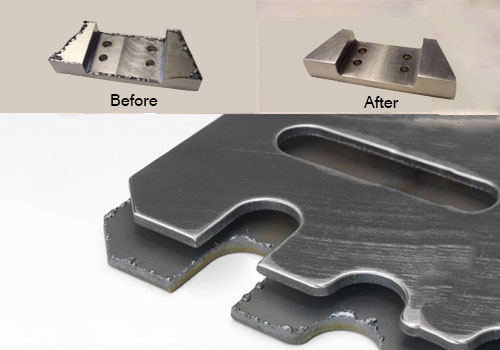
The method of controlling sharp edges and burrs
There are two types of control sharp edges and burrs:
The first consideration is the absence of any sharp edge and burr handling techniques, including keeping the burr height within the allowable limits. For elevator stainless steel sheet metal parts, the design department focuses on the burr formation mechanism and removal techniques in the product/process design stage to limit burrs.
The other type refers to deburring technology, such as the following methods in punching and shearing production:
1.Determining a reasonable tool clearance during the stamping and shearing process is an important factor affecting product burrs. The edge gap size depends on the strength and thickness of the material to be stamped and sheared.
2.The wear and roughness of the cutting edge of the tool in blanking/cutting is another important cause that affects the burr of the product. Therefore, the degree of wear and cutting edge roughness are controlled. If the edge is damaged or worn, it will bend, and the gap will increase due to side wear, which will increase the burr. In the production process, tools typically go through three stages: initial wear, normal wear, and abnormal wear. It is perfect to use different tools before abnormal wear and tear. However, due to the limitations of the product accuracy requirements, the allowable burr height may reach the normal wear area. Now, it is time to replace and grind. The cutting edge of the tool should be checked, maintained and honed frequently to reduce the material burr and the shear force of the machine tool and prolong its service life.
3.Choose the right machining tools, equipment, and condition. The material of the tool should be selected for high wear resistance and hardness. The harder the cutting edge of the tool, the smaller the burr height.
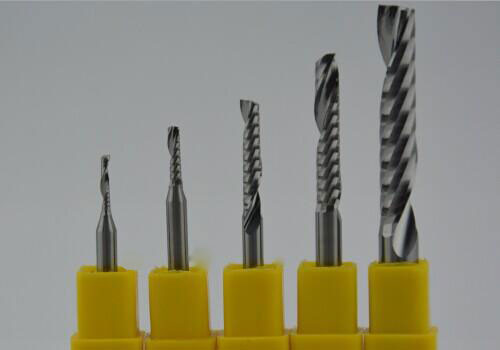
For machining equipment accuracy, the higher static and dynamic accuracy of the equipment will provide less potential for board burrs. Lubricating oil reduces friction between the material to be machined and the cutting edge of the tool. At the same time, it prevents temperature increases caused by shear deformation and prevents the machined material from sticking to the cutting edge of the tool. In this way, good lubrication conditions can reduce the chance of burrs. In addition, there are a few other measures that can be taken in laser cutting production. For example, the static and dynamic accuracy of the machine can be modified by selecting high-purity cutting auxiliary gases and suitable cutting parameters.
As far as the micro-connections between the parts and the tool contacts in stamping/shearing are concerned, they must be used as little as possible. After that, it should be removed manually or by machine.
Other measures to control sharp edges and burrs
In addition to taking the above measures to minimize sharp edges and burrs, the order of prioritization for eliminating sharp edges and burrs is classified as high, medium, and low risk. These are based on the requirements of each stage and the risks associated with sharp edges and burrs.
Some products should be deburred when producing elevator sheet metal parts, and then subsequent processing. However, there are some products that go directly into the product assembly. Think about the product from an appropriate economic point of view. Choose different deburring measures to ensure high product quality and production efficiency with low cost.
Currently, many techniques exist for eliminating sharp edges and burrs in sheet metal parts. Still, most of the SS sheet metal parts of the elevator are mechanically strategic. Sharp edges and burrs are eliminated by machine grinding before bending medium to large parts. For small volume parts, manual honing and burring strategies can be used.
SS sheet metal standard deburring process
The deburring machine can be positioned behind the punching and shearing center. This method is mainly used for deburring car doors, hall doors and car walls in mass production, without bending. The brush deburring machine can be placed after the laser cutter and is mainly used for medium batches, such as door heads, front walls, roofs, etc., as well as for the deburring of unbent products after laser cutting.
Manual deburring tools can also be used for small batches – products that are not suitable for machine deburring.
There are many limitations to the rational selection and determination of deburring technology, including the current production environment, the technical quality of the workers, and the propensity to work. A proper deburring process can help improve product quality and reduce manufacturing costs. Under the concept of quality assurance, it is essential to choose the deburring process at the lowest cost.
A smart choice of deburring technology involves asking reasonable questions about which deburring process to use and fundamentally influencing investments in plants, process equipment, and environmental protection.
CNC machining of components for biomass power generation equipment
The difference between chrome plating, zinc plating, and nickel plating
Related Article


