
Analysis of PCD and PCBN cutting tools
author: Hansheng Automation
2023-05-10
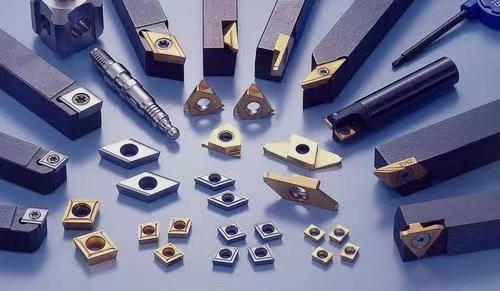
Mechanical processing is developing towards high-speed, composite, intelligent, and environmentally friendly directions. With the emergence of modern integrated manufacturing systems and the continuous improvement of cutting speed, higher requirements are put forward for tool performance. Developing various ultra-hard cutting tools with excellent wear resistance that can stably process for a long time is an inevitable trend. Cutting tools are gradually developing towards efficient machining, hard machining, dry machining, ultra precision machining, and new types of difficult to machine materials. PCD and PCBN tools are essential machining tools for achieving precision and ultra precision machining.
In the past, unless it was indispensable for special machining, PCD/PCBN tools were almost not used in actual machining. Because the cost of PCD/PCBN tools is too high.
Nowadays, although PCD/PCBN tools are still a bit expensive, their quality and reliability have improved. Thus, PCD/PCBN tools have strong competitiveness in many mechanical processing industries such as automobiles, aerospace, and medical equipment. By installing PCD/PCBN tools on rigid machine tools and tool holders, manufacturers can fully utilize the potential of PCD/PCBN to improve productivity. At the same time, in various mechanical processing applications, PCD/PCBN tools provide manufacturers with greater choice of cutting tools. This provides them with more favorable opportunities to improve costs and productivity.
PCD/PCBN knives come in three basic forms: integral, full face, and tip. The new PCBN integrated cutting tool with larger and thicker dimensions has good wear and impact resistance characteristics. The good wear resistance and impact resistance of cutting tools are key means for processing cast iron materials containing less than 10% ferrite. The improvement of tool wear resistance and impact resistance is also particularly important for processing alloy cast iron parts in the automotive industry. Previously, such alloy cast iron parts could only be machined through grinding.
When rough machining alloy cast iron, the cutting tool must withstand intermittent cutting caused by surface cracks, residual sand, and other existing surface discontinuities left over by the casting process. Good wear resistance also plays a significant role in precision machining, especially for workpieces containing 28% to 30% chromium and with a hardness between 68 and 70HRC.
The overall PCBN blade has multiple cutting edges on both sides, thereby reducing the tool cost per unit of production parts. Its cross-sectional area is 4.76mm thick, which is thicker than traditional cutting tools by 3.17mm, allowing the blade to be reliably installed on the standard gasket type hard alloy handle groove. Metal processing WeChat has good content and is worth paying attention to.
PCBN blades are also available in full section and pointed shapes. The full face blade has a complete PCBN top surface, sintered on a hard alloy substrate, providing multiple cutting edges only on one side of the blade, which is cheaper than the overall blade. A sharp blade is a PCBN blade welded to a corner of a hard alloy substrate. The sharp blade is either a single cutting edge or a double cutting edge. Most of the PCBN blades currently used are pointed. Both full section and pointed blades are manufactured according to industry standard dimensions, and like integral blades, they can be installed in standard tool bar blade slots and milling cutter slots.
PCBN tools are more suitable for machining hard parts
PCBN tools are most suitable for cutting hard parts. In fact, the lower limit for the hardness of the processed parts is 45HRC. If PCBN tools are used to process parts with a hardness lower than 45HRC, tool marks will be generated.
In rough machining, the maximum cutting depth added by cutting with an integral PCBN tool varies within the range of 4.76-6.4mm for white iron and other hard high chromium iron, with a maximum cutting depth of approximately 4.76mm. For non alloy pure cast iron, the maximum cutting depth is 6.4mm. The cutting speed range for precision machining ranges from 107-122m/min for high chromium iron to 2134m/min for gray cast iron. All machining with PCBN tools requires the use of highly rigid tools, fixtures, spindles, and machine tools.
The appropriate PCBN tool precision machining cutting speed varies significantly with the material of the workpiece, material height, and size and shape of the part. For example, you can achieve a cutting speed of 183m/min at a cutting depth of 0.51mm when machining hardened steel with a Rockwell hardness of 60-62HRC; A feed rate of 0.05~0.1mm/r can produce lower surface roughness; The harder the material, the higher the cutting speed required. However, when the cutting speed is greater than about 198m/min, it will lead to excessive wear. Processing ordinary cast iron can use very high cutting speeds.
The pointed PCBN tool is both economical and reliable for rough machining and precision machining. However, in this situation, it is required to use both integral and full section cutting tools. Rough boring of the middle part of a cylinder liner with casting burrs is a typical example. When machining with a pointed tool at a very accurate cutting depth, the burrs on the workpiece can ultimately cause the PCBN blade to deviate from the correct position. Powerful overall and full face PCBN tools can eliminate such problems. Both the overall and full face cutting tools can be re sharpened, which can extend the tool life and compensate for their higher costs. In order to achieve the best cost-effectiveness of the overall tool, the cutting edges on both sides of the overall tool should be used.
Currently, the biggest development area of PCBN cutting tools is high hardness cutting - precision machining of automotive engine alloy steel parts with Rockwell hardness of 60-65HRC, such as gears, shafts, and bearings. From a traditional perspective, such parts can only be made by grinding. Moreover, the dimensional tolerance of the parts is very small, and the surface roughness is very fine. High hardness cutting enables this same result to be achieved on a CNC lathe, and the price is only half of the cost of machining parts of the same processing quality on a CNC grinder. Additionally, the maintenance cost of the lathe is also relatively low.
Due to the cutting depth of only 0.3-0.38mm, low-cost PCBN pointed cutting tools can be used for high hardness cutting.
The test results of Advanced Carboloy Materials in the United States show that continuous machining of hardened steel parts (60-62HRC) with a pointed PCBN results in a surface roughness of 0.2 µ m or less.
Dry cutting of PCBN tools
Although PCBN cutting tools have sufficient hardness to resist deformation caused by cutting heat during cutting, they are very brittle. If coolant is added, the blade may crack due to sudden temperature drops. So when using PCBN tools to process parts, dry cutting should generally be done, especially in the case of intermittent cutting, and coolant should never be used during processing. The quality of tool grinding has a significant impact on the success of PCBN tool machining. In order to extend tool life, it is necessary to use appropriate tool grinding methods to strengthen the cutting edge of the tool. The grinding of PCBN cutting tools varies with the processing materials and rough and fine machining. When precision machining cast iron, the grinding amount of the tool edge is small, but when strong rough machining white iron, it is necessary to grind a T-shaped edge surface with a width of 3.8mm and a 15 ° angle. You can also use a combination of blade edges and fine grinding to grind the cutting edge. Add a blade edge to the tool to enhance the cutting edge strength. For example, adding a 20 ° blade edge to a 90 ° tool angle can result in a tool angle of 110 °. The larger this angle, the better the cutting edge strength.
Due to the strengthened PCBN cutting edge changing the direction of cutting force away from the cutting edge, it is generally necessary to maintain the hardness of the cutting edge shuttle surface corresponding to the workpiece material. When rough machining cast iron, the edge surface of the T-shaped blade is about 0.2mm wide and 20 °; When precision machining cast iron, only a slight grinding amount is required. When processing steel with a hardness of 65RC, the width of the T-shaped blade edge of the tool should be 0.1-0.2mm and the angle should be 20 °.
PCD tool processing of non-ferrous alloys
Now, the majority of production users have overcome the shock of the blade tip. They found that PCD tools are cost-effective and cost-effective. Because in the processing of most non-ferrous metals, PCD tools are significantly superior to hard alloy tools, this is not due to any development in the processing materials themselves. Metal processing WeChat has good content and is worth paying attention to.
Most PCD tools currently used are pointed. People weld a PCD blade onto a corner of a hard alloy cutter bar. The size of PCD tool blocks has been standardized in industry and can be used in the groove of standard tool holders and milling cutter grooves. Unlike hard alloy tools, PCD tools cannot be indexed and only have a single blade.
A standard size full face PCD tool with a complete PCD top surface is sintered on a hard alloy substrate. Although full face PCD tools are initially expensive, they are indexable and can provide multiple cutting edges on one side of the tool. When purchasing, this type of knife is often circular in order to obtain the most blades. Initially, full face PCD tools were mainly used for special occasions.
Safe and reliable blade retention plays a key role in the application of PCP tools, especially for rotary tools, the wedge and screw are now used together, just like conical tools and wedges, which improves the stability of tools. Ordinary thread and pressure plate design. And the necessary rigidity can be provided by using tools with suspended tool holders and PCD blades directly welded to the tool holder. A tool device with good rigidity can provide a more reliable effect for PCD tools.
A sturdy workpiece fixture and a rigid machine tool, spindle, etc. can also improve processing characteristics. Today's CNC lathes and machining centers all have the required stiffness for PCD/PCBN cutting tools. When installing new equipment, the environment of the processing workshop must be considered to make it more suitable for high-performance PCD/PCBN cutting tools.
The tool for precision milling aluminum automotive conduits is often used by combining a pointed PCD tool with a regular hard alloy tool to cut casting burrs encountered at a certain cutting depth. These casting burrs can easily continuously impact the solder joints between the PCD blade and the hard alloy blade body, ultimately causing the PCD blade to shift.
PCD pointed cutting tools can perform milling at a maximum cutting depth of approximately 60% of the PCD blade length. Even when machining at or below the maximum cutting depth, burrs can still cause the PCD blade to shift on the tool. This problem can be solved by adding some ordinary hard alloy blades to the milling cutter. These hard alloy blades installed on the milling cutter need to be slightly adjusted in the axial and radial directions of the milling cutter. In this way, the hard alloy tool can cut off burrs in front of the PCD blade, preparing for the precision machining of the PCD tool. Another important application of pointed PCD tools is precision machining of automotive parts in the so-called "three-dimensional" process. In order to save shipping costs and facilitate the collection of rough machined aluminum cylinder heads and other chips, the foundry is used for recycling in the furnace. They use a PCD cutting tool to semi finish machining castings with a very high metal removal rate, including the top, bottom, sides, and edges of the castings. The machined mechanical parts are rectangular in shape, making them easy to load, unload, and package. Due to the limited space occupied by parts, the freight cost of cargo ships has decreased.
Manufacturers should improve productivity, continuously process parts, and extend tool life (eliminating frequent tool changes). When using PCD sharp cutting tools, they can be tilted slightly on the hard alloy. PCD tools are superior to grinding in processing high silicon aluminum automotive parts, such as cylinder heads, engine bodies, ducts, gearboxes, and wheels.
When using PCD tools for machining, effective chip removal is crucial. PCD tools generate chips very quickly, and the machining system must continuously and quickly remove chips from the work area. The coolant, air mist, frozen air, and their combination will all have an impact. The cutting speed of PCD tools can reach up to 3048m/min, which requires an effective chip removal device and a rigid machine tool and operating system. Nowadays, CNC machine tools and machining centers are easy to achieve this speed.
Introduction to Measurement Methods for Transmission Errors of Machine Tools
How does Internet plus lead industry breakthrough in the era of Industry 4.0
Related Article

In order to create new products that are constantly emerging on the market, we use different methods to process various materials.
What is Molding Processing? We will introduce some representative molding processing methods

In the context of vehicle electrification and intelligence, human-computer interaction with consumer experience and intelligent control as the core has become an important development theme of intelligent cockpits. The on-board display is at the core of the intelligent cockpit, benefiting from the continuous development of the Internet of Vehicles and smart cars, the on-board display will usher in new development opportunities.
Lighting up new opportunities for automotive electronics - all at the 2025 Guangzhou International Automotive Intelligent Cockpit and Vehicle Display Technology Event

The 2025 Asia International Power Semiconductor, Materials and Equipment Technology Exhibition will focus on "Focusing on Cutting-edge Technology Breakthroughs and Empowering Industrial Innovation and Integration". It will be held on November 20-22, 2025 at Guangzhou Poly World Trade Center Expo!
Focus on the power semiconductor industry - APSME 2025 Asia International Power Semiconductor, Materials and Equipment Technology Exhibition will be held in Guangzhou

Lexey's multi-axis bus stepper drivers – 2DM3/2CL3-EC (open/closed-loop) dual-axis series and 4DM3/4CL3-EC (open/closed-loop) four-axis series are innovative technologies designed to solve the above problems and help your equipment to achieve efficient upgrades.
"Three provinces" drive: Leisai multi-axis bus stepping, opening a new chapter in the miniaturization and upgrading of precision equipment