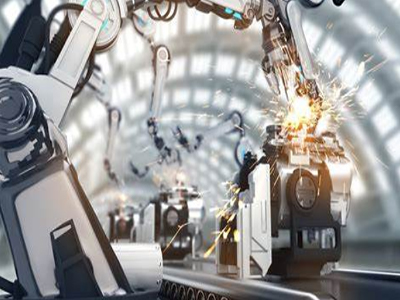
What is Molding Processing? We will introduce some representative molding processing methods
In order to create new products that are constantly emerging on the market, we use different methods to process various materials. For example, the cutting process used to cut the material and the molding process used to join the materials together are all types of processing methods. In this article, we will introduce molding processes (forging, casting, stamping, and injection molding) performed by molds.
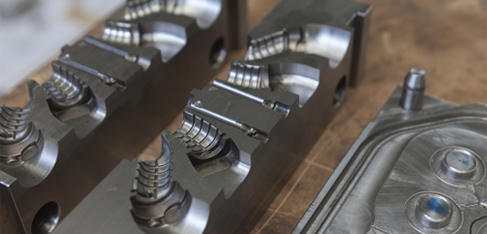
What is Molding Processing?
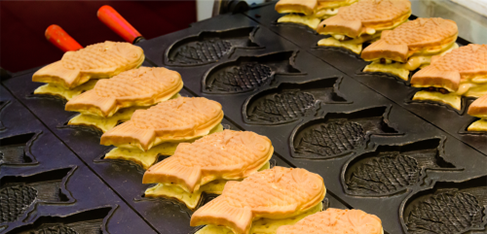
Molding is a method of processing materials such as metal or resin into a final product using a "mold" made of metal or sand. Although they are both called molding, molds can be used in a variety of ways, such as pressing material into a mold to deform it, or injecting heated and molten material into a mold. In addition to forging, casting, stamping, and injection molding, there are many other processing methods that can be selected according to the material and desired shape. Molding processing has a long history, with casting processes already in use in Mesopotamia as early as 4000 BC. In the past, the use of metal as ornaments was limited to forging, but with the invention of the casting process using molds, metal weapons and agricultural tools became popular. Molding was transformed into the industrial field by the Industrial Revolution in United Kingdom in the 18th century. With the development of factories, it was possible to manufacture a large number of products of the same shape using molding methods, which also contributed greatly to the progress of mechanization in the world, centered on casting. Later, with the invention of plastics in the 19th century, the number of products manufactured by molding further increased. The most important feature of molding is that the material is placed into a mold for processing. Therefore, the product can be made by molding the same as taiyaki, and the product can be obtained by separating the molds. Features that cause seizure during die removal cannot be machined in this way, such as holes in the sides or concave shapes. In addition, since the material needs to be filled into the mold, it is necessary to think carefully at the design stage when processing hollow-shaped products.
Advantages and disadvantages of molding processing
Any processing method has its advantages and disadvantages, and of course there are suitable and unsuitable situations for molding processing. The advantages and disadvantages of molding processing are as follows, many of which can be attributed to "molds".
Merit
- Suitable for high-volume production
- Easy to maintain consistent quality
- Complex surfaces can be machined
Because the mold is fixed, it is suitable for making large quantities of products of the same shape. The quality can also be maintained in a stable state under the same processing conditions. Therefore, it is suitable for manufacturing general-purpose products or products with large shipments, etc. In addition, complex curved products such as ventilation fan blades and automobile bodies can be processed and produced relatively easily as long as molds are made.
Shortcoming
- Making molds is time-consuming and costly
- It is difficult to modify the existing mold and the flexibility is low
- Some shapes cannot be machined
Whether it is a metal mold or a sand mold, it is basically necessary to make a special mold according to the shape of each product. Since molds are not universal and need to be made individually, making the molds themselves is time-consuming and costly. Therefore, it is not suitable for the production of small-batch, multi-category products. Moreover, once the mold is completed, it is basically impossible to make major changes. If a defect occurs after mass production, it is necessary to consider the impact on the mold and study improvement measures, etc., so the flexibility after the start of mass production is low. In addition, molding is essentially a cyclic process in which material is injected into the mold, waiting for molding, and then opening the mold to remove the material. Therefore, the products that can be processed by this method are products whose shape does not affect the opening and closing of the mold.
Forging
The most well-known forging process is the processing of Japanese swords. In the forging of Japan knives, the material is heated to red and then hammered with a hammer to make it continuously taper and lengthen, while in the industrial field the product is formed by "molds" rather than hammers.
Forging is the method of forming by hammering and pressing: forging is a processing method that uses the plasticity of metal materials such as steel or aluminum alloys. It is a method of using a hammer or die to vigorously hammer a cast block or a cylindrical metal block to produce plastic deformation to obtain a forging. Forging is classified according to the temperature of the material at the time of processing, and can be roughly divided into two types: "hot forging" and "cold forging". For example, iron materials are usually processed in the range of 1,100°C~1,250°C, while aluminum materials are generally processed at about 400°C. On the other hand, cold forging is basically processed at room temperature, but the temperature of the material will be increased by the heat generated during the deformation process, so the temperature can basically reach hundreds of degrees. In forging, the impact densifies the metal structure inside the material and has the effect of aligning the crystal direction. The reason why Japan swords use the forging method is also because the strength of the material can be improved through forging. To sum up, forging is suitable for manufacturing parts with large forces. On the other hand, large stamping equipment is required due to the need to use dies to apply pressure. The disadvantage of this is that it requires a large investment in equipment.
The main use of forging products is mainly used in the following scenarios.
- Automobile parts (engine crankshafts, etc.)
- Aircraft parts (engine turbines, etc.)
- Power station parts (turbine spindles, etc.)
- Tools (kitchen knives, pliers, etc.)
Foundry
Casting is a processing method for metal materials such as iron and aluminum. Casting can be said to be the earliest processing method used by human beings in the history of metal material processing.
Casting refers to the molding method of pouring liquid metal into a mold: casting is a processing method in which metal heated into a liquid is poured into a mold and then allowed to cool and solidify. Molds include metal molds, sand molds, gypsum molds, etc. Since liquid metal is poured into the mold, more complex shapes can be made by filling the entire mold cavity with material compared to forging. When metal molds are used, the mold cost is higher, but the preparation cost of sand molds or gypsum molds is relatively low, and it is more suitable for the production of small batches of traditional handicrafts, which is also one of its characteristics. On the other hand, in the casting process, the metal needs to be heated until it melts, so in addition to the main heating equipment, a large number of other material handling equipment is required, which is its disadvantage. In addition, there may be "honeycomb" shaped holes in the processed product. In addition, the iron used for casting is called cast iron, and the carbon content is relatively high, so the products produced by the casting process are relatively brittle and not strong. In the sense that metal is machined (after heating) using molds, there are many cases where casting and forging need to be compared. Forged products are generally considered to be stronger, while cast products are cheaper and have more complex shapes. However, due to the differences in materials and shapes, the above conclusions are not absolute.
The main purpose of castingCasting is mainly suitable for the production of a large number of products with complex shapes, so it is widely used in the following categories of products.
- Automotive parts (housings for engines, transmissions, wheels for tires, etc.)
- Electronic parts (computer and camera mounts, etc.)
- Daily necessities (kettles, pans, manhole covers, etc.)
Stamping
Press means "press" in English, and stamping is a processing method that uses a die to press a material to complete the forming. In addition to metal material processing, stamping can also be used for the processing of materials such as paper and resin, such as corrugated sheets and acrylic covers in the interlayer of cardboard boxes. This article only briefly introduces the stamping process of metal materials.
Stamping refers to the processing method of applying pressure to the thin sheet material through the mold to make it form: stamping is a method of using the mold to apply pressure to the SPCC, a thin metal plate with a certain thickness specification, to deform it, and it is a processing method that uses metal plasticity to deform. It is a method of cutting, bending, and extruding metal sheets using the shape of a mold. The biggest difference from forging is the shape of the applicable material, which uses a block material such as a cylindrical shape for forging and a plate-like material for stamping. In addition, most of the metal sheet materials suitable for stamping are steel or aluminum alloys. Since the material is thinner, less force is applied than forging, and machining is usually performed at room temperature. Also very similar to stamping is sheet metal processing. Both are processing methods that use dies to deform sheet metal, but there are the following differences between stamping and sheet metal processing.
- Stamping processing: Using a special mold, processing is carried out using a stamping machine. It is suitable for high-volume production of parts of the same shape, automatic machine feeding and complex shapes such as deep drawing.
- Sheet metal processing: Machining using linear universal dies and stamping equipment. The mold is characterized by its versatility, which can be used to manufacture a wide range of products in small batches, and can flexibly respond to design changes. On the other hand, they are not well suited for mass production, as the parts are machined one by one.
The main purpose of stamping is basically to process sheet metal, so it is often used in the processing of products designed with light weight sheet metal.
- Rocket or airplane parts (exterior products, etc.)
- Car parts (body or doors, etc.)
- Home appliance parts (drums for washing machines, fixtures for fluorescent lamps, etc.)
- Daily necessities (spoons, coins, etc.)
Injection molding
The processing of metal materials introduced earlier in this article is for metal materials, but injection molding is a processing method for resin materials. Injection molding is mainly processed by plastics, but it can also be processed for some rubbers, etc., but the main explanation here is injection molding for plastics.
Injection molding is a molding method in which molten resin is injected into a mold: in the injection molding process, the molten resin (plastic) material is heated and then injected into the mold under pressure. Then, it is cooled to solidify and give the shape of the product. Materials include granular or powdered resins. There are many types of resins, and in order to improve the functional shape of the product, additives and colorants are mixed into the material. The molds used in injection molding are basically made of stainless steel or special metals. Resin is more susceptible to temperature changes than metal, so it is necessary to install a heating device and a cooling device to adjust the temperature in the mold. Injection molding is similar to casting in the sense of pouring molten material into a mold, but the materials used are completely different. In addition, injection molding can also perform more complex processes, such as two-color molding (dual-mold) by injecting different types of resin into a mold, and insert molding in which the resin and metal parts are combined in a mold pre-configured in the mold, such as metal parts.
The main use of injection moldingPlastic products have the advantages of light weight and durability, and the products produced by injection molding are widely used in all aspects of our lives.
- Daily necessities (tableware, stationery, etc.)
- Containers (lotions, beverages, etc.)
- Toys (exterior products, interior parts, etc.)
- Home appliances (exterior products, decorative parts, etc.)
Lighting up new opportunities for automotive electronics - all at the 2025 Guangzhou International Automotive Intelligent Cockpit and Vehicle Display Technology Event
Related Article