
Introduction to Material Requirements and Processing Methods for Dongguan Mechanical Parts Processing
author: Hansheng Automation
2022-01-17
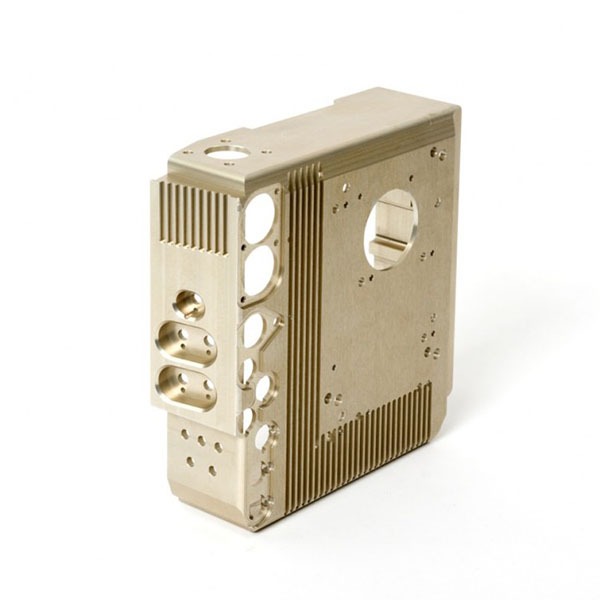
In the Dongguan mechanical parts processing industry, part processing is a common job content. Each type of mechanical equipment needs to be matched with various components, and its constituent parts themselves contain fragmented components and configurations. High quality mechanical parts have an extremely important impact and role in the mechanical industry, and the formation of mechanical parts cannot be separated from small metal parts. The processing methods of machine parts include die-casting, and generally mechanical parts are made of metal materials.
There are definitely many things to pay attention to during the process, and there are also many factors that affect the quality of the product. Therefore, it is important to pay attention to some of the details above. Now, let's understand the material requirements for machining mechanical parts?
There are definitely many things to pay attention to during the process, and there are also many factors that affect the quality of the product. Therefore, it is important to pay attention to some of the details above. Now, let's understand the material requirements for machining mechanical parts?
1、 It is a requirement for material hardness. In some cases, the higher the hardness of the material, the better. It is only limited to the hardness requirements for machining mechanical parts. The material used for machining mechanical parts should not be too hard, and if it is even harder than the mechanical parts, it cannot be processed.
2、 The material should be moderately soft and hard, at least one grade lower than the hardness of the machine, and it also depends on the purpose of the processing device and the reasonable selection of materials for the machine.
In short, there are still certain material requirements for machining mechanical parts, and not all materials are suitable for processing, such as materials that are too soft or too hard. The former is unnecessary, while the latter is not machinable.
Therefore, the basic principle is to pay attention to the density of the material before processing. If the density is too high, it is equivalent to a high hardness. Moreover, if the hardness exceeds the hardness of the machine (lathe turning tool), it cannot be processed. Not only will it damage the parts, but it will also cause danger, such as the turning tool flying off, injuring people, and so on. Therefore, generally speaking, for mechanical processing, the material should be lower than the hardness of the tool in order to proceed with the processing.
The above points are the requirements for machining mechanical parts. Let's take a look at their processing methods again, as follows:
Die casting is a commonly used operating method. Die casting is a metal casting process characterized by the use of a mold cavity to apply high pressure to molten metal. Molds are generally made of high-strength alloys, and this process is somewhat similar to injection molding. Most die castings do not contain iron, such as zinc, copper, aluminum, magnesium, lead, tin, and lead tin alloys and their alloys.
Cold chamber die-casting machines or hot chamber die-casting machines can be used as needed. The cost of castings and molds is very high, so the general die-casting method can only be used for mass production. The manufacturing of die-casting parts is relatively easy, which generally only requires four major steps, with very small cost increments per unit.
It is particularly suitable for producing a large number of small and medium-sized castings, so it is the most widely used among various casting processes. Compared with other casting processes, die-casting parts have a smoother surface and higher dimensional consistency.
What factors should be considered when selecting the type of tool in CNC machining
How to take improvement measures for surface roughness in precision parts machining
Related Article

Let us go over the foundations of the electroplating procedure. Electroplating involves several phases, and from pre-treatment to post-treatment there are several really significant ones.
The basic principle of surface treatment of precision parts in CNC machining

Audio panels, electronic cigarette shells, nameplateLOG, watch shells, etc. are among the CNC processing of high surface texture needs components.
CNC machining aluminum alloy parts high-quality surface texture process explained in detail

Metallic finishing, sometimes known as metallic finishing, is the process of using several techniques to change the surface of an object in order to improve appearance and performance, such as corrosion resistance, discoloration resistance, chemical resistance, abrasion resistance, and hardness, modify electrical conductivity, remove burrs, or apply a specific color to a machined part.
Metal CNC finishing surface treatment process and its working principle
