
What are the selection principles for Dongguan turning and milling composite processing process standards
author: Hansheng Automation
2023-05-17
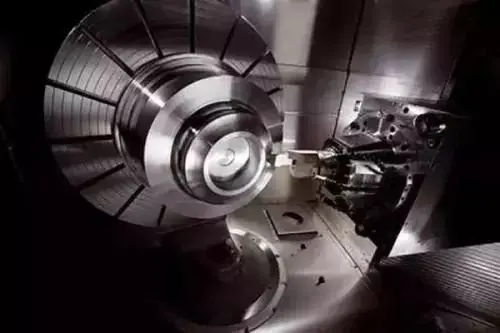
In the initial Dongguan turning and milling composite machining process, only blanks could be used for positioning, and this setting as a reference point is called a coarse reference point. In the subsequent processing of a single workpiece, the machining surface can be used for positioning, and this setting as a reference is called precision reference. Due to the different uses of coarse and fine benchmarks, the focus of selection is also different.
1. Principles for selecting coarse benchmarks
(1) The principle of uniformity of important surface margins. Firstly, it is necessary to ensure that there is a small and uniform machining allowance on the important surface of the workpiece.
(2) The principle of mutual position requirements on workpiece surfaces. It is necessary to ensure the mutual position requirements between the machined surface and the unprocessed surface on the workpiece, and use the unprocessed surface as the rough machining reference.
(3) The principle of sufficient margin. If all surfaces on the part need to be machined, use the surface with small machining allowance as the rough reference.
(4) The principle of reliable positioning. As a rough reference plane, a relatively reliable, smooth, and clean surface should be selected to ensure accurate positioning and reliable clamping.
(5) Non reuse principle. The coarse benchmark positioning accuracy is low, and the same size direction can only be used once and cannot be reused, otherwise the positioning error will be too large.
2. Principles for selecting precise benchmarks
When choosing a precision base, the focus is on how to reduce errors, ensure the precision of Dongguan turning and milling composite processing, and facilitate installation. The selection principles for precision benchmarks include:
(1) Principle of benchmark overlap. The design basis of the parts should be chosen as the reference as much as possible to avoid misalignment errors.
(2) Unified benchmark principle. Precision reference positioning and machining should be chosen as much as possible to ensure the accuracy of mutual positions between surfaces.
(3) Self benchmarking principle. Some finishing or finishing processes require a small and uniform machining allowance, and the machining surface itself should be chosen as the precision reference.
(4) The principle of repeated processing based on mutual reference. Some surfaces with high requirements for mutual positional accuracy can be guaranteed by using the principle of repeated Dongguan turning and milling composite processing with mutual reference.
(5) The principle of positioning reliability. The precision benchmark should be flat and smooth, with a certain degree of accuracy, ensuring simple positioning, easy installation, and reliable clamping.
The selection principles of benchmarks are summarized from production practice and must be analyzed and applied in conjunction with specific production conditions, production types, and processing requirements.
Three Classifications of Dongguan Turning and Milling Composite Processing Methods
The Geometric Angle of Cutting Tools and the Types of Reference Systems in Precision Part Processing
Related Article

Let us go over the foundations of the electroplating procedure. Electroplating involves several phases, and from pre-treatment to post-treatment there are several really significant ones.
The basic principle of surface treatment of precision parts in CNC machining

Audio panels, electronic cigarette shells, nameplateLOG, watch shells, etc. are among the CNC processing of high surface texture needs components.
CNC machining aluminum alloy parts high-quality surface texture process explained in detail

Metallic finishing, sometimes known as metallic finishing, is the process of using several techniques to change the surface of an object in order to improve appearance and performance, such as corrosion resistance, discoloration resistance, chemical resistance, abrasion resistance, and hardness, modify electrical conductivity, remove burrs, or apply a specific color to a machined part.
Metal CNC finishing surface treatment process and its working principle
