
Interpretation of the "Zero Return" Process of Dongguan Turning and Milling Compound Processing Center
author: Hansheng Automation
2023-05-16
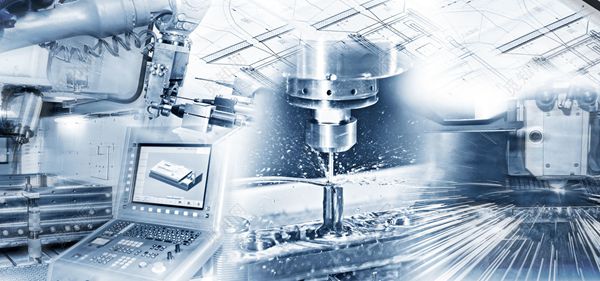
Turning and Milling Compound Processing Center is divided into absolute pulse encoder mode and incremental pulse encoder mode based on the different detection components when returning to zero. Absolute pulse encoder is used as a feedback component system. After the installation and debugging of the machine tool, during normal use, as long as the backup battery of the absolute pulse encoder is valid, there is no need to reset to zero every time the machine is turned on.
The direction or how to move is determined by the programming of the PLC and the machine tool parameter settings of the CNC system. The movement speed of the axis is also set in the machine parameters. The process of returning to zero on a CNC lathe is when the PLC system cooperates with the CNC system, the CNC system provides a return to zero command, and then the axis moves in the predetermined direction. Press the return to zero switch (or leave the zero position switch), and the PLC sends a deceleration signal to the CNC system. The CNC system decelerates in the predetermined direction, and the measurement system receives a zero pulse. After receiving the first pulse, the coordinate value is designed When all axes find zero, the homing process ends.
The method for zeroing CNC lathes is as follows:
In systems using incremental pulse encoders, Dongguan turning and milling compound machining must first perform a zero return operation to determine the machine coordinate origin for each turning. Finding the zero point is mainly related to the zero pulse of the zero switch, encoder, or grating ruler. There are generally two ways:
1. Quickly move in the axial predetermined direction, press the zero position switch, stop decelerating and continue moving forward until the stopper leaves the zero position switch, and the CNC system starts to search for the zero point. When receiving a zero pulse, determine the position of the reference point.
2. The axis moves quickly in the predetermined direction. Press the stop to the zero position switch and decelerate in reverse. When it leaves the zero switch again, the axis changes direction and moves towards the reference point. When the zero point is stopped and pressed again, when the switch is turned on, the Dongguan turning and milling composite machining CNC system starts to find the zero point. When the zero point pulse is received, the position of the reference point will be determined.
What is the reason for oil leakage during CNC machining in CNC processing plants
What should be done when parking in the processing of Dongguan Turning and Milling Compound Center
Related Article

Let us go over the foundations of the electroplating procedure. Electroplating involves several phases, and from pre-treatment to post-treatment there are several really significant ones.
The basic principle of surface treatment of precision parts in CNC machining

Audio panels, electronic cigarette shells, nameplateLOG, watch shells, etc. are among the CNC processing of high surface texture needs components.
CNC machining aluminum alloy parts high-quality surface texture process explained in detail

Metallic finishing, sometimes known as metallic finishing, is the process of using several techniques to change the surface of an object in order to improve appearance and performance, such as corrosion resistance, discoloration resistance, chemical resistance, abrasion resistance, and hardness, modify electrical conductivity, remove burrs, or apply a specific color to a machined part.
Metal CNC finishing surface treatment process and its working principle
