
Want to improve the accuracy of turn-milling composite processing? Then remember these six points
author: Hansheng Automation
2023-05-16
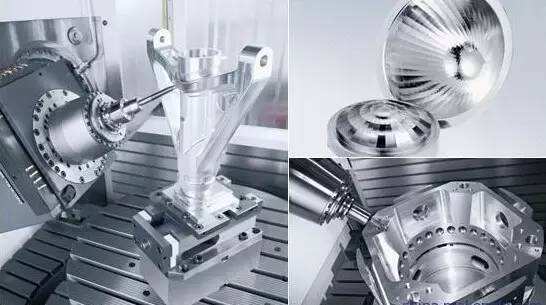
Any turning and milling composite processing equipment, when processing workpieces, such as processing route settings, processing programming, tool selection, machine tool problems, clamping problems, and workpiece materials, will have a certain degree of final processing accuracy and efficiency. As a high-precision machining equipment, vertical machining centers are commonly used methods to reduce workpiece machining errors, mainly including reducing original error method, error compensation method, error transmission method, error grouping method, error averaging method, error synthesis method, etc.
1、 Direct error reduction method
The direct reduction of original error method refers to the attempt to directly eliminate or reduce the main original error factors that affect machining accuracy. For example, long-term use of vertical machining centers can cause misalignment of the transmission system and tooth backlash caused by natural wear.
2、 Error averaging method
The error averaging method utilizes close comparison and mutual correction between surfaces, or uses each other as a machining benchmark, to achieve the goal of eliminating machining errors in vertical machining centers.
3、 Error grouping method
During the processing, there was an error in the raw material of the process, which caused the processing error of the process. The change in blank error has two main impacts on this process: reaction error and positioning error. If the above errors are too large, the machining accuracy cannot be guaranteed, and it is unrealistic to improve the precision of the blank or the machining accuracy of the previous process.
At this point, the method of error grouping can be used, which is to divide the size of the blank or previous process into n groups based on the size of the error, reduce the error of each group of blanks to the original 1/n, and then adjust the tool and workpiece according to each group. The relative position or adjustment of positioning components can greatly reduce the size dispersion range of the entire batch of workpieces. The essence of error grouping method is to use the means of improving measurement accuracy to compensate for the shortcomings of machining accuracy, thereby eliminating the impact of turning milling composite machining errors.
4、 Error compensation method
The error compensation method is to artificially create an error to offset the inherent original error of the process system, or to use one original error to offset another original error, in order to improve the machining accuracy of vertical machining centers. Usually, by reducing the clearance of the machine tool, the rigidity of the machine tool is improved, and pre tightening is used to generate pre tightening force for the relevant fit, eliminating the influence of the clearance. It can also increase the rigidity of the workpiece and tool, reduce the overhang length of the tool and workpiece, and thereby improve the rigidity of the process system. Reasonable clamping and machining methods can also be used to reduce cutting force and its changes, select tool materials reasonably, increase rake angle and main deviation angle, and perform reasonable heat treatment on workpiece materials to improve material processing performance.
5、 Error transfer method
The essence of error transfer method is the comprehensive error caused by collective error, force deformation, and thermal deformation of the transfer process system. For example, when performing some hole machining on a vertical machining center, the coaxiality of the workpiece is not guaranteed by the rotational accuracy of the machine tool spindle, but by the fixture. When the machine tool spindle is connected to the workpiece in a floating manner, the original error of the machine tool spindle no longer affects the machining accuracy and is transferred to the fixture to ensure machining accuracy.
6、 Error synthesis method
Eliminating the errors of the machine tool itself is the main method to ensure the final machining accuracy of the workpiece. The error synthesis method requires measuring the original error of each axis of the machine tool. Laser interferometer has high measurement accuracy and flexible use, making it the main detection instrument for turning and milling composite machining centers.
How to Prepare Tool Inspection and Measurement in Precision Part Processing
What types of cutting tools are used for turning and milling composite processing, and what are their characteristics
Related Article

Let us go over the foundations of the electroplating procedure. Electroplating involves several phases, and from pre-treatment to post-treatment there are several really significant ones.
The basic principle of surface treatment of precision parts in CNC machining

Audio panels, electronic cigarette shells, nameplateLOG, watch shells, etc. are among the CNC processing of high surface texture needs components.
CNC machining aluminum alloy parts high-quality surface texture process explained in detail

Metallic finishing, sometimes known as metallic finishing, is the process of using several techniques to change the surface of an object in order to improve appearance and performance, such as corrosion resistance, discoloration resistance, chemical resistance, abrasion resistance, and hardness, modify electrical conductivity, remove burrs, or apply a specific color to a machined part.
Metal CNC finishing surface treatment process and its working principle
