
These five points may be the main culprits that cause you to frequently collide with knives during turning and milling composite processing
author: Hansheng Automation
2023-05-16
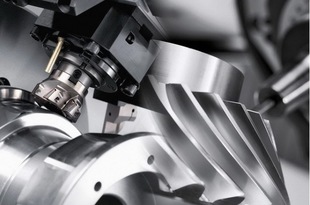
From the perspective of maintaining accuracy, it is not allowed for the tool to collide with the machine tool or workpiece when using a turn-mill composite machining machine tool. Below, Hansheng Automation Co., Ltd. will summarize and analyze the reasons for this collision. I hope it will be helpful to everyone.
1. The position of the cursor during operation is incorrect. When running a line, it is usually executed downwards from the cursor position. For a lathe, it is necessary to call up the tool compensation value of the tool used. If the tool is not called, the tool in the running program segment may not be the required tool, and due to the different tools used, tool collision accidents are prone to occur. Of course, it is necessary to first call the coordinate system (such as G54) and tool length compensation values on the machining center and CNC milling machine. Due to the different length compensation values for each tool, if not called, it may cause tool collisions.
2. The overtravel release direction is incorrect. When the precision CNC turning and milling composite machining machine exceeds the range, the over range release button should be pressed, and then manually or manually moved in the opposite direction to eliminate it. However, if the release direction is opposite, it will damage the machine. Because when the overtravel release device is pressed, the overtravel protection of the machine tool does not work, and the travel switch of the overtravel protection is already at the end of the travel. At this point, this may cause the workbench to continue moving in the overtravel direction, ultimately pulling the lead screw and damaging the machine tool.
3. Forgot to turn off the idle switch during the processing. In order to save time in program simulation, CNC turning and milling machines usually turn on the idle running switch. Idling refers to all motion axes of the machine tool running at G00 speed. If the idle running switch is not turned off during the machining process, the machine tool will ignore the given feed speed and run at G00 speed, resulting in an accident of tool collision with the machine tool.
4. No reference point returned after simulation test run. When verifying the program, the machine tool will be locked and the tool will perform simulation operations relative to the workpiece processing (coordinates and relative coordinates are changing). At this point, the coordinates do not match the actual position. The method of returning to the reference point must be used to ensure that the zero coordinate of the machine tool is consistent with the coordinate and relative coordinates. If no issues are found during the inspection program, the machining operation will be executed, which will cause tool collisions.
5. The simulated machining machine is not locked. Due to the fact that the CNC turning and milling composite machine tool is locked by software, it is not possible to visually see whether the machine tool is locked on the simulation interface when the automatic operation button is pressed during the simulation process. There are usually no tool settings during the simulation process. If the machine tool is not locked and running, there is a high possibility of tool collision. Therefore, before conducting simulation processing, it is necessary to first enter the operation interface to confirm whether the machine tool is locked.
Compared with ordinary machine tools, CNC turning and milling composite machine tools have high accuracy, good dimensional stability, low labor intensity, and convenient modern management. However, due to improper operation or programming errors, it is easy to cause the tool or tool holder to collide with the workpiece or machine tool, causing light damage to the tool and processing parts, and heavy damage to the machine tool parts, resulting in the machining of turn-milling composite machining machines. Losing accuracy and even causing personal accidents.
What types of cutting tools are used for turning and milling composite processing, and what are their characteristics
What are the advantages of CNC precision machining parts
Related Article

Let us go over the foundations of the electroplating procedure. Electroplating involves several phases, and from pre-treatment to post-treatment there are several really significant ones.
The basic principle of surface treatment of precision parts in CNC machining

Audio panels, electronic cigarette shells, nameplateLOG, watch shells, etc. are among the CNC processing of high surface texture needs components.
CNC machining aluminum alloy parts high-quality surface texture process explained in detail

Metallic finishing, sometimes known as metallic finishing, is the process of using several techniques to change the surface of an object in order to improve appearance and performance, such as corrosion resistance, discoloration resistance, chemical resistance, abrasion resistance, and hardness, modify electrical conductivity, remove burrs, or apply a specific color to a machined part.
Metal CNC finishing surface treatment process and its working principle
