
What are the characteristics of cutting tools made of titanium based alloys and ceramic materials in precision parts processing
author: Hansheng Automation
2023-05-16
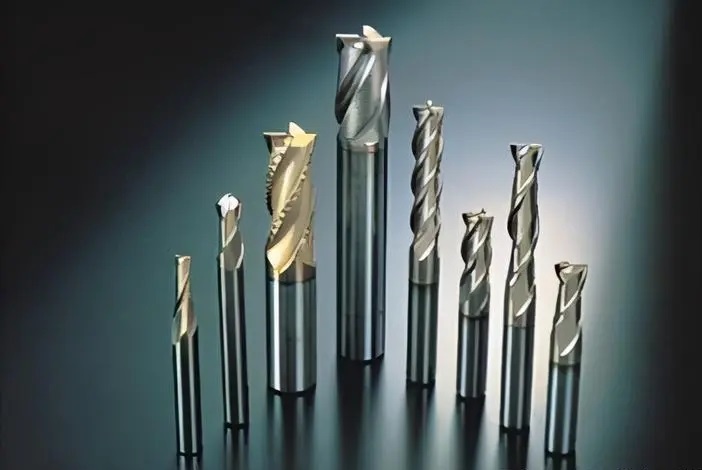
With the continuous development of the modern machining industry, the performance of ordinary cutting tools in the process of precision parts processing is increasingly unable to meet practical needs. This has led to the emergence of a batch of new types of cutting tools using new materials, making them have higher strength, hardness, and wear resistance. Titanium based alloys and ceramic materials are among the best among them.
Carbon and titanium nitride based hard alloys are mainly composed of TiC, TiN, and other carbides or oxides, and are bonded with nickel and molybdenum as binders. Its main advantages include high hardness, good oxidation resistance, low friction coefficient, less chip adhesion, good resistance to crescent pit wear, and low relative density. It is called "cermet" in foreign countries and is suitable for high-speed precision machining and semi precision machining of steel parts. Currently, it is suitable for milling processing and the manufacturing of integral milling cutters.
Ceramic materials have higher hardness and heat resistance than hard alloys, and can still be cut at a temperature of 1200 ° C. They have good wear resistance and chemical inertness, low friction coefficient, and strong resistance to adhesion and diffusion wear. Therefore, they can be cut at higher speeds in precision parts processing. Ceramic materials have stronger properties compared to hard alloy materials. In order to make up for the shortcomings of ceramic materials, such as low bending strength, brittleness and poor stamping resistance, the cutting edge of ceramic blade often grinds a 20 ° negative chamfer, and the thickness and tip arc of the blade are slightly larger than those of cemented carbide blades of the same size.
What are the manufacturing requirements for planar positioning components in precision parts processing
What is the tool life in precision parts processing
Related Article

Let us go over the foundations of the electroplating procedure. Electroplating involves several phases, and from pre-treatment to post-treatment there are several really significant ones.
The basic principle of surface treatment of precision parts in CNC machining

Audio panels, electronic cigarette shells, nameplateLOG, watch shells, etc. are among the CNC processing of high surface texture needs components.
CNC machining aluminum alloy parts high-quality surface texture process explained in detail

Metallic finishing, sometimes known as metallic finishing, is the process of using several techniques to change the surface of an object in order to improve appearance and performance, such as corrosion resistance, discoloration resistance, chemical resistance, abrasion resistance, and hardness, modify electrical conductivity, remove burrs, or apply a specific color to a machined part.
Metal CNC finishing surface treatment process and its working principle
