
What are the processing difficulties of composite materials in the process of turning and milling composite processing
author: Hansheng Automation
2023-05-15
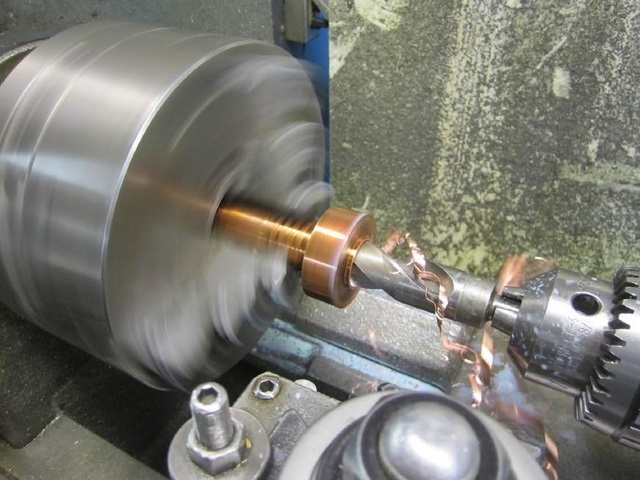
Turning and milling composite machining is a high-precision machining technology with strong automation technology in production and processing. It refers to the entire production process of workpieces being operated by CNC machine tools, which can produce and process some very unique composite materials. Nowadays, composite materials are widely used in various aspects of people's lives, especially in aerospace and some ultra-high precision mechanical manufacturing industries.
1、 Types of composite materials for CNC machining centers
Composite materials are divided into metal materials and metal composite materials, non-metallic materials and metal composite materials, non-metallic and non-metallic composite materials according to their composition. According to its structural characteristics, it can be further divided into:
1. Chemical fiber composite material. It is formed by combining various chemical fiber enhancers into the substrate material. Such as chemical fiber elastomer materials, chemical fiber reinforced alloys, etc.
2. Composite material for the interlayer. Composed of surface raw materials and core plates with different characteristics. Usually, the substrate has high and thin hardness; The core material is light and has low compressive strength, but it has a certain strength and thickness. Divided into two types: solid core skirt wall and honeycomb partition layer.
3. Sand composite material. Combine hard sand into the foundation, such as diffusely reinforced aluminum alloys, cermets, etc.
4. Doped composite materials. Composed of two or more types of improved phase raw materials doped with one substrate phase raw material. Compared with ordinary single phase composite materials, its impact on compressive strength, fatigue limit, and impact toughness is significantly improved, and it has unique thermal deformation characteristics. Divided into intra layer doping, solid layer doping, sandwich hybrid, intra layer/solid layer doping, and super hybrid composite materials.
2、 Issues to be paid attention to when producing and processing composite materials through turn-milling composite processing
1. Carbon fiber composite materials have low compressive strength and are prone to layering under the effect of cutting speed. Therefore, drilling or edge cutting should reduce axial force. High speed rotation and small tool path are specified for drilling. The rotating speed ratio of the CNC machining center is generally 3000~6000r/min, and the cutting speed is 0.01~0.04mm/r. It is good to use a three point two edge or two point two edge Fried Dough Twists drill. The sharp tip can first cut off the carbon fiber material layer, and the two edges have a repairing effect on the surface layer. The diamond inlaid Fried Dough Twists drill is sharp and wear-resistant. The drilling of the interlayer between composite materials and titanium metal is a difficult point. Generally, an overall hard alloy drill bit is selected, and milling is carried out according to the main cutting parameters of milling titanium metal. Drill from the titanium metal side until drilling through, and add lubricating fluid during milling to reduce composite material burns. Boeing Company of the United States has developed a PCD Fried Dough Twists drill to drill holes in the interlayer.
2. The actual drilling effect of three types of new overall hard alloy tool composite materials in the production and processing of turning tools is stronger. They all have some common characteristics: high stiffness, small helix angle, and even 0 °. The professionally designed herringbone edge can reasonably reduce the radial cutting speed of CNC machining centers, reduce the level of division, and achieve high work efficiency and practical results.
3. The composite material is cut into powder form, which poses great harm to human health. Therefore, high-power vacuum cleaners should be used for dust collection, and the use of water-cooled heat dissipation can also reasonably reduce smoke and dust environmental pollution.
4. Carbon fiber composite prefabricated components generally have large specifications, cumbersome appearance and structure, high strength and hardness, and are classified as difficult to produce and process raw materials. During the drilling process, the cutting speed is relatively high, and the drilling heat is not easily transmitted. In severe cases, the epoxy resin may burn or soften the resin, resulting in severe damage to the CNC blade. Therefore, the CNC blade is an important tool for carbon fiber processing, and its drilling principle is closer to cutting rather than cutting. Therefore, the drilling angular speed of turn-mill composite processing usually exceeds 500m/min, so the strategy of high-speed rotation and small tool walking is adopted. Edge cutting production and processing of CNC blades generally use overall hard alloy tool extrusion tap turning tool, electroplating process diamond particle sand wheel blade, inlaid diamond turning tool, copper based steel particle woodworking saw blade.
Why do slender shafts bend during precision part machining
CNC precision parts processing characteristics
Related Article

Let us go over the foundations of the electroplating procedure. Electroplating involves several phases, and from pre-treatment to post-treatment there are several really significant ones.
The basic principle of surface treatment of precision parts in CNC machining

Audio panels, electronic cigarette shells, nameplateLOG, watch shells, etc. are among the CNC processing of high surface texture needs components.
CNC machining aluminum alloy parts high-quality surface texture process explained in detail

Metallic finishing, sometimes known as metallic finishing, is the process of using several techniques to change the surface of an object in order to improve appearance and performance, such as corrosion resistance, discoloration resistance, chemical resistance, abrasion resistance, and hardness, modify electrical conductivity, remove burrs, or apply a specific color to a machined part.
Metal CNC finishing surface treatment process and its working principle
