
What are the improvement measures for errors caused by internal stress in precision parts processing
author: Hansheng Automation
2023-05-15
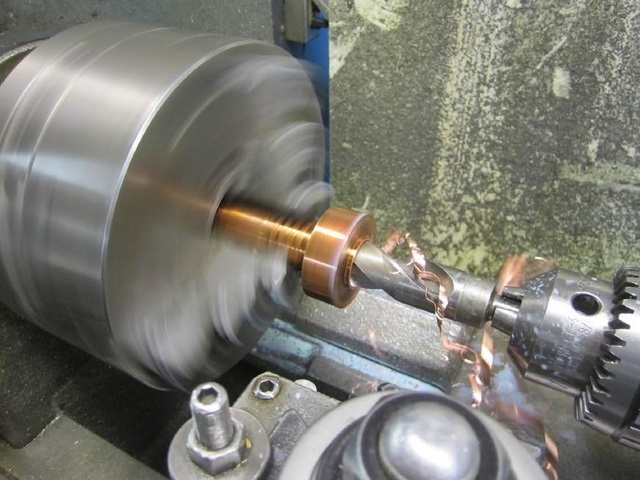
In the field of precision parts processing, the so-called internal stress refers to the stress that remains inside the workpiece after the external load is removed. Internal stress is produced during the processing of a workpiece due to uneven volume changes in its internal macroscopic or microscopic structure.
Parts with internal stress are in an unstable relative equilibrium state, which can maintain temporary stability of shape accuracy. But its internal organization has a strong tendency to restore to a stable state without internal stress. Once external conditions change, such as changes in environmental temperature, continued cutting, or being impacted, the temporary balance of internal stress will be disrupted and redistributed, causing corresponding deformation of the parts, thereby damaging the original accuracy.
In order to reduce or eliminate the impact of internal stress on the machining accuracy of precision parts in machining, when designing the structure of parts, it is necessary to simplify the structure as much as possible and consider uniform wall thickness to reduce the internal stress generated in the manufacturing of casting and forging blanks. During cutting, rough and precision machining should be separated in different processes, with a certain interval after rough machining to redistribute the internal stress and reduce the impact on precision machining.
What is Tool Compensation in Precision Part Processing
Two Reasons for the Formation of Surface Roughness in Precision Parts Processing
Related Article

Let us go over the foundations of the electroplating procedure. Electroplating involves several phases, and from pre-treatment to post-treatment there are several really significant ones.
The basic principle of surface treatment of precision parts in CNC machining

Audio panels, electronic cigarette shells, nameplateLOG, watch shells, etc. are among the CNC processing of high surface texture needs components.
CNC machining aluminum alloy parts high-quality surface texture process explained in detail

Metallic finishing, sometimes known as metallic finishing, is the process of using several techniques to change the surface of an object in order to improve appearance and performance, such as corrosion resistance, discoloration resistance, chemical resistance, abrasion resistance, and hardness, modify electrical conductivity, remove burrs, or apply a specific color to a machined part.
Metal CNC finishing surface treatment process and its working principle
