
The positioning and clamping of workpieces processed by Dongguan CNC Precision Machining Factory on CNC lathes
author: Hansheng Automation
2023-05-11
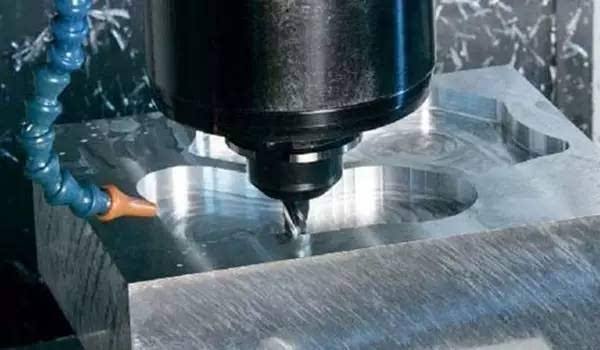
The process of positioning the workpiece in the correct position on the machine tool or fixture at Dongguan CNC Precision Machining Factory is called positioning. In the mechanical processing process of workpieces, the reasonable selection of positioning reference plays an important role in ensuring the dimensional accuracy and mutual position accuracy of workpieces.
There are two types of positioning benchmarks: coarse benchmark and fine benchmark. At the beginning of processing, the blank is positioned on an unprocessed surface, which is called a rough reference; Using the processed surface as the positioning reference plane is called a precision reference.
1. When selecting a rough benchmark, it is necessary to meet the following two basic requirements: firstly, ensure that all machined surfaces have sufficient machining allowance; Secondly, it is necessary to ensure a certain positional accuracy between the machined and non machined surfaces of the workpiece.
2. When there are positional accuracy requirements between the machined surface and the non machined surface, the non machined surface should be selected as the coarse reference. Due to certain form and position errors during casting, during the first clamping and turning process, the non machined surface of the inner edge of the handwheel should be selected as the rough reference to ensure that the thickness a of the wheel flange is basically equal after processing.
If the outer circle of the handwheel (machined surface) is chosen as the rough reference, the casting error cannot be eliminated after processing, resulting in significant inconsistency in the thickness of the wheel flange. That is to say, Dongguan CNC Precision Machining Factory should align the inner edge of the handwheel before turning, or use a three jaw self centering chuck to support the inner edge of the handwheel for turning.
Basic Characteristics of CNC Turning Process at Dongguan CNC Precision Machining Factory
How to proficiently master the determination of cutting parameters during turning processing at Dongguan CNC Precision Machining Factory
Related Article

Let us go over the foundations of the electroplating procedure. Electroplating involves several phases, and from pre-treatment to post-treatment there are several really significant ones.
The basic principle of surface treatment of precision parts in CNC machining

Audio panels, electronic cigarette shells, nameplateLOG, watch shells, etc. are among the CNC processing of high surface texture needs components.
CNC machining aluminum alloy parts high-quality surface texture process explained in detail

Metallic finishing, sometimes known as metallic finishing, is the process of using several techniques to change the surface of an object in order to improve appearance and performance, such as corrosion resistance, discoloration resistance, chemical resistance, abrasion resistance, and hardness, modify electrical conductivity, remove burrs, or apply a specific color to a machined part.
Metal CNC finishing surface treatment process and its working principle
