
Why does the precision of precision parts deteriorate during machining
author: Hansheng Automation
2022-08-12
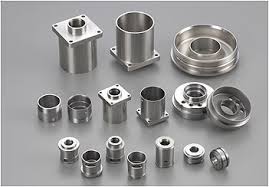
In our industry, no matter what parts are processed, there are requirements for machining accuracy. During the later inspection process, it is found that the machining accuracy of precision parts has deteriorated, which is likely to result in unqualified parts. Therefore, why does the machining accuracy of precision parts deteriorate?
1. The machining accuracy of the parts themselves is poor. Generally speaking, if the dynamic error between the shafts is not adjusted properly during installation, or if the shaft transmission chain changes due to wear, it will affect the accuracy of the parts.
2. Machine tool overshoot during operation can also affect machining accuracy, possibly due to a short acceleration and deceleration time, appropriately extending the change time. Of course, it is also highly likely that the connection between the lead screw and the servo motor is loose.
3. The roundness caused by the two axis linkage is out of tolerance, the mechanical adjustment is not properly adjusted to form axial deformation of the circle, the gap compensation of the shaft screw is not correct, or the shaft positioning is offset, which may affect the accuracy of precision parts.
How can machining manufacturers reduce the heat generated during the cutting process
How to Choose a Processing Center for Stainless Steel Five Axis Processing at Dongguan Five Axis Processing Factory
Related Article

Let us go over the foundations of the electroplating procedure. Electroplating involves several phases, and from pre-treatment to post-treatment there are several really significant ones.
The basic principle of surface treatment of precision parts in CNC machining

Audio panels, electronic cigarette shells, nameplateLOG, watch shells, etc. are among the CNC processing of high surface texture needs components.
CNC machining aluminum alloy parts high-quality surface texture process explained in detail

Metallic finishing, sometimes known as metallic finishing, is the process of using several techniques to change the surface of an object in order to improve appearance and performance, such as corrosion resistance, discoloration resistance, chemical resistance, abrasion resistance, and hardness, modify electrical conductivity, remove burrs, or apply a specific color to a machined part.
Metal CNC finishing surface treatment process and its working principle
