
Which types of cutting tools are commonly used in horizontal five axis machining
author: Hansheng Automation
2023-05-23
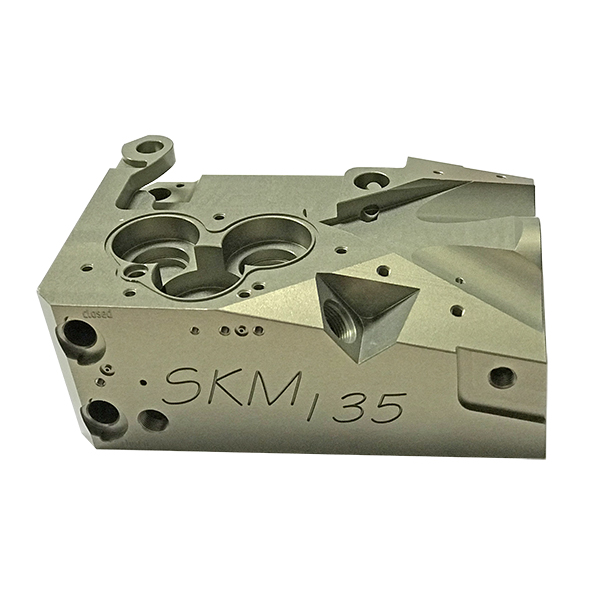
Horizontal five axis machining is a machining method mainly applied to high-precision and complex processes, and commonly used tools include:
1. High speed drill bit: used for drilling, with the characteristics of high speed, high feed rate, and high efficiency.
2. Milling cutter: used for milling various flat surfaces, with characteristics such as high cutting speed and low cutting force.
3. Right angle milling cutter: used for milling various shapes of surfaces such as stairs and flat surfaces, capable of completing multiple tasks simultaneously.
4. Hob: used for machining formed surfaces, chamfers, cams, etc., with the advantages of high efficiency and precision.
5. Tool compensation: used to compensate for errors in the attitude angle and tool length of a five axis machine tool, ensuring machining accuracy and surface quality.
The processing of non-standard parts needs to be considered in accordance with these aspects
What processes are included in machining
Related Article

Let us go over the foundations of the electroplating procedure. Electroplating involves several phases, and from pre-treatment to post-treatment there are several really significant ones.
The basic principle of surface treatment of precision parts in CNC machining

Audio panels, electronic cigarette shells, nameplateLOG, watch shells, etc. are among the CNC processing of high surface texture needs components.
CNC machining aluminum alloy parts high-quality surface texture process explained in detail

Metallic finishing, sometimes known as metallic finishing, is the process of using several techniques to change the surface of an object in order to improve appearance and performance, such as corrosion resistance, discoloration resistance, chemical resistance, abrasion resistance, and hardness, modify electrical conductivity, remove burrs, or apply a specific color to a machined part.
Metal CNC finishing surface treatment process and its working principle
