
What you need to know about CNC aluminum machining
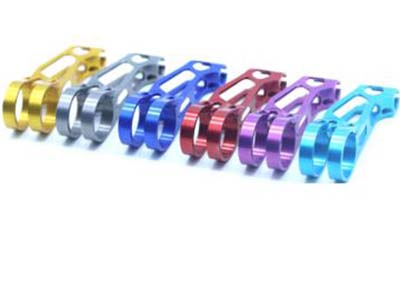
CNC or Computer Numerical Control is a series of processes used for prototyping or mass production. These processes run on computer programs and involve a variety of operations, such as turning and milling. At the same time, aluminum is the material of choice for manufacturing due to its versatility of functions. Its excellent machinability and interesting thermal and mechanical properties have made it popular in the industry.
In addition, the easy forming properties of aluminum make it ideal for the drilling processes involved in CNC aluminum machining. Essentially, other lightweight metals such as magnesium and titanium alloys can't even match the versatility of aluminum.
It is commonly used in the production of CNC automobiles and other CNC parts that require lightweight and heavy-duty use. So, in this article, we're going to explore five things you might not know about CNC machining aluminum.So, we start here.
Aluminum as a material for CNC aluminum machining
Aluminum is one of the lightest metals and is known for its softness, ductility, ease of processing, and durability. Its appearance depends on the roughness of its surface, which gives it a silvery or dull gray color in its pre-finished state. Also, it lacks magnetism, but it is a good conductor of electricity, although its conductivity is not as good as copper in a specific cross-sectional area. It is non-flammable and melts at about 640 degrees Celsius. In terms of its wide range of applications, aluminum is widely used in CNC automobiles such as ATV, aerospace, and medical industries due to its light density of 2.68.
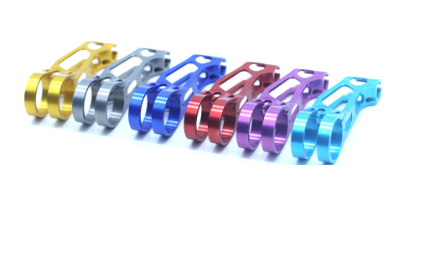
CNC aluminum machining
Aluminum grade
Although there are various grades of aluminum used in various CNC aluminum machining processes, the choice of aluminum grade ultimately depends on your intended machining project. Aluminum is graded and sorted according to its most important and least important properties. In this case, aluminum grades allow you to choose aluminum with specific shapes and properties according to your requirements, as they are all highly machinable.
Below we have discussed several aluminum grades and their significance:
- Aluminum 6061: commonly used in 5-axis CNC aluminum machining. Undoubtedly, it is said to have excellent weldability and local properties, making it ideal for use in extrusion processes. In addition to this, it has excellent mechanical properties, excellent corrosion resistance, medium to high strength, cold anodizing, bending processability and excellent toughness under extreme conditions.
- Aluminum 7075: While this grade also has better corrosion resistance, its popularity is due to its excellent fatigue strength. However, due to its high price, it may not be suitable for welding. As a result, it remains ideal for manufacturing sturdy parts, such as bicycle parts, fuselages, climbing kits, and airplane wings.
- Aluminum 2024: Aluminum 2024 is known for its mechanical properties such as excellent wear resistance and high strength. At the same time, it has extremely poor corrosion resistance and cannot be welded. It is mainly used in the military and aerospace industries.
CNC aluminum prototype
Aluminum machining prototypes are often produced by considering a variety of alloys. Almost all of these alloys offer high-strength and low-density construction. The most commonly used aluminum alloy is 6061-T6 because it is ideal for use in the electronics, transportation, aerospace, and military industries, to name a few. Typically, CNC aluminum machining operations for prototypes have excellent control tolerances, such as 0.001 mm, as well as manufacturing one-of-a-kind, high-quality aluminum prototypes. Again, CNC milling is the best option because of the benefits offered by the machining process that lead to high precision and milling aluminum.
CNC Aluminum Machining: Parts
CNC machining aluminum manufacturing is suitable for different CNC parts and components for various services, such as turning, milling, and grinding. There is no doubt that the popularity of well-machined CNC aluminum parts is steadily increasing in the field of engineering right now. Here are some CNC machined aluminum parts and components:
- Front panel
- pin
- EMI-Housing
- Splined shaft
- Medical equipment
- Lighting fixtures
Avoid deformation in CNC aluminum machining
Despite being the darling of the industry, aluminum still has serious flaws. Due to its relatively low hardness and high thermal expansion, the alloy deforms when machined into thinner sections. However, there are a number of precautions that can be taken in advance to avoid material deformation.
Symmetrical CNC aluminum machining
is critical to prevent extreme heat concentration, but instead creates a heat dispersion or heat dissipation mechanism to minimize the rate of thermal distortion.
There
are many cavities on the layered multiple CNC aluminum machining aluminum alloy plate, which can cause one cavity wall to be twisted due to the force distribution. To prevent this from happening, make sure to treat all cavities at the same time.
Ensure the right cutting parameters
The magnitude of the depth of shear has a significant effect on the cutting data. But then again, CNC milling operations can solve the problem by increasing machine speed and reducing cutting forces while maintaining efficiency and reducing the number of cuts.
Drilling and milling
When a milling cutter is used on the cavity, the cutting becomes sufficient, prompting cutting heat, deformation, and expansion. However, the most feasible way to avoid this problem is to pre-drill the hole with a larger cutter than the milling cutter before inserting and milling.
5-axis CNC aluminum machining
During 5-axis machining, CNC operations simultaneously cut along five angles of the axis. During this time, the process is fast and reliable for designing complex parts. For the record, 5-axis CNC aluminum machining was employed for the following reasons:
- The setup is still single, which reduces lead times and increases efficiency.
- It provides better geometry by avoiding collisions with the tool holder, tilting the table/tool.
- The cut piece does not go through multiple workstations, so errors can be minimized, precision or accuracy can be maintained, and high quality is ensured.
- It can use smaller, sturdier tools. Some of these achieve high spindle speeds by reducing the load on the cutting tool.
conclusion
In conclusion, we discussed the various CNC machining aluminum procedures that transform prefabricated aluminum parts into finished products. Keep in mind that it refers to a laborious process that requires experience, precision and accuracy, and strong machinery. Undoubtedly, this is due to the use of different aluminum alloys. Aluminum, on the other hand, offers several significant benefits, including a fast cutting process and high-quality results. In addition, professionals are emerging from all walks of life to meet your needs; However, do your homework and get samples to ensure the quality of CNC aluminum.
CNC milling machine
What is CNC milling machining
Related Article


