
What parts are suitable for precision parts processing?
author: Hansheng Automation
2023-05-11
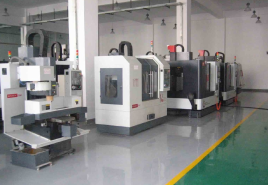
Precision parts processing is suitable for processing multiple precision components in aviation, navigation, automotive, medical, industrial, and other fields. Precision parts have high machining accuracy, fast efficiency, and stable quality. As the saying goes, flying in the air, running on the ground, and swimming in the water can all be done!
The precision parts machining center adopts a numerical programming design, which edits the machining program in advance and enters the precision parts operating system. Processed by operators according to the process. Machine tools are also divided into ordinary precision parts machining centers, 3-axis, 4-axis, 5-axis, and composite machining centers. The precision parts processing center can process complex precision components with multi axis linkage, and can also produce metal or plastic hand boards for research and development companies as a reference. It can also process aluminum profiles, stainless steel, zinc alloys, acrylic acid, ABS, and various plastic raw materials. High compatibility. Its technology can be divided into precision turning, precision drilling, precision milling, precision grinding, grinding, and post-processing.
Material requirements for precision parts processing
What type of workpiece is the floating reaming hole of Dongguan CNC Precision Machining Factory mainly used for processing
Related Article

Let us go over the foundations of the electroplating procedure. Electroplating involves several phases, and from pre-treatment to post-treatment there are several really significant ones.
The basic principle of surface treatment of precision parts in CNC machining

Audio panels, electronic cigarette shells, nameplateLOG, watch shells, etc. are among the CNC processing of high surface texture needs components.
CNC machining aluminum alloy parts high-quality surface texture process explained in detail

Metallic finishing, sometimes known as metallic finishing, is the process of using several techniques to change the surface of an object in order to improve appearance and performance, such as corrosion resistance, discoloration resistance, chemical resistance, abrasion resistance, and hardness, modify electrical conductivity, remove burrs, or apply a specific color to a machined part.
Metal CNC finishing surface treatment process and its working principle
